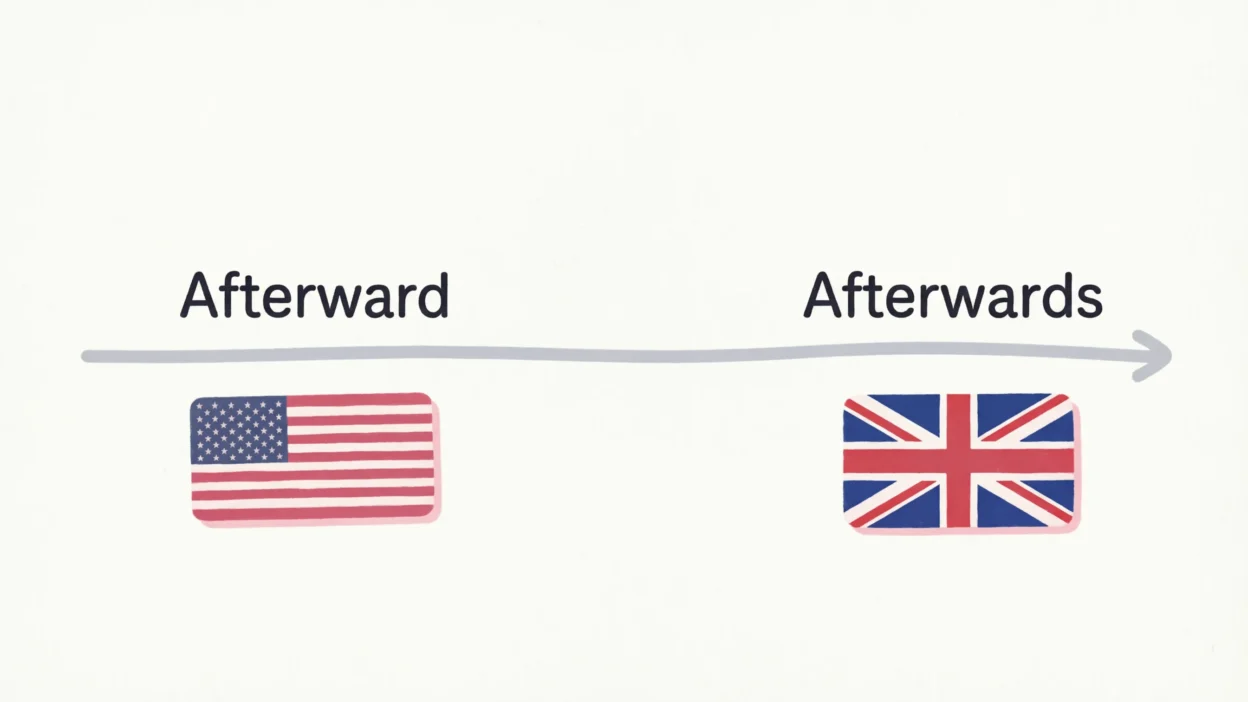
“Afterward” and “afterwards” are both correct English words with the same meaning. The difference mainly comes down to regional spelling preferences.
The key idea: American English vs British English style.
Understanding the difference helps you write more naturally for your audience and keep your spelling consistent.
Quick Answer
- ✅ Afterward – More common in American English
- ✅ Afterwards – More common in British English
- ✏️ Remember: No “s” = American style, “s” = British style
Clear Explanation
What Does “Afterward” Mean?
Afterward is an adverb meaning:
- later
- after something happens
- subsequently
Examples:
- We went home afterward.
- She felt tired afterward.
- They talked afterward about the meeting.
- He apologized afterward.
- We had dinner afterward.
👉 “Afterward” is commonly used in:
- American English
- U.S. business writing
- American publications
Common Uses of “Afterward”
1. Referring to a Later Time
Examples:
- afterward we left
- afterward they met
Example Sentence:
- We relaxed afterward.
2. Describing Consequences
Examples:
- felt sick afterward
- regretted it afterward
Example Sentence:
- She felt much better afterward.
3. Talking About Sequence
Examples:
- eat afterward
- discuss afterward
Example Sentence:
- The team met afterward to celebrate.
What Does “Afterwards” Mean?
Afterwards has exactly the same meaning:
- later
- after that
- subsequently
Examples:
- We went home afterwards.
- He apologized afterwards.
- They rested afterwards.
- She called afterwards.
- The children played afterwards.
👉 “Afterwards” is commonly used in:
- British English
- UK publications
- Commonwealth English
Common Uses of “Afterwards”
1. Talking About Later Events
Examples:
- afterwards we ate
- afterwards they spoke
Example Sentence:
- We went for coffee afterwards.
2. Describing What Happened Next
Examples:
- cried afterwards
- slept afterwards
Example Sentence:
- He rested afterwards.
Key Difference
| Feature | Afterward | Afterwards |
|---|---|---|
| Meaning | Same | Same |
| English Style | American English | British English |
| Pronunciation | Same | Same |
| Preferred In | United States | UK/Commonwealth |
Which One to Use and When
Use “Afterward” When:
- Writing American English
- Writing for U.S. audiences
- Following American style guides
Examples:
- afterward we talked
- met afterward
- traveled afterward
- discussed afterward
- relaxed afterward
Example Sentences:
- We spoke afterward.
- She called afterward.
- They celebrated afterward.
Use “Afterwards” When:
- Writing British English
- Writing for UK or Commonwealth readers
- Following British spelling conventions
Examples:
- afterwards we spoke
- met afterwards
- relaxed afterwards
- traveled afterwards
- discussed afterwards
Example Sentences:
- We had tea afterwards.
- He apologized afterwards.
- They rested afterwards.
Common Mistakes People Make
1. Thinking One Is Incorrect
Both spellings are correct.
2. Mixing English Styles
Avoid switching between:
- afterward
and - afterwards
within the same document.
3. Assuming Meaning Changes
The meaning stays exactly the same.
4. Using Random Style Choices
Choose one spelling style and stay consistent.
5. Confusing It With “After”
“Afterward(s)” means later in time, not simply “after.”
Easy Memory Trick
👉 Afterward = American English
👉 Afterwards = British English
Think:
- American English often removes extra endings like “s.”
Real-Life Examples
Correct Use of “Afterward”
- We met afterward for dinner.
- She felt tired afterward.
- They discussed the project afterward.
Correct Use of “Afterwards”
- We talked afterwards.
- He slept afterwards.
- They celebrated afterwards.
Practice Exercise
Fill in the blanks:
- American English commonly uses “______.”
- British English commonly uses “______.”
- Both words mean “later.”
Answers:
- afterward
- afterwards
- true
Quick Quiz
- Which spelling is more common in American English?
a) Afterwards
b) Afterward - Which spelling is more common in British English?
a) Afterward
b) Afterwards - Do both words have the same meaning?
a) Yes
b) No
Correct Answers:
- b) Afterward
- b) Afterwards
- a) Yes
Why This Confusion Happens
The confusion happens because:
- both spellings are correct
- pronunciation is identical
- English spelling varies by region
However:
- afterward is more American
- afterwards is more British
Helpful Tip for Better Writing
Stay consistent:
- American English → afterward
- British English → afterwards
Conclusion
The difference between “afterward” and “afterwards” is mainly regional spelling preference. Both mean “later” or “after that.”
👉 Afterward = American English
👉 Afterwards = British English
Choosing the correct regional style will make your writing clearer and more professional.

Sophia Reynolds is a digital writer and researcher with a focus on modern trends, productivity, and online education. She enjoys exploring new ideas and presenting them in a simple, reader-friendly way. Sophia is committed to creating informative and trustworthy content that helps audiences stay informed and inspired.