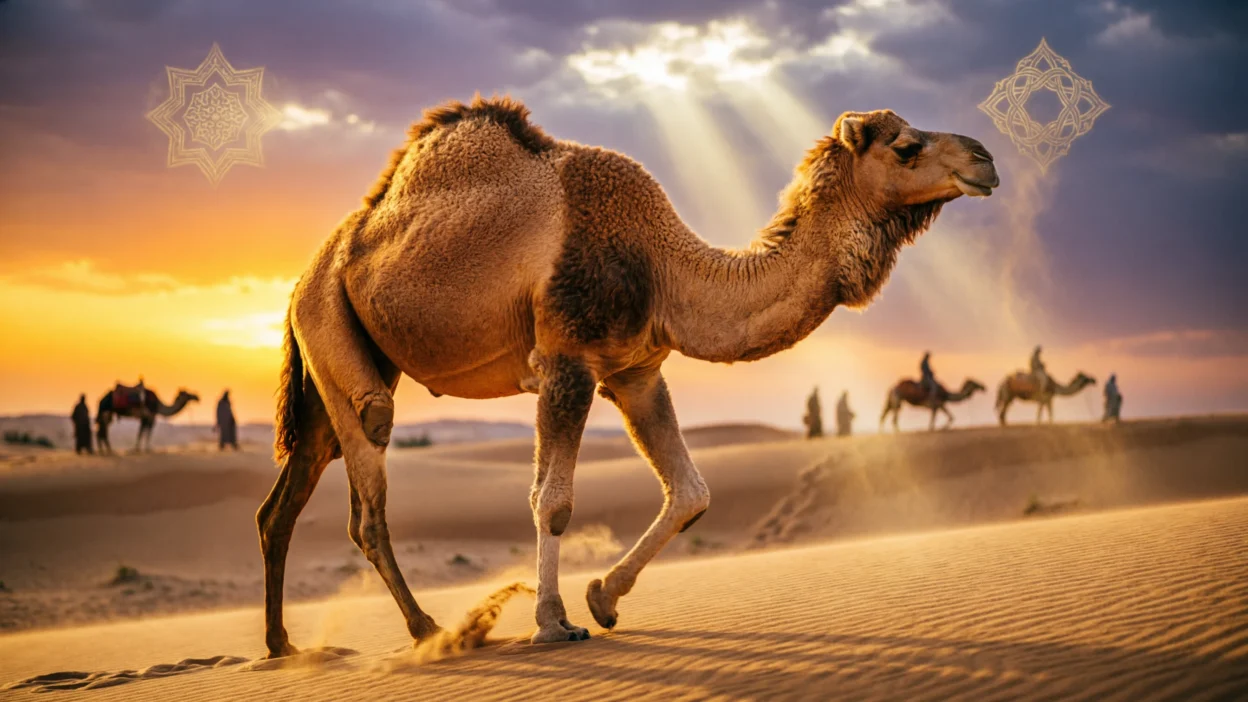
Camel symbolism represents endurance, resilience, patience, and survival through life’s harshest conditions. Known as the “ship of the desert,” the camel has long symbolized steady progress, self-sufficiency, and the ability to carry emotional and spiritual burdens with grace. Across Middle Eastern traditions, African cultures, and spiritual interpretations, the camel stands for perseverance, adaptability, and inner strength.
Let’s explore the deep symbolic meaning of the camel in spirituality, history, dreams, and modern life.
What Does a Camel Symbolize?
At its core, camel symbolism reflects survival and long-term strength. Camels thrive where other animals struggle, making them powerful symbols of endurance.
Core Symbolic Meanings
- Patience and perseverance
- Endurance through hardship
- Self-reliance
- Responsibility
- Stability
- Long-term vision
The camel teaches that progress may be slow, but steady determination leads to survival and success.
Spiritual Meaning of Camel Symbolism
Spiritually, the camel represents carrying life’s responsibilities with grace and trust.
Endurance & Faith
In spiritual traditions, the camel symbolizes unwavering faith during difficult journeys. It reflects trust in divine timing and protection.
Emotional Strength
Camels can carry heavy loads across long distances. Symbolically, they represent the ability to bear emotional or spiritual burdens without breaking.
Adaptability & Balance
Because camels survive in extreme desert climates, they symbolize adapting to challenging environments while conserving energy wisely.
The spiritual camel reminds you that resilience often comes from patience, not speed.
Camel Symbolism in History and Culture
Middle Eastern Symbolism
In Middle Eastern cultures, camels symbolize wealth, status, and survival. Historically, owning camels meant prosperity and trade success.
They represent:
- Prosperity
- Hospitality
- Journey and migration
- Community survival
The camel is deeply respected as a life-sustaining animal.
Biblical Symbolism
In the Bible, camels symbolize wealth, abundance, and long journeys. They are frequently associated with trade caravans and important missions.
Camel symbolism in biblical contexts reflects:
- Blessings and prosperity
- Patience
- Faith during long journeys
The camel often appears as a symbol of preparation and responsibility.
African Symbolism
In African desert regions, camels represent survival, cooperation, and adaptation. They are symbols of resourcefulness and endurance in harsh climates.
They symbolize:
- Community support
- Stability
- Strength in adversity
Camel Symbolism in Literature and Folklore
In storytelling, camels often symbolize long spiritual journeys and life lessons learned through patience.
They represent:
- Spiritual testing
- Humility
- Discipline
- The importance of pacing oneself
The camel reflects wisdom gained through endurance.
Camel Symbolism in Dreams
Dreaming of a camel often relates to responsibility and perseverance.
Common Camel Dream Meanings
| Dream Situation | Possible Meaning |
|---|---|
| Seeing a camel | Strength during hardship |
| Riding a camel | Steady progress in life |
| Camel carrying heavy load | Emotional or personal responsibility |
| Thirsty camel | Need for rest or renewal |
| Camel crossing desert | Spiritual or personal journey |
Camel dreams usually encourage patience and steady effort.
Modern Meaning of Camel Symbolism
Today, camel symbolism represents sustainability, long-term planning, and emotional resilience. It symbolizes:
- Responsibility
- Determination
- Survival mindset
- Adaptability
- Quiet strength
In modern life, the camel teaches endurance in a fast-paced world.
Positive and Negative Meanings of Camel Symbolism
Positive Interpretations
- Patience
- Strength
- Stability
- Faith
- Resourcefulness
- Long-term success
Negative Interpretations
- Carrying too much burden
- Emotional exhaustion
- Stubbornness
- Isolation
The camel reminds us that while strength is powerful, rest and balance are equally important.
Conclusion
Camel symbolism represents endurance, patience, resilience, and faith. Across cultures and spiritual traditions, the camel stands as a symbol of survival and steady progress through difficult terrain. It teaches that success is not always about speed — it is about consistency, preparation, and inner strength.
The camel’s message is clear: carry your journey with patience, conserve your energy, and trust the path ahead.
FAQs About Camel Symbolism
1. What does a camel symbolize spiritually?
Spiritually, a camel symbolizes endurance, patience, resilience, and faith during challenging journeys.
2. Is the camel a symbol of wealth?
Yes. In many Middle Eastern cultures, camels historically symbolized prosperity and status.
3. What does dreaming about a camel mean?
Camel dreams often represent responsibility, perseverance, and long-term progress.
4. What does a camel carrying a heavy load symbolize?
It symbolizes emotional or personal burdens that require strength and balance.
5. Why is the camel linked to patience?
Because it survives long desert journeys slowly and steadily, symbolizing endurance and discipline.

Emily Carter is a content writer and editor based in the United States, specializing in lifestyle, wellness, and personal development topics. With a passion for clear and engaging storytelling, she creates content that connects with readers and delivers practical value. Emily focuses on making complex ideas easy to understand and relatable.