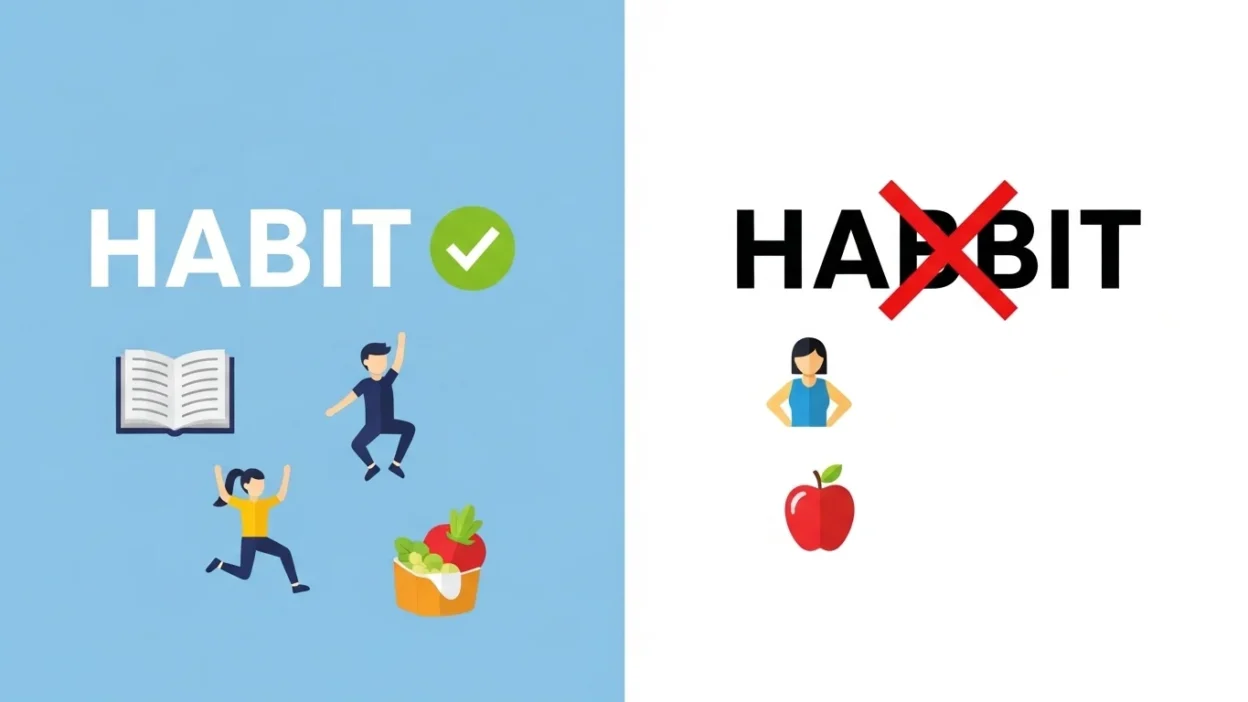
Many learners feel confused between “habbit” and “habit.” These two words look very similar, and the only difference is one extra “b.” Because of this, people often think both spellings are correct and can be used in the same way.
This confusion is very common, especially for students and ESL learners. English spelling rules are not always simple, and some words have double letters while others do not. When you see words like “rabbit” or “hobby,” it is easy to think “habit” should also have double “b.”
But the truth is very simple: only one of these words is correct in modern English.
In this article, you will learn the clear difference in very easy English. By the end, you will feel confident and never make this mistake again.
Quick Answer
- Habit = correct spelling (a regular action you do often)
- Habbit = incorrect spelling (not a real word)
✔ Correct: Drinking water daily is a healthy habit.
❌ Incorrect: Drinking water daily is a healthy habbit.
👉 Always use habit
Simple Origin and Background
Where Does “Habit” Come From?
The word “habit” comes from an old language where it meant “condition” or “behavior.” Over time, its meaning became simple:
👉 Something you do regularly without thinking much
This meaning is still used today.
Why Does “Habbit” Exist?
The word “habbit” does not come from proper English. It is simply a spelling mistake that people make because:
- They confuse it with words like rabbit
- They think the word needs double letters
- They are unsure about spelling rules
So, “habbit” has no real history in correct English.
Clear Explanation of the Difference
What Does “Habit” Mean?
Habit is a noun. It means:
- A regular action
- Something you do again and again
- A behavior that becomes natural over time
Examples:
- Brushing your teeth every morning is a good habit.
- He has a habit of checking his phone often.
- Reading before bed is her daily habit.
Habits can be:
- Good habits → helpful (exercise, studying)
- Bad habits → harmful (smoking, wasting time)
What About “Habbit”?
Habbit:
- Is not a real English word
- Has no meaning
- Is always a spelling mistake
If you use “habbit” in writing, it will be marked wrong in exams, schoolwork, or professional communication.
Comparison Table
| Feature | Habit | Habbit |
|---|---|---|
| Meaning | Regular action or behavior | No meaning |
| Usage | Correct and common | Incorrect |
| Spelling | One “b” | Two “b” (wrong) |
| Grammar | Proper English | Not accepted |
| Use in exams | Correct | Marked wrong |
| Everyday use | Very common | Never used |
Which One to Use and When
Always Use “Habit”
You should use habit in all situations where you talk about repeated actions.
Examples:
- Waking up early is a healthy habit.
- She has a habit of smiling at everyone.
- Saving money is a smart habit.
You can use it in:
- School essays
- Exams
- Emails
- Daily conversations
- Social media posts
Never Use “Habbit”
Avoid habbit completely. It should not be used in:
- Writing
- Speaking
- Text messages
- Any formal or informal situation
Even if you see it online, remember it is incorrect.
Common Mistakes People Make
1. Adding an Extra “B”
The most common mistake is writing:
- ❌ habbit
Instead of:
- ✔ habit
2. Confusing with Similar Words
Learners often think of words like:
- rabbit
- hobby
These words have double letters, so they assume “habit” does too. But this is not correct.
3. Thinking All Short Words Have Double Letters
Some students believe short words need double letters. This is not a rule in English. Each word has its own spelling.
4. Typing Too Fast
Sometimes the mistake happens simply because of fast typing. Always check your spelling before finishing your work.
Everyday Real-Life Examples
In Emails
- Developing good habits is important for success.
- He has a habit of replying late.
Incorrect:
- Developing good habbits is important.
On Social Media
- Build strong habits for a better life.
- Good habits bring good results.
In Daily Conversation
- I have a habit of drinking tea in the morning.
- She has a habit of being very organized.
In School or Homework
- Students should form good study habits.
- Writing daily improves your habit of learning.
In Self-Improvement Topics
- Success comes from small daily habits.
- Change your habits to change your life.
Short Learning Section for Students and Beginners
Simple Rule to Remember
👉 Habit has only ONE “b”
Easy Memory Trick
Think:
👉 “Habit is simple, so it has one ‘b’”
Practice Sentences
Fill in the blanks:
- Reading daily is a good ______.
✔ habit - He has a bad ______ of being late.
✔ habit - Exercise is a healthy ______.
✔ habit
Mini Exercise
Choose the correct word:
- Build a good habit/habbit.
✔ habit - She has a daily habit/habbit.
✔ habit - This is a useful habit/habbit.
✔ habit
FAQ Section
1. Is “habbit” a real word?
No, it is not a real English word. It is just a spelling mistake.
2. What does “habit” mean?
It means something you do regularly, like a daily action or behavior.
3. Why do people write “habbit”?
Because they confuse it with words that have double letters, like “rabbit.”
4. Can I use “habbit” in exams?
No. It will always be marked incorrect.
5. Is “habit” used in daily English?
Yes, it is very common in both speaking and writing.
6. What are examples of good habits?
Reading, exercising, and eating healthy food are good habits.
7. What are examples of bad habits?
Smoking, wasting time, or sleeping too late are bad habits.
8. How can I remember the correct spelling?
Just remember:
👉 “Habit = one ‘b’ only”
Conclusion
The difference between habbit and habit is very easy to understand once you know the rule.
- Habit is the correct and widely used word
- Habbit is incorrect and should never be used
This mistake happens because of confusion with other words that have double letters. But now you know the truth.
Always remember this simple rule:
👉 One “b” = correct (habit)
If you follow this, your English will be clearer, more accurate, and more confident.

Michael Anderson is a professional editor and senior contributor with a background in long-form content and strategic writing. He focuses on quality, structure, and credibility across all publications. Michael brings years of experience in content development and ensures high editorial standards for every project.