Karma symbolism represents the universal idea that actions create consequences. Across spiritual traditions and philosophical teachings, karma symbolizes the connection between choices and outcomes. The concept teaches that every action—good or harmful creates effects that influence future experiences.
Throughout history, karma symbolism has appeared in religious teachings, cultural stories, literature, and modern discussions about personal responsibility. These symbols remind people that life is shaped not only by chance but also by the intentions and actions they bring into the world.
What Is Karma Symbolism?
Karma symbolism refers to the images, concepts, and metaphors used to represent the law of cause and effect in human life. It suggests that actions influence future circumstances and personal growth.
Symbolically, karma may represent:
- Cause and effect
- Moral responsibility
- Balance and justice
- Personal growth through actions
- The cycle of actions and consequences
This symbolism highlights the idea that every choice can contribute to shaping the future.
Historical Meaning of Karma
The concept of karma originated in ancient spiritual traditions and philosophical teachings that explored how actions influence life experiences.
Ancient Spiritual Traditions
Early teachings explained karma as the principle that every action generates a corresponding reaction, influencing the future.
Philosophical Interpretations
Philosophers discussed karma as a moral framework encouraging people to act with kindness, wisdom, and responsibility.
Cultural Teachings
Stories and traditions often illustrate karma through characters whose actions lead to positive or negative outcomes.
These historical interpretations show how karma symbolism has guided ethical thinking and personal reflection.
Spiritual Meaning of Karma Symbolism ✨
Spiritually, karma symbolism represents balance, learning, and growth. Rather than punishment or reward, many interpretations describe karma as a natural process of learning through experiences.
Spiritually, karma may symbolize:
- Life lessons and personal development
- Balance between actions and outcomes
- Responsibility for choices
- Growth through experience
- Harmony between individuals and the world
These interpretations encourage awareness and thoughtful decision-making.
Common Symbols of Karma
Various symbols are used to represent karma and the cycle of cause and effect.
| Symbol | Meaning | Cultural Connection |
|---|---|---|
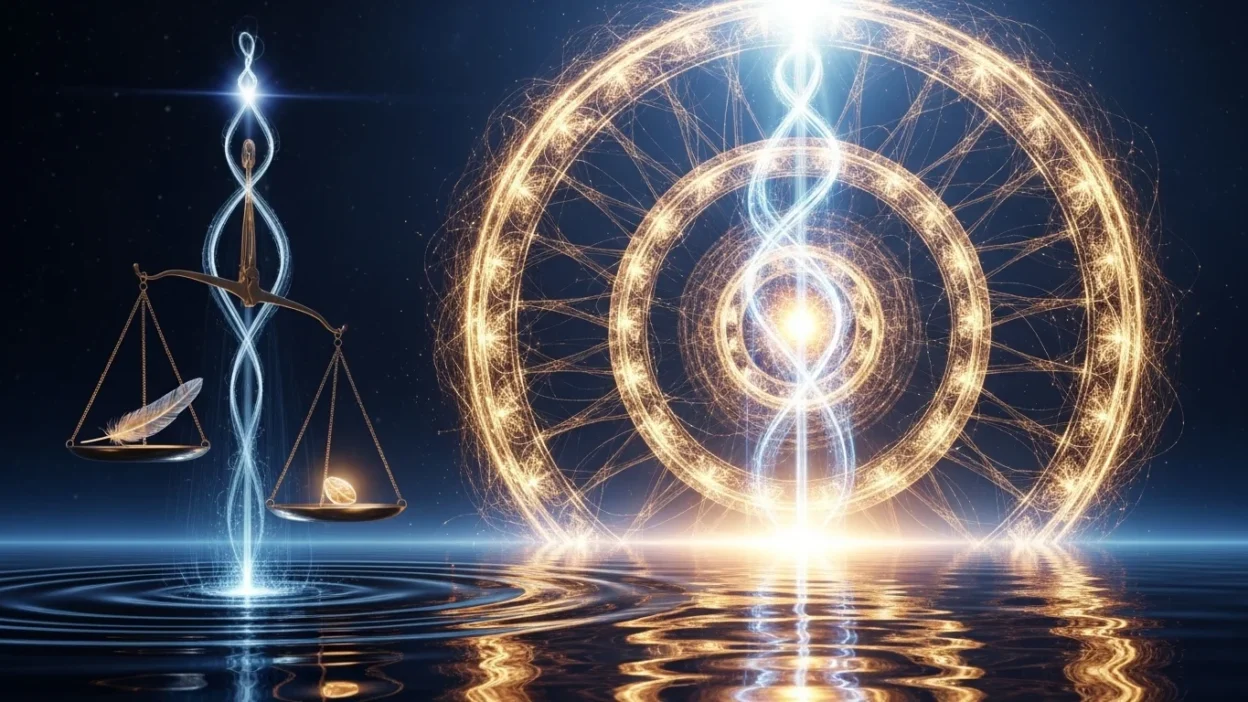
| Wheel | Cycle of actions and consequences | Spiritual traditions |
| Circle | Balance and continuity | Universal symbolism |
| Scales | Moral balance and justice | Cultural symbolism |
| Ripple in water | Actions creating effects | Philosophical metaphor |
| Path | Journey shaped by choices | Spiritual teachings |
These symbols highlight the continuous nature of actions and their results.
Karma Symbolism in Culture and Traditions
Many cultures use stories and teachings to explain karma symbolism and its importance.
Moral Stories
Traditional tales often show how characters’ actions influence their future, illustrating the principle of cause and effect.
Cultural Teachings
Communities emphasize kindness, honesty, and responsibility as ways to create positive outcomes.
Philosophical Reflection
Karma symbolism encourages people to reflect on how their behavior affects others and themselves.
These traditions promote ethical awareness and compassion.
Karma Symbolism in Literature and Art
Writers and artists frequently explore karma symbolism to demonstrate the consequences of actions and the importance of moral choices.
Common themes include:
- Justice and fairness
- Personal transformation through experience
- The impact of choices on future events
- The interconnectedness of human actions
Artworks sometimes depict circular patterns, ripples, or balanced scales to symbolize karma’s influence.
Karma Symbolism in Dreams
Dreams involving karma-related imagery may reflect thoughts about responsibility, personal decisions, or life lessons.
| Dream Scenario | Possible Meaning | Emotional Theme |
|---|---|---|
| Seeing a spinning wheel | Life cycles and consequences | Awareness |
| Dropping a stone into water | Actions creating effects | Reflection |
| Walking a winding path | Learning from experiences | Growth |
| Balancing scales | Seeking fairness | Justice |
| Returning to the same place | Repeated lessons | Realization |
These dream interpretations often encourage reflection on personal actions and future choices.
Modern Interpretation of Karma Symbolism
Today, karma symbolism is widely used to describe the connection between behavior and outcomes in everyday life. Many people interpret karma as a reminder to act with integrity, kindness, and responsibility.
In modern contexts, karma may symbolize:
- Accountability for actions
- Personal growth and learning
- The importance of kindness and fairness
- The long-term effects of choices
- Awareness of how actions influence others
These interpretations highlight the idea that thoughtful decisions contribute to positive experiences and relationships.
Symbols Associated With Karma
Several symbols commonly represent karma and its principles.
- Wheels and circular patterns
- Ripples in water
- Balanced scales
- Paths or journeys
- Interconnected designs
These images represent cycles, balance, and the ongoing effects of actions.
Secondary Keywords
- karma symbolism meaning
- spiritual meaning of karma
- karma dream meaning
- symbolism of cause and effect
- karma symbolism in culture
- symbols representing karma
Conclusion
Karma symbolism represents the powerful idea that actions influence outcomes. Across cultures and spiritual traditions, this concept encourages responsibility, compassion, and awareness of how choices shape experiences. Whether represented through wheels, circles, or ripples in water, karma reminds people that life is interconnected and that every action carries meaning.
Understanding karma symbolism can inspire thoughtful decisions, kindness toward others, and a deeper appreciation for the lessons life provides.
FAQs
What does karma symbolize?
Karma symbolizes the principle of cause and effect, meaning actions create consequences that influence future experiences.
Is karma considered spiritual?
Yes, karma is often viewed as a spiritual concept emphasizing balance, responsibility, and learning through life experiences.
What symbols represent karma?
Common symbols include wheels, circles, ripples in water, scales, and paths representing life journeys.
What does dreaming about karma mean?
Dreams involving karma-related symbols may reflect reflection on personal actions, choices, and lessons learned.
Can karma influence the future?
Many interpretations suggest that positive actions and intentions can contribute to positive outcomes over time.

Emily Carter is a content writer and editor based in the United States, specializing in lifestyle, wellness, and personal development topics. With a passion for clear and engaging storytelling, she creates content that connects with readers and delivers practical value. Emily focuses on making complex ideas easy to understand and relatable.