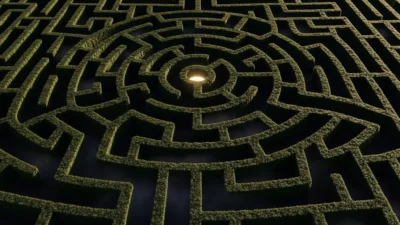
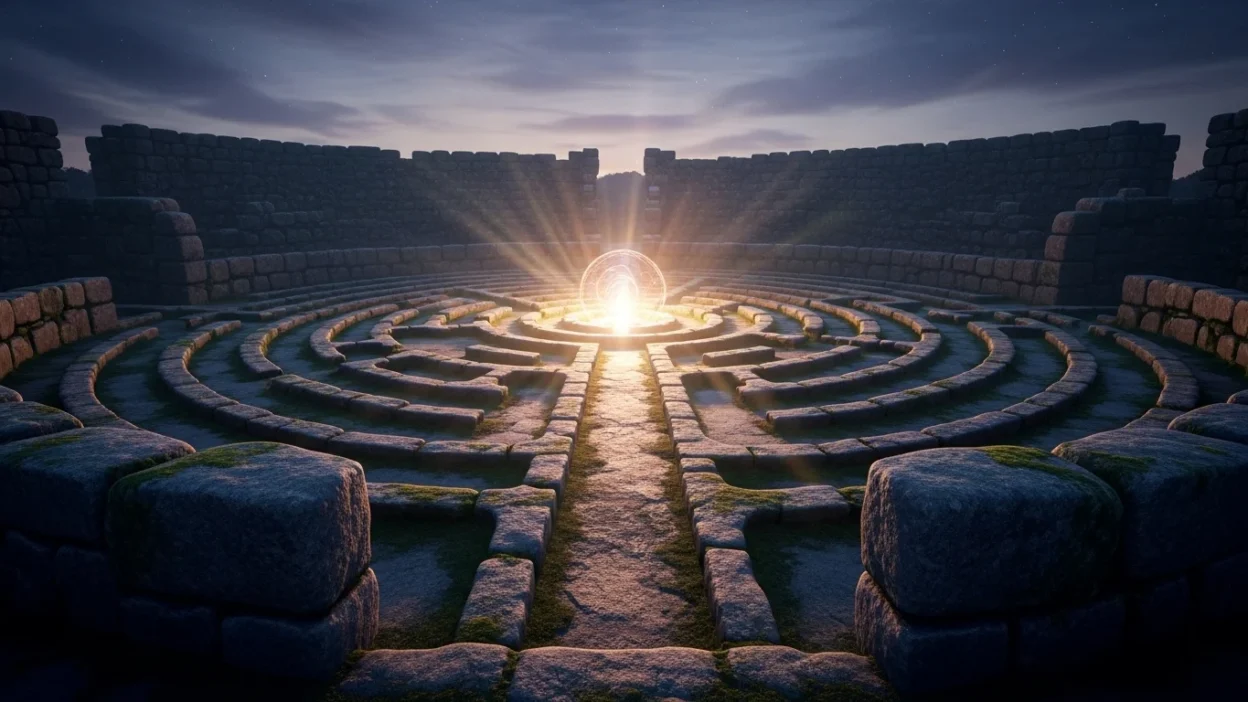
Labyrinth symbolism represents the complex journey of life, self-discovery, and the search for meaning. Unlike a maze, which is designed to confuse, a labyrinth typically has a single winding path leading to a center, symbolizing a purposeful journey inward and outward again. Throughout history, labyrinths have appeared in mythology, spiritual practices, art, and architecture as powerful symbols of transformation and reflection.
From ancient stories to modern interpretations, labyrinth symbolism reflects the idea that life’s path may be intricate, but it often leads to growth, understanding, and clarity.
What Is Labyrinth Symbolism?
Labyrinth symbolism refers to the meanings associated with labyrinth structures and their metaphorical representation of life’s journey. The winding path of a labyrinth symbolizes movement through challenges, thoughts, and experiences toward a meaningful center.
Symbolically, a labyrinth may represent:
- The journey of life
- Self-discovery and reflection
- Spiritual growth and transformation
- Navigating challenges
- Finding clarity and purpose
These meanings highlight how labyrinths symbolize both the process and the destination of personal growth.
Historical Origins of Labyrinth Symbolism
Labyrinths have been used in various cultures for thousands of years.
Ancient Mythology
One of the most famous labyrinth stories comes from Greek mythology, where a complex structure was built to contain a powerful creature, symbolizing mystery and challenge.
Sacred Architecture
Labyrinth designs have been found in ancient temples and sacred spaces, often used for meditation or symbolic journeys.
Cultural Traditions
In many traditions, walking a labyrinth was considered a spiritual practice representing reflection and inner exploration.
These historical uses show how labyrinths symbolized both physical and spiritual journeys.
Spiritual Meaning of Labyrinth Symbolism ✨
Spiritually, labyrinth symbolism represents the inward journey toward understanding and the outward journey toward clarity. Walking a labyrinth is often seen as a meditative act that encourages focus, patience, and awareness.
Spiritually, labyrinths may symbolize:
- Inner reflection and awareness
- The path to enlightenment
- Transformation through experience
- Letting go of distractions
- Connection between mind and spirit
These meanings emphasize the labyrinth as a tool for contemplation and growth.
Common Symbolic Meanings of the Labyrinth
| Symbolic Element | Meaning | Interpretation |
|---|---|---|
| Winding path | Life’s journey | Growth through experience |
| Center point | Clarity or truth | Achievement of understanding |
| Circular design | Unity and continuity | Balance |
| Entry and exit | Beginning and return | Transformation |
| Turns and curves | Challenges and decisions | Adaptability |
These symbolic elements reflect the idea of movement toward knowledge and self-awareness.
Labyrinth Symbolism in Culture and Traditions
Labyrinths appear in many cultural and spiritual traditions.
Mythological Symbol
Stories often use labyrinths to represent complex challenges or hidden truths.
Meditation Practice
Walking a labyrinth is sometimes used as a form of meditation, symbolizing a journey toward inner peace.
Artistic Representation
Labyrinth patterns are used in art and design to symbolize complexity, balance, and harmony.
These traditions highlight the labyrinth as a universal symbol of life’s journey.
Labyrinth Symbolism in Literature and Art
Writers and artists frequently use labyrinths to explore themes of mystery and transformation.
Common themes include:
- Navigating complex situations
- Searching for truth or purpose
- The journey of self-discovery
- Overcoming confusion or uncertainty
Artists often depict labyrinths with intricate patterns to represent the complexity of thought and experience.
Labyrinth Symbolism in Dreams
Dreams involving labyrinths often symbolize confusion, decision-making, or the search for direction.
| Dream Scenario | Possible Meaning | Emotional Theme |
|---|---|---|
| Walking in a labyrinth | Personal journey | Reflection |
| Lost in a labyrinth | Uncertainty | Confusion |
| Finding the center | Clarity or success | Relief |
| Exiting a labyrinth | Resolution | Achievement |
| Watching a labyrinth | Observing life choices | Awareness |
These dream interpretations often relate to navigating challenges and seeking understanding.
Modern Interpretation of Labyrinth Symbolism
In modern culture, labyrinth symbolism is often used as a metaphor for life’s journey and personal development. It represents the idea that even complex paths can lead to meaningful outcomes.
Today, labyrinth symbolism may represent:
- Personal growth and transformation
- Problem-solving and patience
- Emotional and mental clarity
- The search for purpose
- Mindfulness and reflection
These meanings show how labyrinth symbolism continues to resonate in contemporary life.
Symbols Associated With Labyrinths
Several images commonly appear with labyrinth symbolism.
- Circular patterns
- Spiral designs
- Pathways and trails
- Centers or focal points
- Stone or mosaic patterns
These symbols emphasize structure, movement, and balance.
Secondary Keywords
- labyrinth symbolism meaning
- spiritual meaning of labyrinth
- labyrinth dream meaning
- symbolism of labyrinth in mythology
- labyrinth path symbolism
- labyrinth symbolism in culture
Conclusion
Labyrinth symbolism represents the journey of life, filled with twists, challenges, and moments of clarity. Through mythology, spirituality, and art, the labyrinth has become a powerful symbol of self-discovery, reflection, and transformation. Its winding path reminds us that even complex journeys can lead to understanding and growth.
Understanding labyrinth symbolism encourages patience, awareness, and appreciation for the process of finding meaning in life.
FAQs
What does a labyrinth symbolize?
A labyrinth symbolizes life’s journey, self-discovery, and the process of navigating challenges toward clarity and understanding.
Is a labyrinth the same as a maze?
No, a labyrinth typically has one path leading to the center, while a maze has multiple paths designed to confuse.
What does dreaming about a labyrinth mean?
Dreaming about a labyrinth may symbolize confusion, decision-making, or the search for direction.
Why are labyrinths used in meditation?
Labyrinths are used as a meditative tool to encourage focus, reflection, and inner awareness.
What does the center of a labyrinth represent?
The center often symbolizes clarity, truth, or the achievement of understanding.

Michael Anderson is a professional editor and senior contributor with a background in long-form content and strategic writing. He focuses on quality, structure, and credibility across all publications. Michael brings years of experience in content development and ensures high editorial standards for every project.