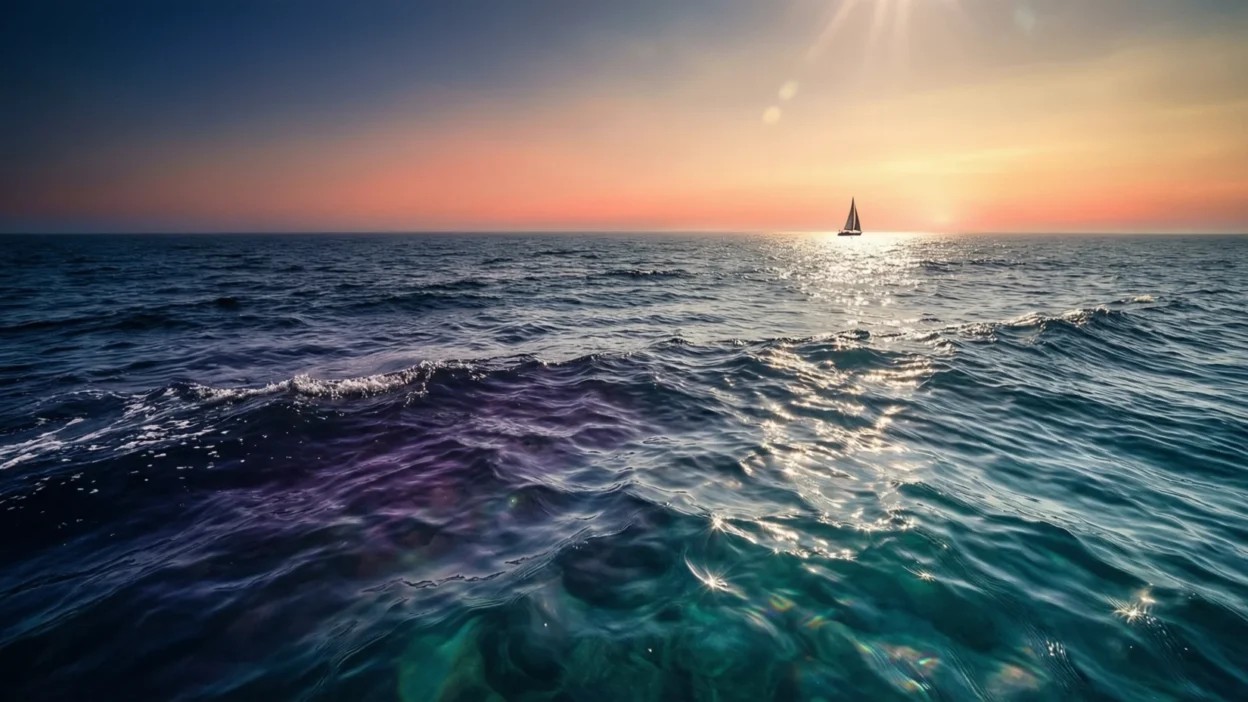
Ocean symbolism appears across spiritual traditions, cultures, religions, dreams, and art as a profound image of depth and vastness.
Endless and ever moving, the ocean represents mystery, emotion, the subconscious, creation, and the unknown. Its boundless nature mirrors the infinite complexity of life and the human soul.
What Is Ocean Symbolism?
Ocean symbolism refers to the symbolic meanings associated with the ocean, shaped by its depth, power, and immensity. Across belief systems, the ocean symbolizes mystery, emotional depth, transformation, and infinite potential.
The ocean reminds us that much of life exists beneath the surface.
Core Symbolic Meanings of the Ocean
The ocean carries layered symbolic meanings rooted in its vastness.
| Symbolic Meaning | Interpretation |
|---|---|
| Mystery | The unknown, hidden truths |
| Power | Strength, force of nature |
| Depth | Emotions, subconscious |
| Infinity | Limitlessness, eternity |
| Creation | Origin of life |
| Transformation | Change and renewal |
Spiritual Meaning of Ocean Symbolism
Spiritually, the ocean symbolizes divine consciousness, emotional healing, and spiritual depth. It represents unity, where all streams of life return.
Spiritual themes linked to the ocean include:
- Connection to universal energy
- Emotional purification
- Surrender to higher wisdom
The ocean encourages us to trust the deeper flow of existence.
Cultural and Mythological Symbolism of the Ocean
Across civilizations, the ocean has been both revered and feared:
- Ancient cultures: Oceans symbolized chaos and creation
- Mythology: Oceans were homes of gods and mythical beings
- Indigenous traditions: Oceans represented ancestors and spiritual memory
Cultures viewed the ocean as a source of life, danger, and divine mystery.
Ocean Symbolism in Religion
In religious symbolism, the ocean often represents:
- Divine power and judgment
- Purification and rebirth
- Eternal life and divine mystery
Sacred traditions portray the ocean as a symbol of God’s infinite nature and authority.
Ocean Symbolism in Literature and Art
In literature and art, the ocean symbolizes:
- Emotional depth and longing
- Exploration and freedom
- Inner conflict and discovery
Artists use the ocean to express vast emotion, isolation, and wonder.
Dream Meaning of the Ocean
Dreams involving the ocean often reflect emotional states and subconscious themes.
Common ocean dream interpretations:
- Calm ocean: Emotional balance and peace
- Stormy ocean: Inner turmoil or conflict
- Diving into ocean: Self-exploration
- Being lost at sea: Uncertainty or overwhelm
Ocean dreams invite reflection on emotions beneath the surface.
Modern Meaning of Ocean Symbolism
In modern symbolism, the ocean represents:
- Emotional intelligence and depth
- Environmental awareness
- Freedom and exploration
Today, the ocean symbolizes connection, sustainability, and the unknown.
Conclusion: The Timeless Message of Ocean Symbolism
Ocean symbolism reminds us that life is vast, powerful, and deeply mysterious. Whether spiritual, cultural, or modern, the ocean teaches humility, emotional depth, and respect for the unknown. Endless and alive, the ocean remains a timeless symbol of infinite possibility.
Frequently Asked Questions (FAQs)
What does the ocean symbolize spiritually?
Spiritually, the ocean symbolizes divine depth, unity, emotional healing, and infinite consciousness.
Is the ocean a symbol of emotion?
Yes. The ocean often represents deep emotions and the subconscious mind.
What does dreaming of the ocean mean?
Dreaming of the ocean reflects emotional state, inner depth, or life uncertainty.
Why is the ocean associated with mystery?
Because much of it is unexplored, it symbolizes the unknown and hidden truth.
What does a calm ocean symbolize?
A calm ocean symbolizes peace, balance, and emotional clarity.

Emily Carter is a content writer and editor based in the United States, specializing in lifestyle, wellness, and personal development topics. With a passion for clear and engaging storytelling, she creates content that connects with readers and delivers practical value. Emily focuses on making complex ideas easy to understand and relatable.