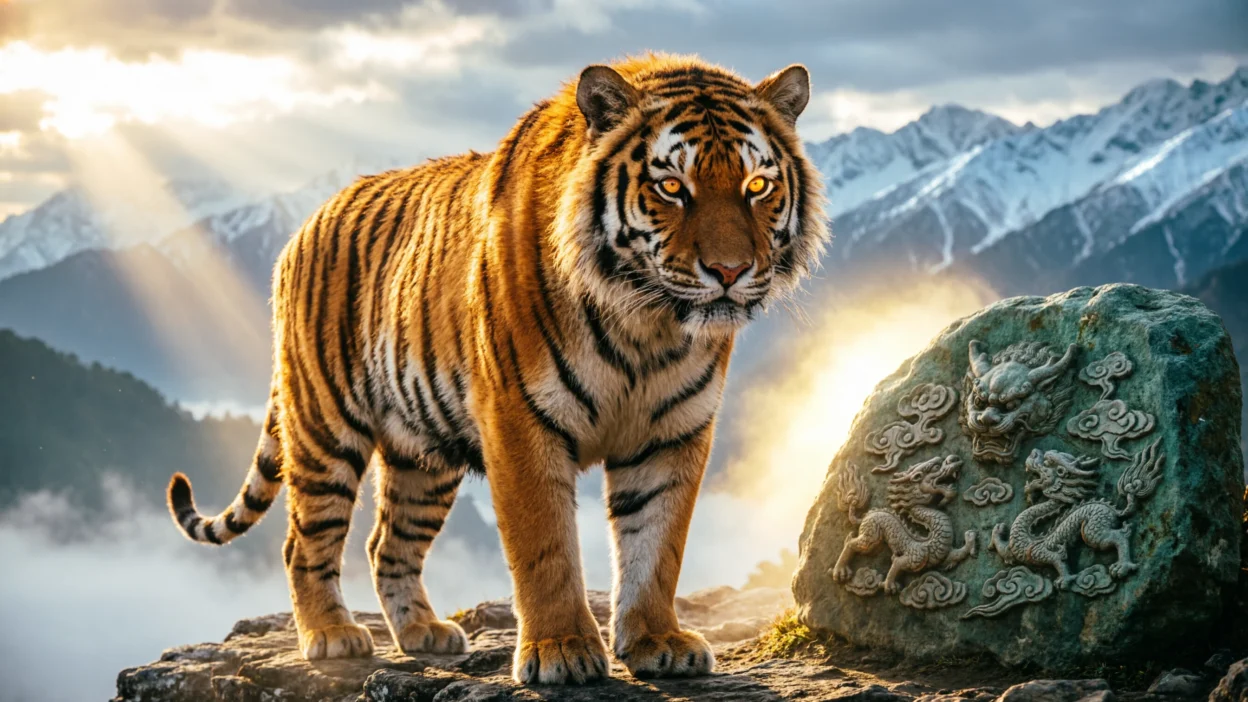
Tiger symbolism represents power, courage, protection, and raw instinct. Across cultures and centuries, the tiger has stood as a majestic symbol of strength, leadership, independence, and spiritual authority. From Asian mythology to modern interpretations, the tiger embodies both ferocity and grace.
Let’s explore the powerful and layered meanings behind tiger symbolism in spirituality, culture, history, dreams, and modern life.
What Does a Tiger Symbolize?
At its core, tiger symbolism reflects strength balanced with awareness. The tiger is both patient and powerful — calm yet capable of decisive action.
Core Symbolic Meanings
- Courage and bravery
- Personal power
- Protection and guardianship
- Independence
- Confidence
- Passion and intensity
The tiger reminds us to trust our instincts and stand firmly in our personal power.
Spiritual Meaning of Tiger Symbolism
Spiritually, the tiger represents inner strength and mastery over fear. It is often seen as a guide for those learning to harness their confidence and authority.
Personal Power & Confidence
The tiger symbolizes courage in facing life’s challenges. Spiritually, it encourages bold decisions and self-trust.
Protection & Guardianship
In many traditions, the tiger is considered a protective spirit that guards against negative energies.
Balance of Strength & Patience
Tigers move with calm precision. They teach that true power does not need constant display — it acts at the right moment.
The spiritual tiger urges alignment between instinct and wisdom.
Tiger Symbolism in History and Culture
Chinese Symbolism
In Chinese culture, the tiger is one of the 12 zodiac animals and represents bravery, competitiveness, and protection. It is seen as a guardian against evil spirits.
The White Tiger is one of the Four Sacred Symbols in Chinese mythology, representing:
- Strength
- Military power
- Autumn season
- Protection
The tiger is a symbol of authority and courage.
Indian and Hindu Symbolism
In Hindu tradition, the goddess Durga rides a tiger, symbolizing divine power and victory over fear and evil.
Here, tiger symbolism represents:
- Strength guided by righteousness
- Divine protection
- Spiritual authority
- Fearlessness
The tiger becomes a vehicle of divine energy.
Korean and East Asian Folklore
In Korean folklore, the tiger symbolizes both protection and unpredictability. It is often portrayed as a mountain guardian spirit.
In East Asian art, tigers symbolize:
- Protection from evil
- Authority
- Natural balance
Tiger Symbolism in Literature and Art
Tigers frequently represent untamed power in storytelling.
- In poetry, the tiger symbolizes fierce beauty and intensity.
- In art, it represents dominance and sovereignty.
- In folklore, it often guards sacred lands or treasures.
Writers use the tiger to reflect inner fire, leadership, and primal instinct.
Tiger Symbolism in Dreams
Dreaming of a tiger often relates to power, fear, or ambition.
Common Tiger Dream Meanings
| Dream Situation | Possible Meaning |
|---|---|
| Seeing a tiger | Hidden strength awakening |
| Being chased by a tiger | Avoiding confrontation or fear |
| Calm tiger nearby | Controlled power |
| Attacking tiger | Overwhelming emotions |
| White tiger | Spiritual protection and rare strength |
Tigers in dreams usually signal that you are confronting power — either your own or someone else’s.
Modern Meaning of Tiger Symbolism
In modern culture, tiger symbolism represents ambition, leadership, and bold identity.
It often symbolizes:
- Competitive spirit
- Determination
- Confidence
- Independence
- Charisma
Sports teams, brands, and leaders use tiger imagery to communicate dominance and strength.
The tiger today represents unapologetic authenticity.
Positive and Negative Meanings of Tiger Symbolism
Positive Interpretations
- Courage
- Leadership
- Protection
- Determination
- Passion
- Confidence
Negative Interpretations
- Aggression
- Impulsiveness
- Dominance without balance
- Uncontrolled anger
The tiger teaches that strength must be balanced with awareness.
Conclusion
Tiger symbolism represents courage, power, protection, and fierce independence. Across cultures and spiritual traditions, the tiger stands as a guardian and leader fearless yet controlled. It teaches us to embrace our inner strength while maintaining balance and wisdom.
The tiger’s message is powerful: trust your instincts, act with confidence, and own your strength.
FAQs About Tiger Symbolism
1. What does a tiger symbolize spiritually?
Spiritually, a tiger symbolizes courage, protection, personal power, and mastery over fear.
2. Is the tiger a good omen?
In many cultures, especially in Asia, the tiger is considered a symbol of protection, luck, and authority.
3. What does dreaming about a tiger mean?
Tiger dreams often represent hidden strength, ambition, confrontation, or emotional intensity.
4. What does a white tiger symbolize?
A white tiger symbolizes rare strength, spiritual protection, and powerful transformation.
5. Why is the tiger associated with power?
Because of its strength, hunting ability, and commanding presence, the tiger naturally symbolizes dominance and authority.

Daniel Brooks is a technology and business writer with experience covering innovation, startups, and digital tools. His work emphasizes clarity, accuracy, and real-world application. Daniel aims to help readers understand emerging technologies and make informed decisions in a fast-changing digital landscape.