Many people feel confused when they see the words “vender” and “vendor.” They look almost the same, and both seem related to selling something. Because of this, learners often think they can use either word in the same way.
But here is the truth: only one of these words is commonly used in modern English. The other one is rare and often considered incorrect in everyday writing.
This article will explain everything in very simple English so you can understand the difference clearly and use the correct word with confidence.
Quick Answer
- Vendor = a person or company that sells something (correct and common)
- Vender = very rare spelling, almost never used today
- In most cases, you should always use vendor
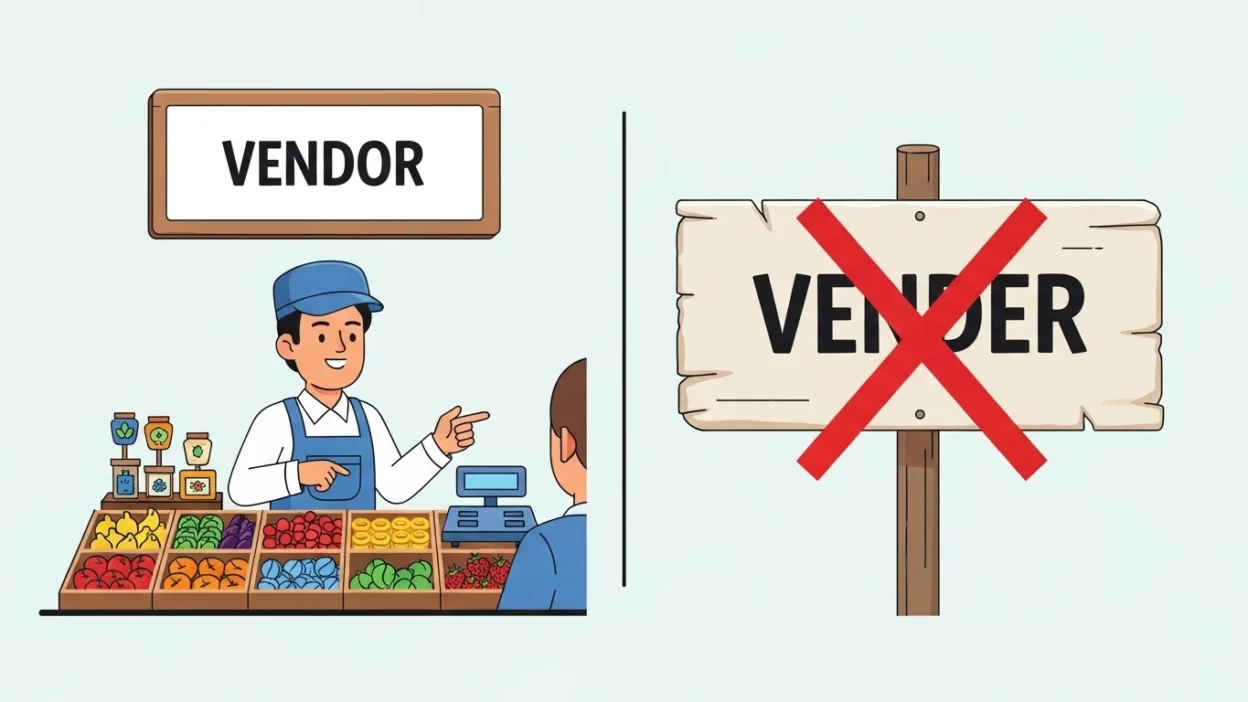
✔ Correct: The vendor sold fresh fruit.
❌ Incorrect: The vender sold fresh fruit.
Simple Origin and Background
To understand the difference, it helps to look at where these words come from.
Both vendor and vender come from the same old root word, which means “to sell.” Over time, English changed, and different spellings appeared.
- Vendor became the standard spelling in modern English
- Vender was used in older times but slowly disappeared
Today, vendor is the accepted and correct form in almost all situations.
So even though both words have the same origin, only one survived in everyday use.
Clear Explanation of the Difference
What Does “Vendor” Mean?
A vendor is:
- A person who sells goods (things)
- A company that sells products or services
You can see vendors in many places:
- Street food sellers
- Shop owners
- Online sellers
- Companies providing services
Examples:
- The vendor is selling ice cream.
- We hired a vendor for the event.
- The company works with many software vendors.
What Does “Vender” Mean?
The word vender:
- Has the same meaning as vendor (someone who sells)
- But it is not used in modern English
- It may appear in old texts or legal documents, but very rarely
In simple words:
“Vender” is outdated and should be avoided.
Comparison Table
| Feature | Vendor | Vender |
|---|---|---|
| Meaning | Someone who sells goods/services | Same meaning |
| Usage | Very common | Very rare |
| Modern English | Correct | Not recommended |
| Seen in | Daily life, business, online | Old or historical texts |
| Spelling | Standard spelling | Outdated spelling |
Which One to Use and When
Always Use “Vendor”
You should use vendor in:
- School writing
- Emails
- Business communication
- Exams
- Daily conversation
- Online content
Examples:
- The vendor gave us a discount.
- We need to choose a reliable vendor.
- The street vendor sells snacks.
Avoid Using “Vender”
Do not use vender unless:
- You are reading or studying old texts
- You are quoting something exactly
Even in these cases, you usually don’t need to write it yourself.
Common Mistakes People Make
1. Thinking Both Words Are Equal
Many learners think:
“Vendor and vender are just different spellings.”
This is not true. Only vendor is correct today.
2. Spelling Errors
People often write:
- ❌ vender
Instead of: - ✔ vendor
This mistake happens because the words sound similar.
3. Using “Vender” in Formal Writing
Using vender in emails, essays, or work can make your writing look incorrect or outdated.
4. Mixing with Similar Words
Some learners confuse vendor with:
- “vending” (like vending machines)
- “sell” or “seller”
Remember:
- Vendor = the person selling
Everyday Real-Life Examples
1. In Emails
Correct:
- We will contact the vendor for more details.
- The vendor has confirmed the delivery.
Incorrect:
- We will contact the vender.
2. In News
- The city removed illegal street vendors.
- Local vendors are protesting new rules.
You will always see vendor, not vender.
3. On Social Media
- Support small vendors!
- This vendor has amazing products.
Again, vendor is used everywhere.
4. In Daily Conversation
- I bought this from a street vendor.
- The vendor gave me a good price.
5. In Business and Work
- We are choosing a new vendor.
- The vendor agreement is ready.
In professional settings, using the correct word is very important.
Short Learning Section for Students and Beginners
Here is a simple way to remember:
👉 Vendor = Correct word (modern English)
👉 Vender = Old word (do not use)
Easy Trick
Think of:
- Vendor = “standard” spelling
- It is used in books, schools, and real life
Practice Sentences
Fill in the blank:
- The ______ is selling fruits.
✔ vendor - We hired a ______ for catering.
✔ vendor - The ______ delivered the goods.
✔ vendor
Mini Exercise
Choose the correct word:
- The vender/vendor arrived early.
✔ vendor - This vender/vendor is reliable.
✔ vendor - We contacted the vender/vendor.
✔ vendor
FAQ Section
1. Is “vender” a real word?
Yes, it exists, but it is very rare and outdated. Most people do not use it today.
2. Which word should I use in writing?
You should always use vendor in modern writing.
3. Are “vendor” and “vender” the same?
They have the same meaning, but only vendor is correct in current English.
4. Why do people still use “vender”?
Some people use it by mistake, or they see it in old texts and copy it.
5. Is “vender” wrong?
It is not completely wrong, but it is not recommended and may look incorrect today.
6. Can I use “vender” in exams?
No. You should always use vendor in exams.
7. Is “vendor” used in business English?
Yes, very commonly. It is an important word in business and daily communication.
8. What is a simple meaning of vendor?
A vendor is a person or company that sells something.
Conclusion
The difference between vender and vendor is simple once you understand it clearly.
- Vendor is the correct, modern, and widely used word
- Vender is outdated and rarely used
If you want your English to be clear, correct, and natural, always choose vendor.
Remember this simple rule:
👉 When in doubt, use “vendor.”
Once you follow this, you will never be confused again.

Daniel Brooks is a technology and business writer with experience covering innovation, startups, and digital tools. His work emphasizes clarity, accuracy, and real-world application. Daniel aims to help readers understand emerging technologies and make informed decisions in a fast-changing digital landscape.