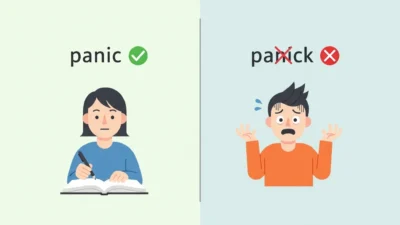

Many learners feel confused between “offerred” and “offered.” These words look very similar, and the only difference is an extra “r.” Because English spelling rules can be tricky, students often wonder whether they should double the final letter when adding -ed to a verb.
This confusion is common among beginners, ESL learners, and even native speakers. Some words require double consonants, while others do not. Understanding the correct rule makes it easy to choose the right spelling.
The truth is simple: only one of these forms is correct. This article explains the difference in very easy English so you can understand and remember it confidently.
Quick Answer
- Offered = correct spelling (past tense of “offer”)
- Offerred = incorrect spelling
✔ Correct: She offered help to her friend.
❌ Incorrect: She offerred help to her friend.
👉 Always use offered.
Simple Origin and Background
The Base Word: “Offer”
The word “offer” is a verb and a noun. It means:
- To give something willingly
- To propose or suggest something
- To present help, services, or opportunities
Examples:
- He offered me a job.
- She offered her support.
- The company made an attractive offer.
The word comes from Latin roots meaning “to present” or “to bring forward.”
How Is the Past Tense Formed?
To form the past tense, we simply add -ed to the base verb:
- offer + ed → offered
This creates the correct past tense and past participle form.
Clear Explanation of the Difference
What Does “Offered” Mean?
Offered is the correct past tense of offer. It describes an action that has already happened. It can also function as a past participle in perfect tenses.
As a Past Tense Verb
Examples:
- She offered me a cup of tea.
- They offered assistance during the crisis.
- He offered an apology.
As a Past Participle
Examples:
- She has offered her help.
- The company has offered new services.
- They had offered a discount before the sale ended.
What About “Offerred”?
Offerred is incorrect. It is a spelling mistake caused by wrongly doubling the final “r.”
- It is not recognized in standard English.
- It does not appear in dictionaries.
- It will be marked wrong in exams and professional writing.
Therefore, offerred should never be used.
Comparison Table
| Feature | Offered | Offerred |
|---|---|---|
| Meaning | Past tense of “offer” | No meaning |
| Usage | Correct and widely accepted | Incorrect |
| Spelling | Single “r” before “-ed” | Double “r” (wrong) |
| Grammar | Proper English | Not accepted |
| Use in Exams | Correct | Marked wrong |
| Dictionary Status | Recognized | Not recognized |
Which One to Use and When
Use “Offered”
Use offered when describing something that was given, proposed, or presented in the past.
Examples:
- She offered her seat to an older people man.
- He offered to help with the project.
- The teacher offered extra classes.
- The store offered huge discounts.
- They offered their sincere apologies.
Avoid “Offerred”
Never use offerred in:
- School assignments
- Exams
- Essays and reports
- Emails and professional communication
- Social media posts
It is always incorrect.
Common Mistakes People Make
1. Doubling the Final “R” Incorrectly
Many learners assume that verbs ending in -er require a double consonant when adding -ed.
Incorrect:
- ❌ offerred
Correct:
- ✔ offered
2. Confusing Spelling Rules
Some verbs double the final consonant before adding -ed, but offer does not follow this pattern because the stress falls on the first syllable.
Correct examples:
- prefer → preferred
- refer → referred
However:
- offer → offered (not offerred)
3. Spelling Based on Pronunciation
Since the pronunciation does not clearly indicate the number of “r” letters, learners may guess incorrectly.
4. Typing Too Fast
Simple typing errors often result in misspellings.
Everyday Real-Life Examples
In Emails
Correct:
- We offered our support during the meeting.
- She offered to assist with the project.
Incorrect:
- We offerred our support during the meeting.
In Business and Workplaces
- The company offered a new position.
- They offered competitive salaries.
- He offered valuable advice.
On Social Media
- She offered kind words of encouragement.
- The brand offered amazing discounts yesterday.
In Daily Conversations
- He offered me a ride home.
- They offered their congratulations.
In School or Homework
- The teacher offered extra guidance.
- She offered an excellent answer in class.
Short Learning Section for Students and Beginners
Simple Rule to Remember
👉 Offer + ed = Offered (one “r”).
Easy Memory Trick
Think:
👉 “Offer has one ‘r,’ so offered also has one ‘r.’”
This simple reminder helps you avoid the common mistake.
Practice Sentences
Fill in the blanks:
- She ______ her help yesterday.
✔ offered - They ______ a discount to customers.
✔ offered - He ______ useful advice.
✔ offered
Mini Exercise
Choose the correct word:
- She offerred/offered to help.
✔ offered - The company offerred/offered a job.
✔ offered - They have offerred/offered their support.
✔ offered
FAQ Section
1. Is “offerred” a real word?
No, it is a spelling mistake and not accepted in standard English.
2. What does “offered” mean?
It is the past tense of “offer,” meaning to give or present something.
3. Why is “offerred” incorrect?
Because the verb “offer” does not require doubling the final “r” before adding -ed.
4. What is the base form of “offered”?
The base word is offer.
5. Can I use “offerred” in exams?
No. It will be marked incorrect.
6. Is “offered” used in formal writing?
Yes, it is commonly used in both formal and informal English.
7. What is the present participle of “offer”?
The present participle is offering.
8. How can I remember the correct spelling?
Remember: One “r” in offer means one “r” in offered.
Conclusion
The difference between offerred and offered is simple and clear:
- Offered is the correct spelling and the past tense of “offer.”
- Offerred is incorrect and should never be used.
This mistake occurs because of confusion about doubling consonants. By remembering that offer has only one “r,” you can always spell it correctly.
👉 Final Tip: Always write “offered,” never “offerred.”
With this knowledge, you can write confidently and accurately in everyday and academic English.

Sophia Reynolds is a digital writer and researcher with a focus on modern trends, productivity, and online education. She enjoys exploring new ideas and presenting them in a simple, reader-friendly way. Sophia is committed to creating informative and trustworthy content that helps audiences stay informed and inspired.