Many English learners confuse “it” and “its” because the words look very similar. However, they have completely different grammatical functions.
The key idea: subject pronoun vs possessive form.
Understanding this difference will help improve your grammar and writing accuracy.
Quick Answer
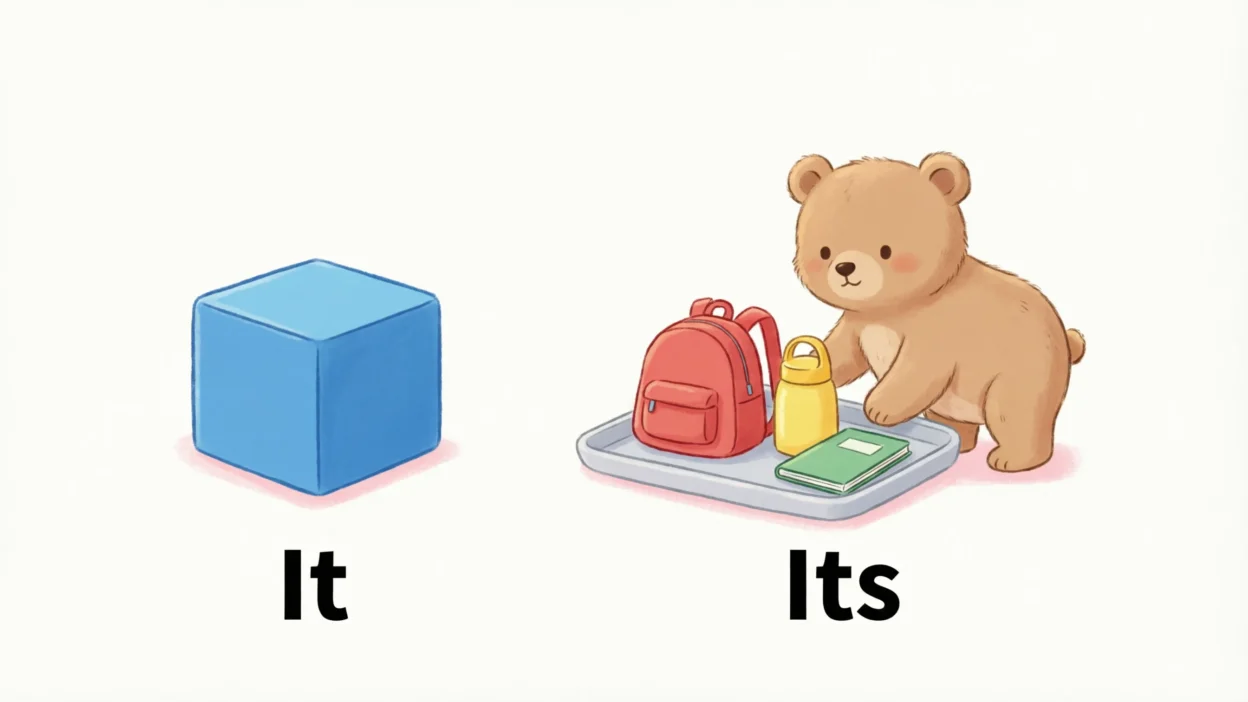
- ✅ It – A pronoun used for things, animals, or ideas
- ✅ Its – A possessive word meaning “belonging to it”
- ✏️ Remember: Its shows ownership
Clear Explanation
What Does “It” Mean?
It is a pronoun.
👉 It replaces:
- objects
- animals
- ideas
- situations
Examples:
- It is raining.
- I found a book, and it was old.
- The dog barked because it was hungry.
- It looks beautiful outside.
- I bought a phone, but it stopped working.
👉 “It” usually acts as:
- the subject
- the object in a sentence
Common Uses of “It”
1. Talking About Objects
- It is expensive.
- It broke yesterday.
2. Talking About Weather or Time
- It is sunny today.
- It is late.
3. Referring to Animals or Situations
- The cat cleaned itself because it was dirty.
What Does “Its” Mean?
Its is a possessive adjective.
👉 It means:
- belonging to it
Examples:
- The company changed its policy.
- The dog wagged its tail.
- The tree lost its leaves.
- The machine stopped because its battery died.
- Every country has its own culture.
👉 “Its” always shows ownership.
Key Difference
| Feature | It | Its |
|---|---|---|
| Grammar Type | Pronoun | Possessive adjective |
| Meaning | Refers to a thing/animal | Belonging to it |
| Example | It is sleeping | Its bed is soft |
Which One to Use and When
Use “It” When:
- Referring to a thing, animal, or idea
Examples:
- It works well.
- It is cold outside.
- I found it yesterday.
- It seems interesting.
- It fell off the table.
Use “Its” When:
- Showing ownership
Examples:
- Its color changed
- Its engine failed
- Its owner arrived
- Its design improved
- Its wheels were damaged
Common Mistakes People Make
1. Confusing “Its” and “It’s”
This is extremely common.
Difference:
- Its = possessive
- It’s = “it is” or “it has”
Examples:
- Its tail is long.
- It’s raining today.
2. Using “It” for Possession
❌ The cat hurt it paw
✅ The cat hurt its paw
3. Adding Apostrophes Incorrectly
Possessive pronouns usually do not use apostrophes.
Examples:
- his
- hers
- yours
- its
4. Forgetting Sentence Function
“It” replaces nouns.
“Its” describes nouns.
5. Mixing Spoken and Written Grammar
Many people pronounce them similarly.
Easy Memory Trick
👉 Its = ownership
👉 Think:
- his
- her
- its
No apostrophe needed.
Real-Life Examples
Correct Use of “It”
- It is very cold today.
- I saw a bird, and it flew away.
- It seems difficult at first.
Correct Use of “Its”
- The company changed its logo.
- The car lost its tire.
- The dog wagged its tail happily.
Practice Exercise
Fill in the blanks:
- The cat cleaned ______ fur.
- ______ is raining outside.
- The phone lost ______ signal.
Answers:
- its
- It
- its
Quick Quiz
- Which word shows possession?
a) It
b) Its - Which word acts as a pronoun?
a) Its
b) It - Which sentence is correct?
a) The dog wagged it tail
b) The dog wagged its tail
Correct Answers:
- b) Its
- b) It
- b) The dog wagged its tail
Why This Confusion Happens
The confusion happens because:
- the words look almost identical
- pronunciation is similar
- English apostrophe rules can be confusing
However:
- it refers to something
- its shows ownership
Helpful Tip for Better Writing
Try replacing:
- its with “his” or “her”
If the sentence still makes sense, “its” is correct.
Example:
- The dog wagged its tail.
- The dog wagged his tail. ✅
Conclusion
The difference between “it” and “its” is grammatical but very important. It is a pronoun used for things, animals, or ideas, while its is a possessive word showing ownership.
👉 It = pronoun
👉 Its = belonging to it
Learning this distinction will make your English writing much clearer and more accurate.

Daniel Brooks is a technology and business writer with experience covering innovation, startups, and digital tools. His work emphasizes clarity, accuracy, and real-world application. Daniel aims to help readers understand emerging technologies and make informed decisions in a fast-changing digital landscape.