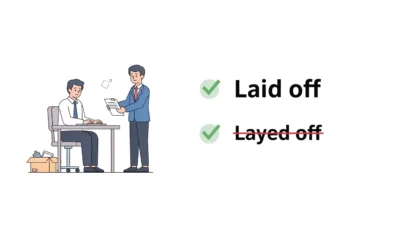
Many learners search for “layed vs laid” because both words look possible and sound similar. The confusion happens because English verbs change forms in different ways, and not all follow simple rules.
In this case, one word is correct, and the other is a common mistake.
Quick Answer
Here is the clear and simple answer:
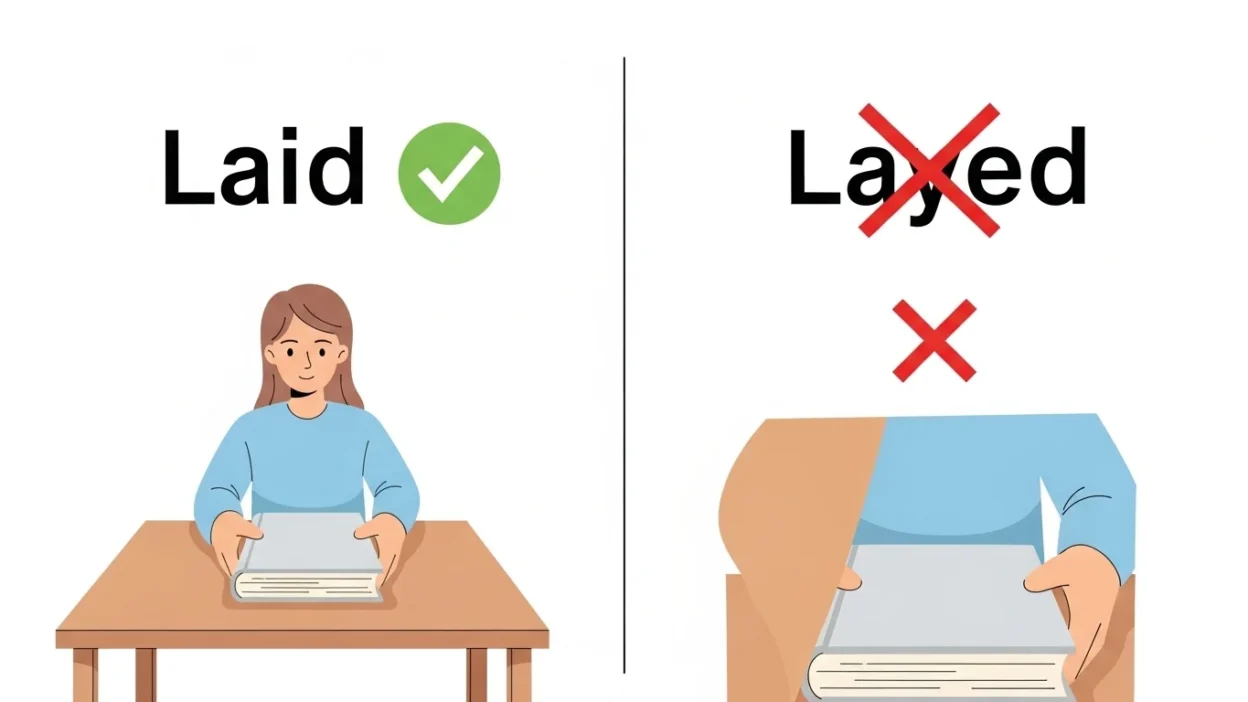
- ✅ Laid – Correct past tense of lay (to put something down)
- ❌ Layed – Incorrect spelling
- 📚 Always use laid in writing
- ✏️ Remember: Lay → Laid (not layed)
Origin and Background
The verb lay means “to put something down.”
English has irregular verbs, and lay is one of them. Instead of adding “-ed,” it changes form:
- Lay → Laid
This is why “layed” is incorrect.
Clear Explanation of the Difference
What Does “Laid” Mean?
Laid is the past tense of lay. It means you placed or put something somewhere.
Important Note:
Lay always needs an object (something you place).
Examples:
- She laid the book on the table.
- He laid the keys on the desk.
- They laid the carpet.
- The hen laid eggs.
- I laid my bag down.
What About “Layed”?
Layed is not correct in standard English. It is a common mistake caused by adding “-ed” like regular verbs.
❌ Layed
✅ Laid
You should never use layed in proper writing.
Comparison Table
| Feature | Laid | Layed |
|---|---|---|
| Spelling | Correct | Incorrect |
| Meaning | Past of “lay” (put something down) | No meaning in standard English |
| Verb Type | Irregular verb | Incorrect form |
| Usage | Formal and informal English | Considered a spelling error |
| Example | She laid the book down. | ❌ She layed the book down. |
Which One to Use and When
Use “Laid” When:
- Talking about placing something in the past
- Writing sentences with an object
- Describing completed actions
Examples:
- She laid the phone on the table.
- He laid the tools down.
- They laid the foundation.
- The bird laid eggs.
- I laid my jacket on the chair.
Avoid “Layed”
Never use layed, as it is always incorrect.
Common Mistakes People Make
1. Adding “-ed” to “Lay”
People treat it like a regular verb.
❌ Layed
✅ Laid
2. Confusing “Lay” and “Lie”
These two verbs are different and often mixed.
3. Spelling Based on Logic
“Layed” looks correct but is not.
4. Typing Too Quickly
Fast typing can cause errors.
5. Lack of Practice
Irregular verbs need more practice.
Everyday Real-Life Examples
Daily Use
- “I laid the keys on the table.”
- “She laid the book down.”
School and Education
- “The student laid the paper on the desk.”
- “They laid the materials carefully.”
Workplace Communication
- “He laid the documents on the table.”
- “They laid the plan out clearly.”
Nature and Animals
- “The hen laid eggs.”
- “The bird laid eggs in the nest.”
Conversations
- “I laid it there.”
- “She laid everything in place.”
Short Learning Section for Students and Beginners
Easy Rule to Remember
Lay → Laid (not layed)
Memory Tip
“Laid is the past of lay.”
Pronunciation Guide
- Laid: LAYD
Practice Exercise
Fill in the blanks with the correct word:
- She ______ the book on the table.
- He ______ the keys down.
- The hen ______ eggs.
Answers:
- laid
- laid
- laid
Quick Quiz
Choose the correct option:
- She ______ the bag down.
a) Layed
b) Laid - The bird ______ eggs.
a) Laid
b) Layed
Correct Answers:
- b) Laid
- a) Laid
Frequently Asked Questions (FAQs)
1. Is “layed” correct?
No, it is incorrect.
2. What is the correct past tense of “lay”?
The correct form is laid.
3. What does “laid” mean?
It means to put something down.
4. Why do people write “layed”?
Because they think all verbs take “-ed.”
5. Is “laid” used in formal writing?
Yes, it is used in all types of writing.
6. How do you pronounce “laid”?
It is pronounced LAYD.
7. Is “lay” a regular verb?
No, it is an irregular verb.
8. How can I remember it?
Remember: Lay → Laid (not layed).
Conclusion
The difference between “layed” and “laid” is simple. Laid is the correct past tense of lay and should always be used. Layed is incorrect and should be avoided.
To avoid mistakes, remember this easy rule:
👉 Lay → Laid (not layed).
Using the correct form will help you write clearly, confidently, and correctly in all situations

Emily Carter is a content writer and editor based in the United States, specializing in lifestyle, wellness, and personal development topics. With a passion for clear and engaging storytelling, she creates content that connects with readers and delivers practical value. Emily focuses on making complex ideas easy to understand and relatable.