
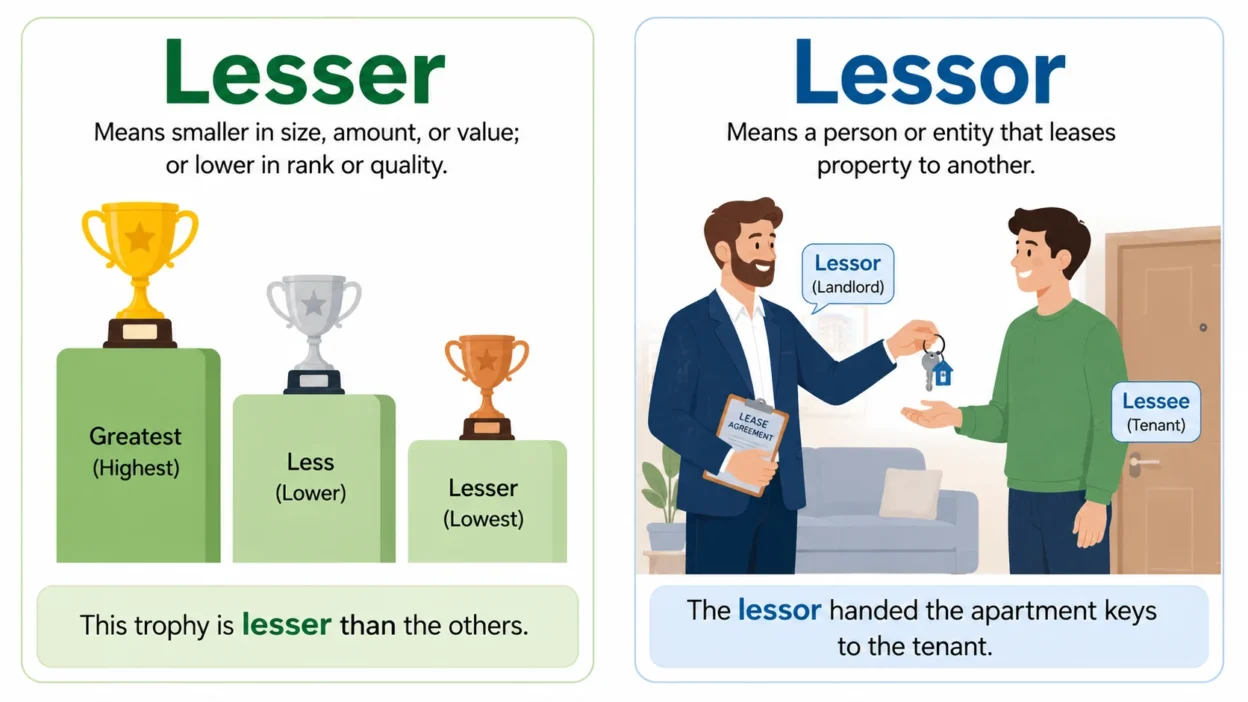
“Lesser” and “lessor” are commonly confused because they sound almost identical in pronunciation. However, they have very different meanings and are used in completely different contexts.
The key idea: smaller or less important vs property owner who rents something out.
Understanding the difference will help you avoid spelling mistakes in both everyday and legal English.
Quick Answer
- ✅ Lesser – Smaller, lower, or less important
- ✅ Lessor – A person or company that rents property to someone else
- ✏️ Remember: Lesser = less in importance, Lessor = landlord/renter
Clear Explanation
What Does “Lesser” Mean?
Lesser is an adjective.
👉 It means:
- smaller
- lower in importance
- not as great
Examples:
- He chose the lesser option.
- This is the lesser of two problems.
- Lesser-known artists attended the event.
- She accepted a lesser role in the company.
- The storm caused lesser damage than expected.
👉 “Lesser” often describes:
- importance
- size
- quality
- degree
Common Uses of “Lesser”
1. Lesser-Known
Examples:
- lesser-known actors
- lesser-known brands
Example Sentence:
- The article highlighted lesser-known historical facts.
2. Lesser Evil
A common expression meaning:
- the less harmful choice
Example:
- They chose the lesser of two evils.
3. Lower Importance or Degree
Examples:
- lesser value
- lesser impact
Example Sentence:
- The issue became a lesser concern over time.
What Does “Lessor” Mean?
Lessor is a noun used mainly in legal and business English.
👉 It means:
- a person or company that rents property to another person
Examples:
- The lessor signed the lease agreement.
- The lessor owns the apartment building.
- The company acted as the vehicle lessor.
- The lessor approved the contract changes.
- Tenants must follow the lessor’s rules.
👉 “Lessor” is commonly used in:
- rental agreements
- leases
- property law
- business contracts
Important Related Word
Lessor vs Lessee
These words are often paired together.
| Word | Meaning |
|---|---|
| Lessor | Person renting property out |
| Lessee | Person renting property from the owner |
Example:
- The lessor rented the office to the lessee.
Common Uses of “Lessor”
1. Property Rentals
Examples:
- apartment lessor
- building lessor
Example Sentence:
- The lessor increased the rent.
2. Vehicle or Equipment Leasing
Examples:
- car lessor
- equipment lessor
Example Sentence:
- The lessor maintained ownership of the machinery.
3. Legal Contracts
Examples:
- lessor agreement
- lessor obligations
Example Sentence:
- The lessor signed the lease documents.
Key Difference
| Feature | Lesser | Lessor |
|---|---|---|
| Meaning | Smaller or less important | Person renting property out |
| Type | Adjective | Noun |
| Context | General English | Legal/business English |
| Example | Lesser damage | Apartment lessor |
Which One to Use and When
Use “Lesser” When:
- Talking about lower importance or smaller degree
Examples:
- Lesser-known
- Lesser role
- Lesser amount
- Lesser impact
- Lesser value
Example Sentences:
- She accepted a lesser salary.
- The second issue was of lesser importance.
- The storm caused lesser damage.
Use “Lessor” When:
- Talking about leasing or renting property
Examples:
- Property lessor
- Vehicle lessor
- Equipment lessor
- Building lessor
- Lease lessor
Example Sentences:
- The lessor approved the new tenant.
- The lessor owns the property.
- The company became the official lessor.
Common Mistakes People Make
1. Using “Lesser” in Legal Rental Situations
❌ The lesser signed the lease
✅ The lessor signed the lease
2. Using “Lessor” for Importance or Size
❌ This is the lessor problem
✅ This is the lesser problem
3. Confusing Similar Pronunciation
The words sound nearly identical.
4. Forgetting Part of Speech
- lesser = adjective
- lessor = noun
5. Mixing “Lessor” and “Lessee”
Many learners reverse these legal terms.
Easy Memory Trick
👉 Lesser = less important
👉 Lessor = landlord
Think:
- lesser → less
- lessor → owner renting property
Real-Life Examples
Correct Use of “Lesser”
- The company faced lesser competition this year.
- She played a lesser role in the project.
- This issue is of lesser importance.
Correct Use of “Lessor”
- The lessor signed the apartment lease.
- The lessor maintained ownership of the building.
- The vehicle lessor handled maintenance costs.
Practice Exercise
Fill in the blanks:
- The apartment ______ approved the contract.
- He accepted a ______ position at work.
- This caused ______ damage than expected.
Answers:
- lessor
- lesser
- lesser
Quick Quiz
- Which word refers to someone renting property out?
a) Lesser
b) Lessor - Which word means “smaller or less important”?
a) Lessor
b) Lesser - Which sentence is correct?
a) The lesser signed the lease
b) The lessor signed the lease
Correct Answers:
- b) Lessor
- b) Lesser
- b) The lessor signed the lease
Why This Confusion Happens
The confusion happens because:
- the words sound almost identical
- spelling differs by only one letter
- both are uncommon in everyday speech
However:
- lesser relates to importance or degree
- lessor relates to leasing property
Helpful Tip for Better Writing
If the sentence involves:
- size, degree, or importance → use lesser
- renting or lease contracts → use lessor
Conclusion
The difference between “lesser” and “lessor” is about meaning and context. Lesser means smaller or less important, while lessor refers to a person or company that rents property to someone else.
👉 Lesser = less important
👉 Lessor = property owner renting out

Emily Carter is a content writer and editor based in the United States, specializing in lifestyle, wellness, and personal development topics. With a passion for clear and engaging storytelling, she creates content that connects with readers and delivers practical value. Emily focuses on making complex ideas easy to understand and relatable.