Many learners confuse “deep-seeded” and “deep-seated” because they sound similar. However, only one form is correct in standard English.
The key idea: correct idiom vs common mistake.
Quick Answer
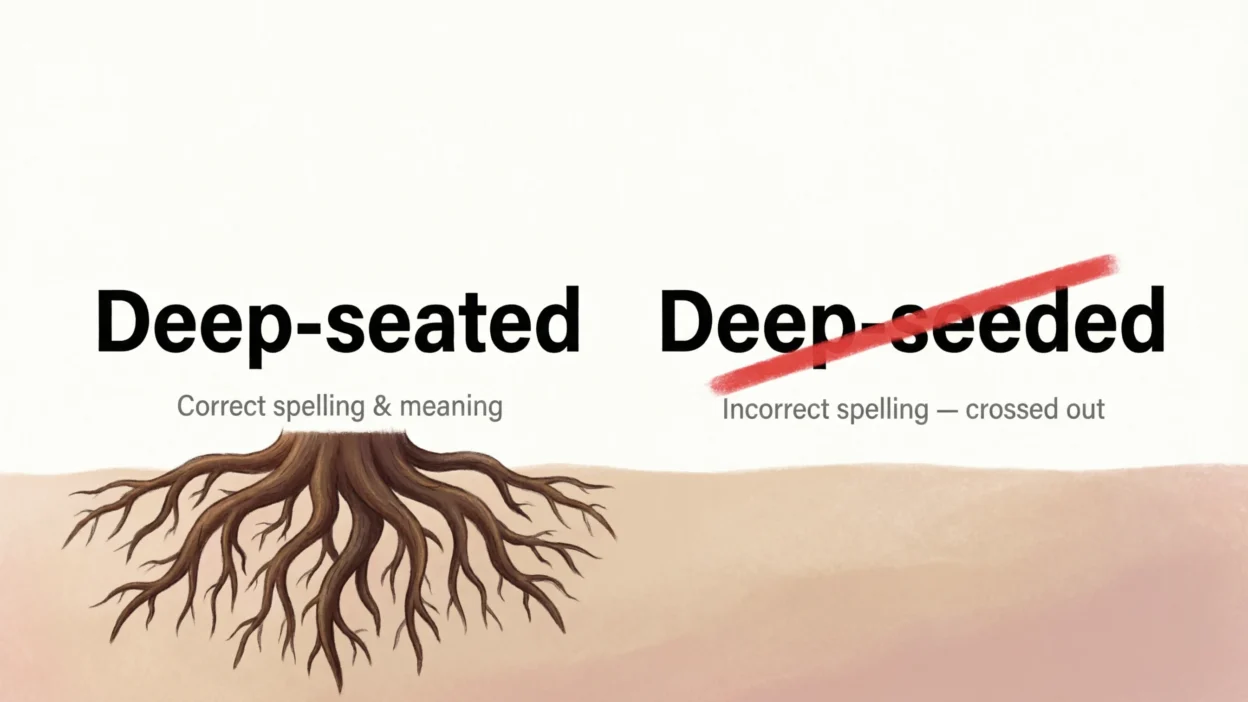
- ✅ Deep-seated – Correct phrase (firmly established, deeply rooted)
- ❌ Deep-seeded – Incorrect (common misspelling)
- ✏️ Remember: Seated = fixed in place
Clear Explanation
What Does “Deep-Seated” Mean?
Deep-seated is the correct expression.
👉 It means:
- firmly established
- deeply rooted
- strongly felt or ingrained
Examples:
- He has deep-seated fears.
- The problem is deep-seated.
- There is deep-seated anger.
- Their rivalry is deep-seated.
- She has deep-seated beliefs.
👉 It often describes:
- emotions (fear, anger)
- beliefs or attitudes
- long-term problems
What About “Deep-Seeded”?
❌ Deep-seeded is incorrect.
👉 It comes from confusion with the word “seed” (like planting), but this is not the correct idiom.
Why Is It “Deep-Seated”?
- fixed in position
- firmly placed
👉 So deep-seated = something firmly fixed deep inside.
Comparison Table
| Feature | Deep-Seated | Deep-Seeded |
|---|---|---|
| Spelling | Correct | Incorrect |
| Meaning | Firmly rooted | No standard meaning |
| Usage | Standard English | Common mistake |
| Example | Deep-seated fear | ❌ Deep-seeded fear |
Which One to Use
Always Use “Deep-Seated”
Examples:
- Deep-seated hatred
- Deep-seated issues
- Deep-seated beliefs
- Deep-seated problems
- Deep-seated emotions
Never Use “Deep-Seeded”
❌ Avoid this in writing and exams.
Common Mistakes People Make
1. Writing “Deep-Seeded”
Because it sounds logical.
2. Confusing Meaning with “Seed”
“Seed” relates to growth, not this idiom.
3. Spelling Based on Sound
Both sound similar when spoken.
4. Overthinking the Word
The correct form is fixed.
5. Ignoring Standard Usage
Only “deep-seated” is accepted.
Everyday Real-Life Examples
Emotions
- “He has deep-seated fear.”
- “There is deep-seated anger.”
Relationships
- “They have deep-seated issues.”
- “Their conflict is deep-seated.”
Society
- “The problem is deep-seated.”
- “There are deep-seated beliefs.”
Personal Life
- “She has deep-seated doubts.”
- “His habits are deep-seated.”
Easy Memory Trick
👉 Think:
“Seated = sitting firmly”
So:
👉 Deep-seated = firmly fixed deep inside
Practice Exercise
Fill in the blanks:
- He has ______ fears.
- The issue is ______.
- Their conflict is ______.
Answers:
- deep-seated
- deep-seated
- deep-seated
Quick Quiz
Choose the correct option:
- She has ______ beliefs.
a) Deep-seeded
b) Deep-seated - The problem is ______.
a) Deep-seated
b) Deep-seeded
Correct Answers:
- b) Deep-seated
- a) Deep-seated
Frequently Asked Questions (FAQs)
1. Is “deep-seeded” correct?
No, it is incorrect.
2. What is the correct phrase?
Deep-seated.
3. What does it mean?
Firmly established or deeply rooted.
4. Why do people say “deep-seeded”?
Because it sounds similar.
5. Is this a common mistake?
Yes, very common.
6. Where is it used?
In formal and informal English.
7. How can I remember it?
“Seated = fixed.”
8. Is spelling important here?
Yes, very important.
Conclusion
The difference between “deep-seated” and “deep-seeded” is simple. Deep-seated is the correct phrase meaning firmly established, while deep-seeded is a common mistake.
To remember:
👉 Deep-seated = correct
👉 Deep-seeded = incorrect

Michael Anderson is a professional editor and senior contributor with a background in long-form content and strategic writing. He focuses on quality, structure, and credibility across all publications. Michael brings years of experience in content development and ensures high editorial standards for every project.