Many learners search for “past away vs passed away” because the words past and passed sound the same. This makes it easy to mix them up in writing.
The confusion becomes stronger because both words are common in English—but they have different meanings. Only one of them fits this phrase.
Quick Answer
Here is the clear and simple answer:
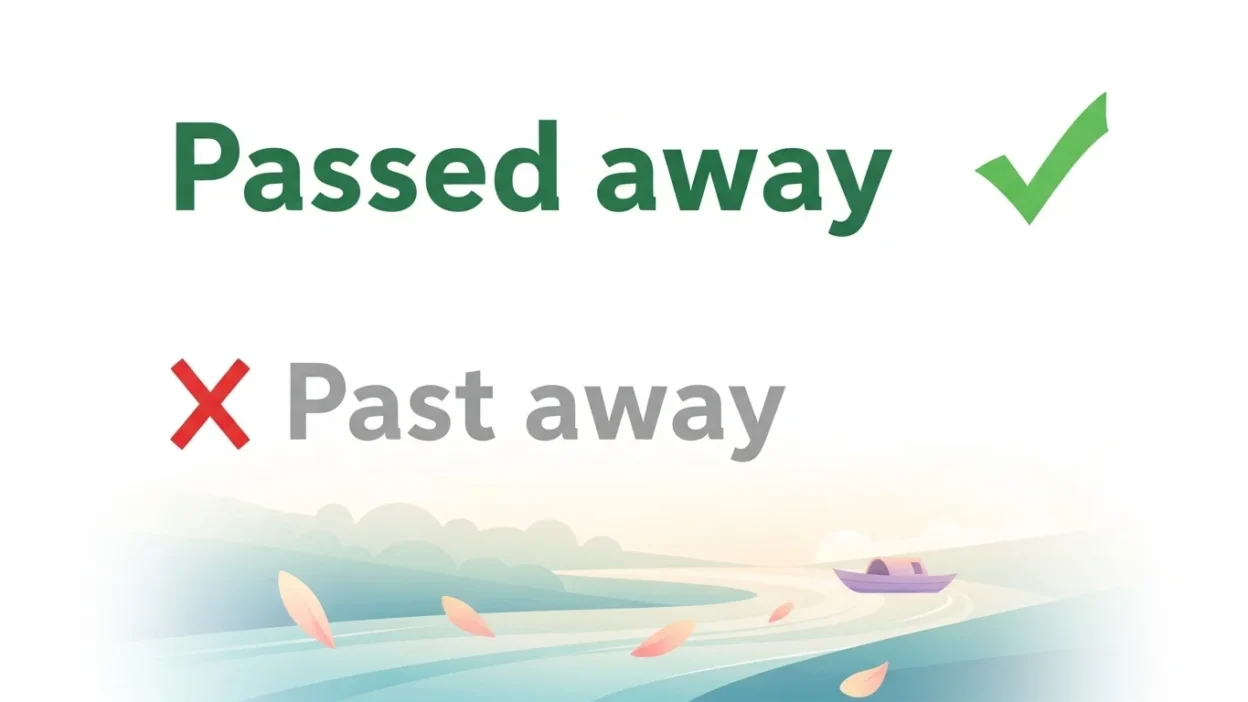
- ✅ Passed away – Correct phrase; means someone has died
- ❌ Past away – Incorrect phrase
- 📚 Always use passed away in writing
- ✏️ Remember: “Passed” = verb (action), “past” = time/place
Origin and Background
The phrase “passed away” is a polite and gentle way to say someone has died.
- Passed comes from the verb pass (to go or move)
- Away adds the meaning of leaving
Together:
👉 Passed away = someone has gone (died)
Clear Explanation of the Difference
What Does “Passed Away” Mean?
Passed away is a verb phrase. It is used to talk about death in a respectful and soft way.
Examples:
- His grandfather passed away last year.
- She passed away peacefully.
- The teacher passed away recently.
- He passed away in his sleep.
- My neighbor passed away yesterday.
What Does “Past” Mean?
Past is not a verb. It is usually:
- A noun (time before now)
- An adjective (something earlier)
- A preposition (beyond something)
Examples:
- That is in the past.
- We walked past the house.
- Past events are important.
👉 This is why “past away” is incorrect.
Comparison Table
| Feature | Passed away | Past away |
|---|---|---|
| Spelling | Correct | Incorrect |
| Meaning | Someone died | No correct meaning |
| Type | Verb phrase | Incorrect usage |
| Usage | Formal and informal English | Considered a mistake |
| Example | He passed away. | ❌ He past away. |
Which One to Use and When
Use “Passed Away” When:
- Talking about someone’s death
- Writing respectfully
- Speaking politely
Examples:
- She passed away peacefully.
- His father passed away last year.
- The actor passed away recently.
- He passed away at home.
- They said she passed away quietly.
Avoid “Past Away”
Never use past away, as it is always incorrect.
Common Mistakes People Make
1. Confusing “Past” and “Passed”
They sound the same but have different meanings.
❌ Past away
✅ Passed away
2. Not Knowing “Passed” Is a Verb
“Passed” shows action.
3. Spelling Based on Sound
Both words sound alike.
4. Typing Too Quickly
Fast typing can cause errors.
5. Lack of Understanding Context
Using the wrong word in sensitive situations.
Everyday Real-Life Examples
Conversations
- “His grandfather passed away.”
- “She passed away last night.”
News and Media
- “The leader passed away.”
- “He passed away peacefully.”
Social Media
- “Sad to hear she passed away.”
- “He passed away yesterday.”
Emails
- “We are sorry he passed away.”
- “She passed away recently.”
Family Discussions
- “My uncle passed away.”
- “Her grandmother passed away.”
Short Learning Section for Students and Beginners
Easy Rule to Remember
Passed = action (correct)
Past = time/place (not correct here)
Memory Tip
“If it’s an action, use passed.”
Pronunciation Guide
- Passed away: PASSED uh-WAY
- Past: PAST
Practice Exercise
Fill in the blanks:
- He ______ away last year.
- She ______ away peacefully.
- My uncle ______ away.
Answers:
- passed
- passed
- passed
Quick Quiz
Choose the correct option:
- He ______ away yesterday.
a) Past
b) Passed - She ______ away peacefully.
a) Passed
b) Past
Correct Answers:
- b) Passed
- a) Passed
Frequently Asked Questions (FAQs)
1. Is “past away” correct?
No, it is incorrect.
2. What is the correct phrase?
The correct phrase is passed away.
3. What does “passed away” mean?
It means someone has died.
4. Why do people write “past away”?
Because both words sound the same.
5. Is “passed away” formal?
Yes, it is polite and commonly used.
6. How do you pronounce it?
It is pronounced PASSED uh-WAY.
7. What does “past” mean?
It refers to time or position, not action.
8. How can I remember it?
Remember: Action = passed.
Conclusion
The difference between “past away” and “passed away” is simple. Passed away is the correct phrase and is used to politely say someone has died. Past away is incorrect and should never be used.
To avoid mistakes, remember this easy rule:
👉 Use “passed” for actions, not “past.”
Using the correct phrase helps you communicate clearly and respectfully in all situations.

Emily Carter is a content writer and editor based in the United States, specializing in lifestyle, wellness, and personal development topics. With a passion for clear and engaging storytelling, she creates content that connects with readers and delivers practical value. Emily focuses on making complex ideas easy to understand and relatable.