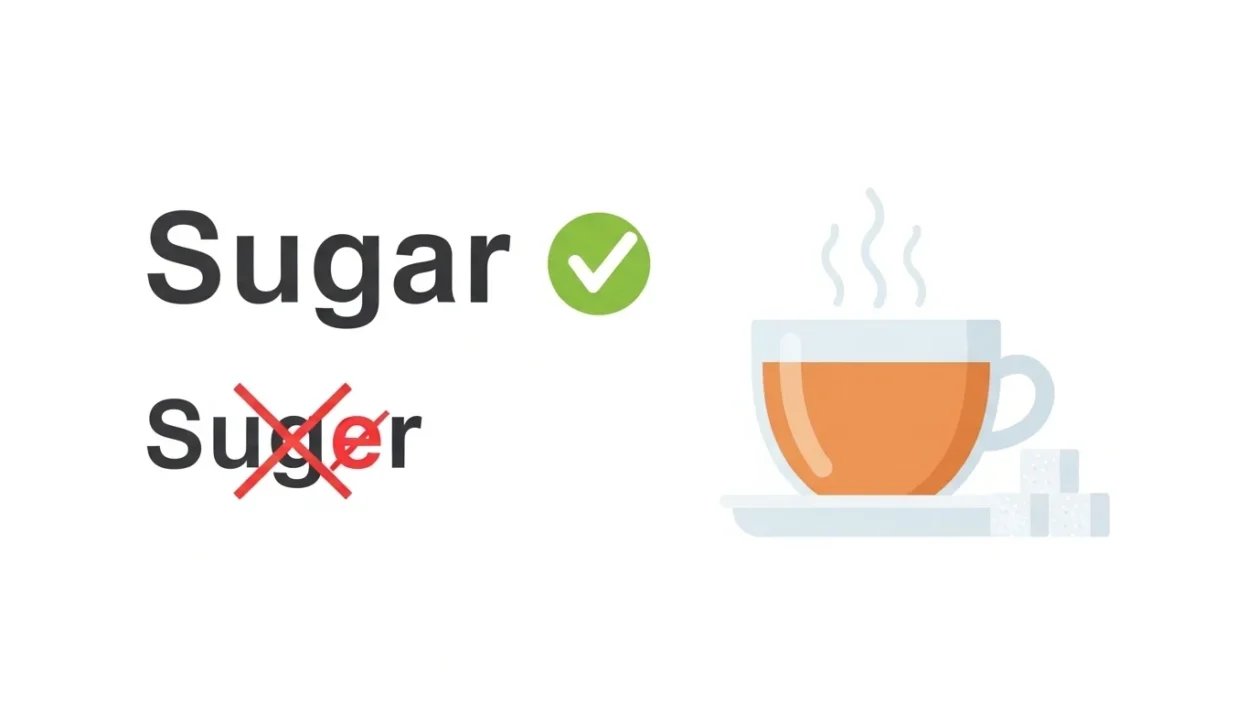
Many learners search for “suger vs sugar” because the pronunciation can be tricky. When we say the word, it may sound like “shug-er,” which makes people think the spelling could be “suger.”
But English spelling does not always match sound. In this case, only one form is correct.
Quick Answer
Here is the clear and simple answer:
- ✅ Sugar – Correct spelling; a sweet substance used in food and drinks
- ❌ Suger – Incorrect spelling
- 📚 Always use sugar in writing
- ✏️ Remember: “u + g + a” → sugar
Origin and Background
The word sugar comes from older languages like Arabic and Sanskrit. Over time, it became “sugar” in English.
Even though the pronunciation changed slightly, the spelling stayed the same. That is why it may look different from how it sounds.
Clear Explanation of the Difference
What Does “Sugar” Mean?
Sugar is a noun. It means a sweet substance often used in food and drinks.
Common Uses
- Food Ingredient
- Add sugar to tea.
- Sweet Taste
- This cake has a lot of sugar.
- Everyday Cooking
- We need sugar for baking.
What About “Suger”?
Suger is not correct in standard English. It is a spelling mistake based on how the word sounds.
❌ Suger
✅ Sugar
You should never use suger in proper writing.
Comparison Table
| Feature | Sugar | Suger |
|---|---|---|
| Spelling | Correct | Incorrect |
| Meaning | Sweet substance | No meaning in English |
| Part of Speech | Noun | Not valid |
| Usage | Formal and informal English | Considered a spelling error |
| Example | Add sugar to tea. | ❌ Add suger to tea. |
Which One to Use and When
Use “Sugar” When:
- Talking about food or drinks
- Writing recipes
- Describing sweetness
Examples:
- I added sugar to my tea.
- This cake needs more sugar.
- She bought sugar from the store.
- Too much sugar is not healthy.
- The recipe includes sugar.
Avoid “Suger”
Never use suger, as it is always incorrect.
Common Mistakes People Make
1. Spelling Based on Sound
People write what they hear.
❌ Suger
✅ Sugar
2. Confusing Pronunciation
The “sh” sound causes confusion.
3. Typing Too Quickly
Fast typing leads to errors.
4. Not Seeing the Word Often
Less reading increases mistakes.
5. Lack of Practice
Practice helps fix spelling issues.
Everyday Real-Life Examples
Daily Use
- “I need sugar for tea.”
- “Add sugar to the coffee.”
Cooking and Baking
- “The recipe needs sugar.”
- “Mix sugar and flour.”
Shopping
- “Buy sugar from the store.”
- “We are out of sugar.”
Conversations
- “Do you take sugar?”
- “This has too much sugar.”
Social Media
- “Less sugar, healthier life.”
- “Cut down on sugar.”
Short Learning Section for Students and Beginners
Easy Rule to Remember
Sugar = correct spelling
Memory Tip
“Sweet word, sweet spelling → sugar.”
Pronunciation Guide
- Sugar: SHOO-gər
Practice Exercise
Fill in the blanks:
- Add ______ to tea.
- This cake needs ______.
- I bought ______.
Answers:
- sugar
- sugar
- sugar
Quick Quiz
Choose the correct option:
- Add ______ to coffee.
a) Suger
b) Sugar - This cake has ______.
a) Sugar
b) Suger
Correct Answers:
- b) Sugar
- a) Sugar
Frequently Asked Questions (FAQs)
1. Is “suger” correct?
No, it is incorrect.
2. What is the correct spelling?
The correct spelling is sugar.
3. What does “sugar” mean?
It is a sweet substance used in food.
4. Why do people write “suger”?
Because it sounds similar.
5. Is “sugar” used daily?
Yes, it is very common.
6. How do you pronounce “sugar”?
It is pronounced SHOO-gər.
7. Is this spelling common?
Yes, it is standard English.
8. How can I remember it?
Remember: Sweet = sugar.
Conclusion
The difference between “suger” and “sugar” is simple. Sugar is the correct spelling and should always be used. Suger is incorrect and should be avoided.
To avoid mistakes, remember this easy rule:
👉 Always write “sugar,” not “suger.”
Using the correct spelling will help you write clearly, confidently, and correctly in everyday English.

Michael Anderson is a professional editor and senior contributor with a background in long-form content and strategic writing. He focuses on quality, structure, and credibility across all publications. Michael brings years of experience in content development and ensures high editorial standards for every project.