English spelling can be confusing when words sound the same but are spelled differently. One common mistake is between “hazard” and “hazzard.” Many learners, students, and even native speakers get confused because they hear the strong “z” sound and assume a double letter is needed.
This confusion often comes from fast typing, pronunciation, or seeing incorrect spellings online. In this guide, we will clearly explain which spelling is correct and how to use it in simple English.
Quick Answer
Here is the clear and simple answer:
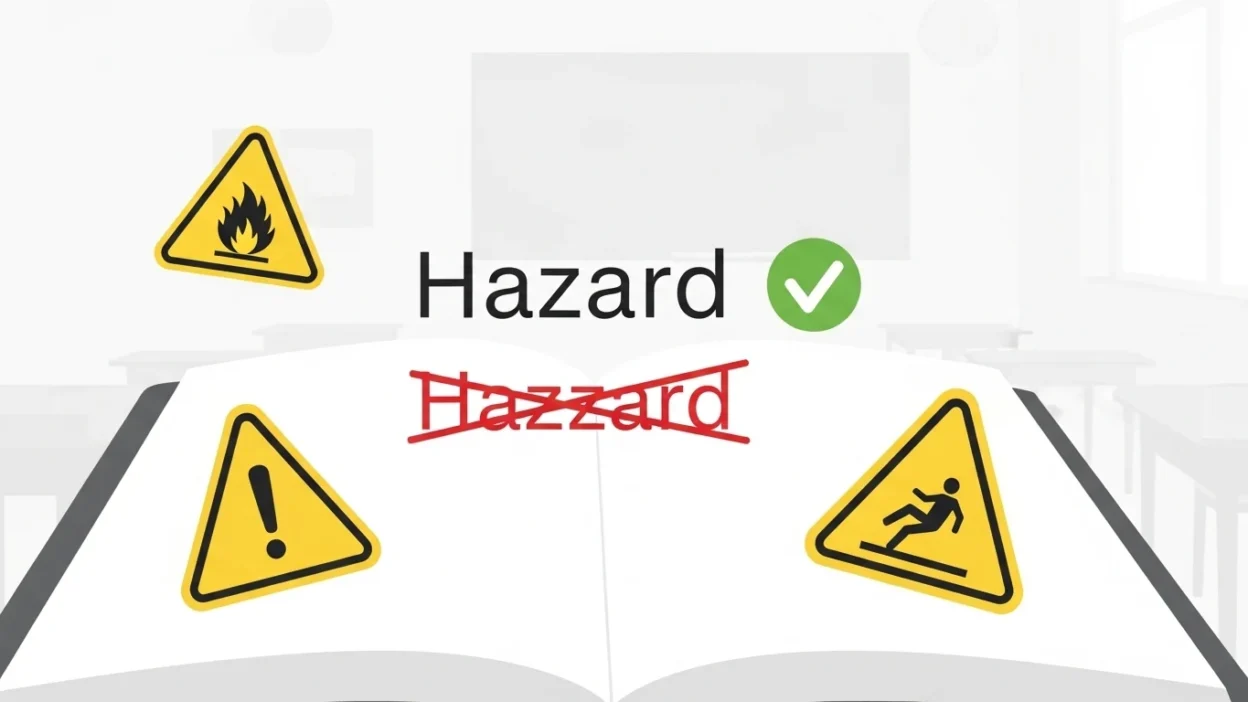
- ✅ Hazard – Correct spelling; means danger or risk.
- ❌ Hazzard – Incorrect spelling; not a standard English word.
- 📚 Always use hazard in writing and speaking.
- ✏️ If you see “hazzard,” it is a spelling mistake.
Origin and Background
The word hazard comes from Old French word hasard, which originally referred to a game of chance using dice. Over time, its meaning changed in English to represent risk, danger, or something unsafe.
Today, the word is used in safety, health, science, and everyday communication.
The incorrect spelling “hazzard” likely appears because English speakers sometimes double consonants in words for emphasis or pronunciation, but this rule does not apply here.
Clear Explanation of the Difference
What Does “Hazard” Mean?
Hazard is a noun and sometimes a verb. It mainly refers to something that can cause danger, harm, or risk.
1. Danger or Risk
- Fire is a major hazard in buildings.
- Wet floors are a slipping hazard.
- Smoking is a health hazard.
2. Something Unsafe in the Environment
- Chemical spills are environmental hazards.
- Broken glass is a hazard on the road.
3. As a Verb (less common)
- They hazard their lives in rescue missions.
- He hazarded a guess.
What About “Hazzard”?
Hazzard is not a correct English word. It is simply a spelling mistake.
❌ Hazzard
✅ Hazard
You should avoid using “hazzard” in any type of writing, including casual messages, school work, or professional documents.
Comparison Table
| Feature | Hazard | Hazzard |
|---|---|---|
| Spelling | Correct | Incorrect |
| Meaning | Danger, risk, or unsafe situation | No standard meaning |
| Part of Speech | Noun / Verb | Not valid |
| Dictionary Status | Recognized | Not recognized |
| Usage | Formal and informal English | Spelling mistake |
| Example | The road is a safety hazard. | ❌ The road is a safety hazzard. |
Which One to Use and When
Use “Hazard” When:
- Talking about danger or risk
- Writing safety instructions
- Discussing health, environment, or workplace safety
- Communicating in school or professional writing
- Describing unsafe conditions
Examples:
- This area is a fire hazard.
- The chemical is a health hazard.
- Broken wires are an electrical hazard.
- Driving in fog can be a hazard.
Avoid “Hazzard”
Never use hazzard, as it is always incorrect in standard English.
Common Mistakes People Make
1. Double “Z” Confusion
People think the “z” sound needs two letters.
❌ Hazzard
✅ Hazard
2. Pronunciation Misleading Spelling
Since “hazard” is pronounced with a strong “z” sound, learners often over-spell it.
3. Typing Errors
Fast typing and autocorrect sometimes produce incorrect spellings.
4. Influence of Names
Some people confuse it with surnames like “Hazzard,” which exist in names but not in standard vocabulary.
5. Lack of Proofreading
Not checking written work leads to repeated spelling mistakes.
Everyday Real-Life Examples
Safety Warnings
- “Wet floor: slip hazard.”
- “This area contains electrical hazards.”
Workplace
- “Employees must report safety hazards.”
- “The factory removed all fire hazards.”
School and Education
- “The teacher explained lab hazards.”
- “Students learned about environmental hazards.”
News and Media
- “Floods are a major natural hazard.”
- “Authorities warned about chemical hazards.”
Social Media
- “Driving without a seatbelt is a serious hazard.”
- “Stay aware of road hazards during rain.”
Daily Conversations
- “That broken step is a hazard.”
- “Smoking is a health hazard.”
Short Learning Section for Students and Beginners
Easy Trick to Remember
Think of the word “hasard” → hazard (drop the extra letters).
Memory Tip
“Hazard = hazard warning (danger alert).”
Pronunciation Guide
- Hazard: HAZ-erd
Practice Exercise
Fill in the blanks:
- Fire is a serious ______.
- The road has many ______.
- Chemical waste is a health ______.
Answers:
- hazard
- hazards
- hazard
Quick Quiz
Choose the correct option:
- This is a safety ______.
a) Hazzard
b) Hazard - Broken glass is a ______.
a) Hazard
b) Hazzard
Correct Answers:
- b) Hazard
- a) Hazard
Frequently Asked Questions (FAQs)
1. Is “hazzard” a real word?
No, “hazzard” is not a correct English word. It is a spelling mistake.
2. What is the correct spelling?
The correct spelling is hazard.
3. What does “hazard” mean?
It means danger, risk, or something unsafe.
4. How do you pronounce “hazard”?
It is pronounced as HAZ-erd.
5. Is “hazard” used in safety signs?
Yes, it is commonly used in warnings like “fire hazard” or “slip hazard.”
6. Can “hazard” be a verb?
Yes, but it is rare. Example: “He hazarded a guess.”
7. Why do people write “hazzard”?
Because they mistakenly double the “z” due to pronunciation or typing errors.
8. How can I remember the correct spelling?
Remember: Hazard has only one “z.”
Conclusion
The difference between “hazard” and “hazzard” is simple. Hazard is the correct spelling and means danger or risk. The word hazzard is always incorrect in standard English and should be avoided.
By learning its meaning, practicing examples, and remembering that it has only one “z,” you can easily avoid this common mistake. Whether you are writing for school, work, or daily communication, using the correct spelling will make your English clearer and more professional.

Emily Carter is a content writer and editor based in the United States, specializing in lifestyle, wellness, and personal development topics. With a passion for clear and engaging storytelling, she creates content that connects with readers and delivers practical value. Emily focuses on making complex ideas easy to understand and relatable.