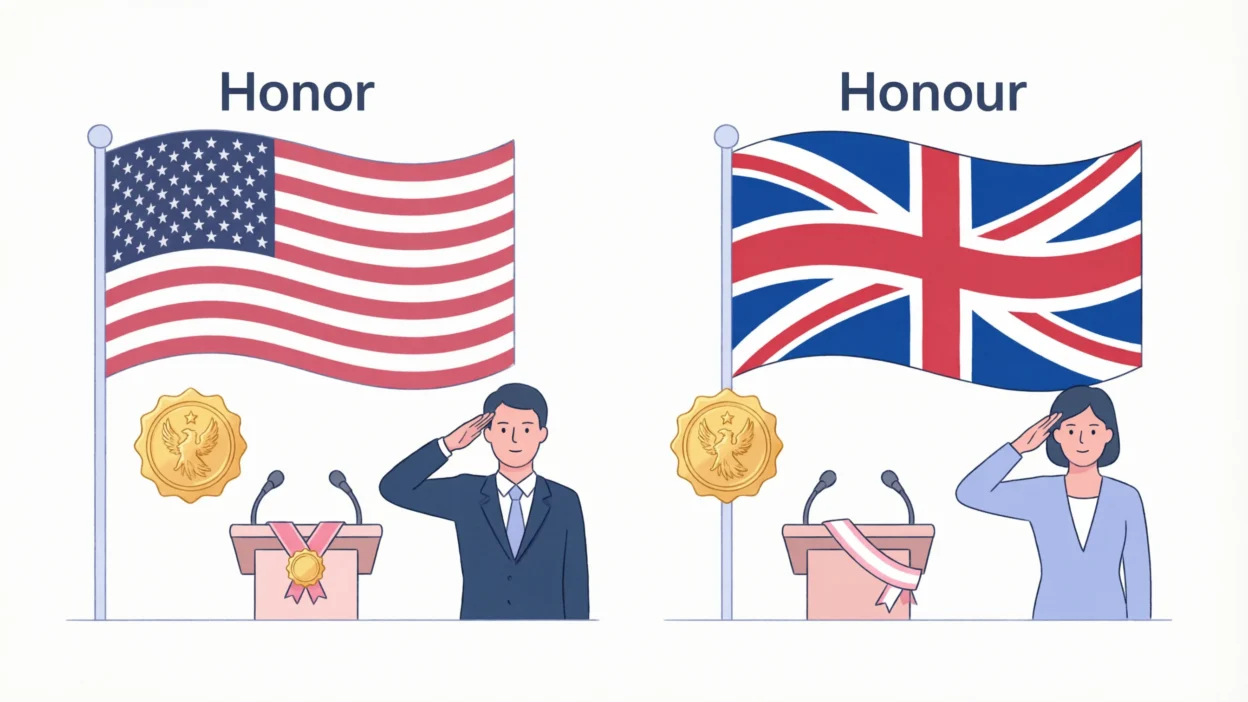
“Honor” and “honour” have the same meaning and pronunciation. The difference is mainly based on regional English spelling conventions.
The key idea: American English vs British English spelling.
Both words refer to:
- respect
- integrity
- recognition
- privilege
Understanding the difference will help you choose the correct spelling for your audience and writing style.
Quick Answer
- ✅ Honor – American English spelling
- ✅ Honour – British English spelling
- ✏️ Remember: American English often removes the “u”
Clear Explanation
What Does “Honor” Mean?
Honor is the American English spelling.
👉 It can mean:
- respect or admiration
- moral integrity
- a privilege or award
Examples:
- It was an honor to meet her.
- He received military honors.
- She acted with honor and honesty.
- The school held an honor ceremony.
- They honored the volunteers publicly.
👉 “Honor” is commonly used in:
- the United States
- American schools and businesses
- U.S. publications
Common Uses of “Honor”
1. Respect and Admiration
Examples:
- honor someone
- honor a tradition
Example Sentence:
- They honor their teachers every year.
2. Awards and Recognition
Examples:
- honor award
- honor ceremony
Example Sentence:
- She graduated with honors.
3. Integrity and Morality
Examples:
- code of honor
- personal honor
Example Sentence:
- He defended his honor bravely.
What Does “Honour” Mean?
Honour is the British English spelling of the same word.
👉 It has exactly the same meaning:
- respect
- integrity
- recognition
- privilege
Examples:
- It was an honour to attend.
- She acted with honour and dignity.
- The ceremony honoured local heroes.
- He defended his honour proudly.
- They paid honour to the veterans.
👉 “Honour” is commonly used in:
- the United Kingdom
- Australia
- New Zealand
- Commonwealth English
Common Uses of “Honour”
1. Respect and Tribute
Examples:
- honour traditions
- honour someone
Example Sentence:
- The nation honoured its soldiers.
2. Awards and Achievements
Examples:
- honours degree
- honour ceremony
Example Sentence:
- She graduated with honours.
3. Personal Integrity
Examples:
- sense of honour
- family honour
Example Sentence:
- He behaved with honour throughout the conflict.
Key Difference
| Feature | Honor | Honour |
|---|---|---|
| Meaning | Same | Same |
| English Style | American English | British English |
| Pronunciation | Same | Same |
| Spelling | No “u” | Includes “u” |
Which One to Use and When
Use “Honor” When:
- Writing American English
- Writing for U.S. audiences
- Following American spelling conventions
Examples:
- honor award
- honor society
- code of honor
- honor ceremony
- honor tradition
Example Sentences:
- It was an honor to speak there.
- She graduated with honors.
- They honor veterans every year.
Use “Honour” When:
- Writing British English
- Writing for UK or Commonwealth audiences
- Following British spelling conventions
Examples:
- honour award
- honours degree
- code of honour
- honour ceremony
- honour tradition
Example Sentences:
- It was an honour to attend.
- She graduated with honours.
- They honour their traditions proudly.
Common Mistakes People Make
1. Mixing American and British Spelling
Avoid using:
- honor
and - honour
within the same document.
2. Thinking One Spelling Is Incorrect
Both are correct depending on regional style.
3. Forgetting the “U” Rule
British English often keeps:
- colour
- honour
- favour
American English often removes the “u”:
- color
- honor
- favor
4. Assuming Pronunciation Changes
Both are pronounced the same way.
5. Inconsistent Formal Writing
Academic and professional writing should keep one spelling style consistently.
Easy Memory Trick
👉 Honor = American English
👉 Honour = British English
Think:
- British English often keeps the extra “u.”
Real-Life Examples
Correct Use of “Honor”
- It was an honor to meet the author.
- The school created an honor program.
- They honored the firefighters publicly.
Correct Use of “Honour”
- It was an honour to attend the ceremony.
- She defended her honour proudly.
- The university awarded honours degrees.
Practice Exercise
Fill in the blanks:
- American English commonly uses “______.”
- British English commonly uses “______.”
- Both words refer to respect or recognition.
Answers:
- honor
- honour
- true
Quick Quiz
- Which spelling is American English?
a) Honour
b) Honor - Which spelling is British English?
a) Honor
b) Honour - Do both words have the same meaning?
a) Yes
b) No
Correct Answers:
- b) Honor
- b) Honour
- a) Yes
Why This Confusion Happens
The confusion happens because:
- both spellings are correct
- pronunciation is identical
- British English often keeps the letter “u”
However:
- honor is American English
- honour is British English
Helpful Tip for Better Writing
Stay consistent:
- American English → honor
- British English → honour
Conclusion
The difference between “honor” and “honour” is mainly regional spelling preference. Both words refer to respect, integrity, recognition, or privilege.
👉 Honor = American English
👉 Honour = British English
Using the correct regional spelling will make your writing clearer and more professional.

Sophia Reynolds is a digital writer and researcher with a focus on modern trends, productivity, and online education. She enjoys exploring new ideas and presenting them in a simple, reader-friendly way. Sophia is committed to creating informative and trustworthy content that helps audiences stay informed and inspired.