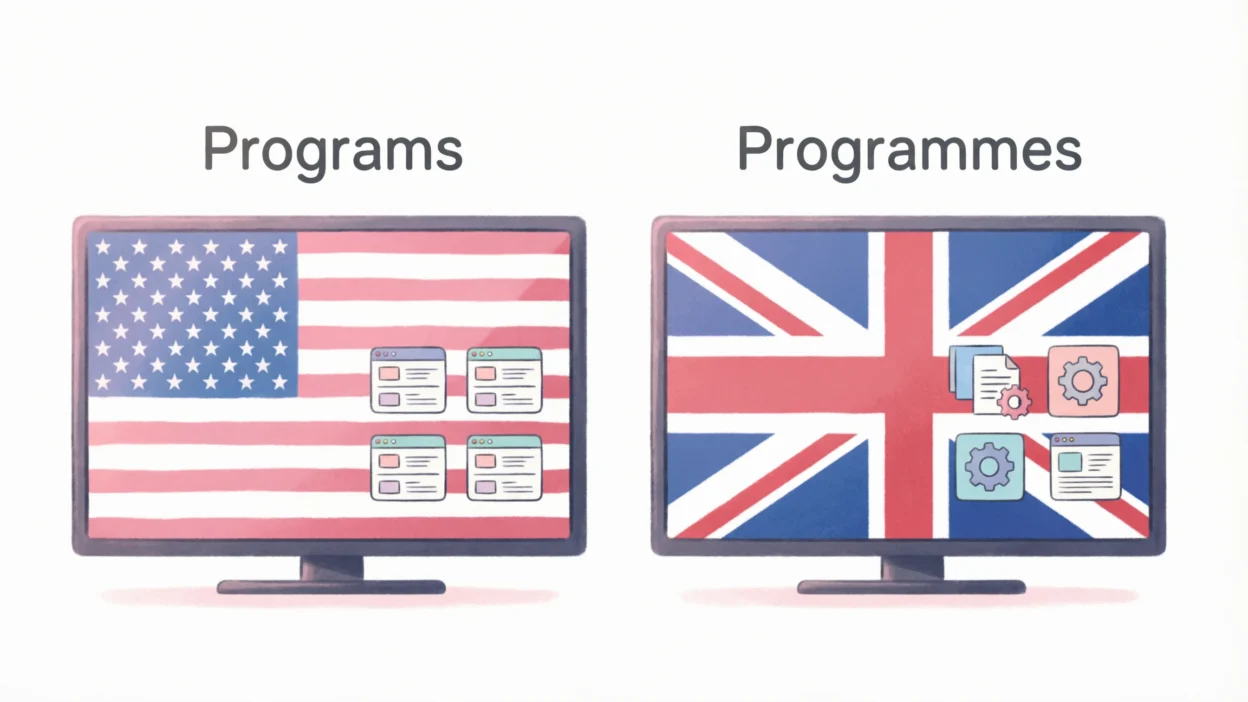
“Programs” and “programmes” have the same meaning in many situations, but the spelling depends mainly on regional English usage.
The key idea: American English vs British English spelling.
Both words can refer to:
- planned activities
- TV or radio shows
- courses or systems
- computer software (with one important exception)
Understanding the difference will help you choose the correct spelling for your audience and context.
Quick Answer
- ✅ Programs – American English spelling
- ✅ Programmes – British English spelling (except for computer software)
- ✏️ Remember: American English prefers “program,” British English often prefers “programme”
Clear Explanation
What Does “Programs” Mean?
Programs is the American English plural form of program.
👉 It can refer to:
- television shows
- planned events
- educational systems
- software applications
Examples:
- educational programs
- TV programs
- fitness programs
- computer programs
- training programs
👉 “Programs” is commonly used in:
- the United States
- American business writing
- software and technology worldwide
Common Uses of “Programs”
1. Television or Radio Shows
Examples:
- news programs
- comedy programs
Example Sentence:
- She watches cooking programs every weekend.
2. Education and Training
Examples:
- training programs
- university programs
Example Sentence:
- The college offers several science programs.
3. Computer Software
Examples:
- computer programs
- software programs
Example Sentence:
- He develops computer programs professionally.
What Does “Programmes” Mean?
Programmes is the British English plural form of programme.
👉 It refers to:
- TV shows
- planned events
- educational systems
- schedules or activities
Examples:
- training programmes
- television programmes
- fitness programmes
- educational programmes
- theatre programmes
👉 “Programmes” is commonly used in:
- the United Kingdom
- Australia
- New Zealand
- Commonwealth English
Important Exception: Computers
Even in British English:
✅ computer programs is usually preferred
❌ computer programmes is less common in modern tech writing
This is one of the biggest differences.
Common Uses of “Programmes”
1. Television Shows
Examples:
- comedy programmes
- news programmes
Example Sentence:
- British television programmes are popular worldwide.
2. Organized Activities
Examples:
- training programmes
- educational programmes
Example Sentence:
- The school introduced new learning programmes.
3. Printed Event Guides
Examples:
- theatre programmes
- concert programmes
Example Sentence:
- Guests received programmes at the entrance.
Key Difference
| Feature | Programs | Programmes |
|---|---|---|
| Meaning | Same in most contexts | Same in most contexts |
| English Style | American English | British English |
| Computer Software | Preferred worldwide | Rare in tech usage |
| Pronunciation | Same | Same |
Which One to Use and When
Use “Programs” When:
- Writing American English
- Writing about software or coding
- Writing for U.S. audiences
Examples:
- computer programs
- TV programs
- training programs
- software programs
- educational programs
Example Sentences:
- The company develops computer programs.
- She enjoys cooking programs.
- Universities offer many programs.
Use “Programmes” When:
- Writing British English
- Referring to TV shows or organized activities
- Writing for UK or Commonwealth audiences
Examples:
- television programmes
- educational programmes
- theatre programmes
- training programmes
- fitness programmes
Example Sentences:
- The university launched new programmes.
- He watches nature programmes regularly.
- Visitors received concert programmes.
Common Mistakes People Make
1. Using “Programmes” for Software
In technology:
✅ computer programs
is preferred almost everywhere.
2. Mixing American and British Spelling
Avoid switching between:
- programs
and - programmes
within the same document.
3. Thinking One Is Incorrect
Both are correct depending on context and region.
4. Forgetting the Tech Exception
British English still usually prefers:
- computer program
not: - computer programme
5. Assuming Pronunciation Changes
Both are pronounced the same way.
Easy Memory Trick
👉 Programs = American and computer-related
👉 Programmes = British general usage
Think:
- software almost always uses “programs.”
Real-Life Examples
Correct Use of “Programs”
- The company creates computer programs.
- She enjoys educational programs.
- Universities offer many training programs.
Correct Use of “Programmes”
- British television programmes are popular.
- The theatre distributed printed programmes.
- The school launched new educational programmes.
Practice Exercise
Fill in the blanks:
- American English commonly uses “______.”
- British English often uses “______.”
- Computer software usually uses “______” worldwide.
Answers:
- programs
- programmes
- programs
Quick Quiz
- Which spelling is American English?
a) Programmes
b) Programs - Which spelling is commonly British English?
a) Programs
b) Programmes - Which spelling is usually preferred for computer software worldwide?
a) Programs
b) Programmes
Correct Answers:
- b) Programs
- b) Programmes
- a) Programs
Why This Confusion Happens
The confusion happens because:
- both spellings are correct
- English varies by region
- technology writing follows different conventions
However:
- programs is American English and standard in computing
- programmes is British English for general usage
Helpful Tip for Better Writing
Stay consistent:
- American English → programs
- British English → programmes
- Computer software → usually programs everywhere
Conclusion
The difference between “programs” and “programmes” is mainly regional spelling preference, with one important exception for computer software.
👉 Programs = American English and computing
👉 Programmes = British English general usage
Using the correct spelling will make your writing more polished and audience-appropriate.

Daniel Brooks is a technology and business writer with experience covering innovation, startups, and digital tools. His work emphasizes clarity, accuracy, and real-world application. Daniel aims to help readers understand emerging technologies and make informed decisions in a fast-changing digital landscape.