
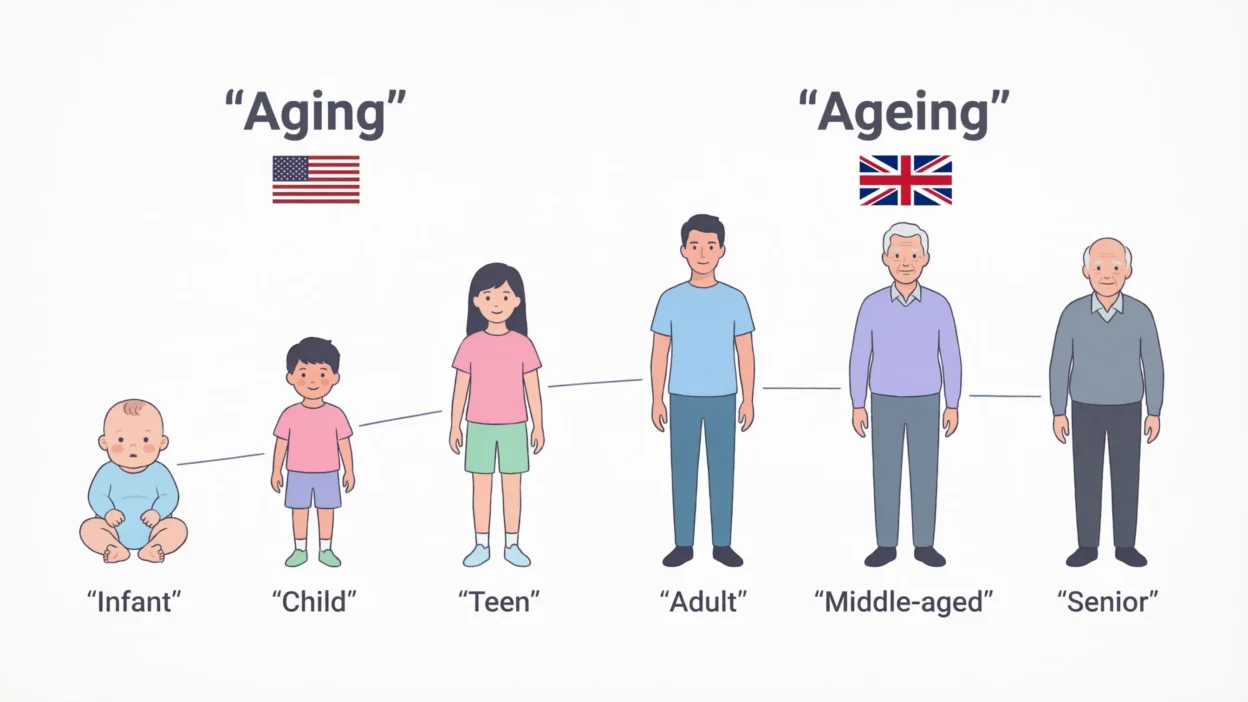
“Ageing” and “aging” both refer to the process of growing older or becoming mature over time. The meanings are identical, but the spelling differs depending on the type of English being used.
The key idea: British English vs American English spelling.
Understanding the difference will help you choose the correct form for your audience and maintain consistent writing style.
Quick Answer
- ✅ Aging – American English spelling
- ✅ Ageing – British English spelling
- ✏️ Remember: One “e” extra = British style
Clear Explanation
What Does “Aging” Mean?
Aging is the American English spelling of the present participle and noun form of age.
👉 It refers to:
- growing older
- becoming mature over time
- physical or chemical changes caused by time
Examples:
- Aging is a natural process.
- Scientists study aging carefully.
- The wine is aging in barrels.
- He worries about aging skin.
- The population is aging rapidly.
👉 “Aging” is commonly used in:
- the United States
- American medical writing
- U.S. scientific publications
Common Uses of “Aging”
1. Human Aging
Examples:
- aging process
- aging population
Example Sentence:
- Doctors research healthy aging.
2. Beauty and Skincare
Examples:
- aging skin
- anti-aging cream
Example Sentence:
- Many products target aging skin.
3. Food and Materials
Examples:
- aging cheese
- aging wine
Example Sentence:
- The wine is aging perfectly.
What Does “Ageing” Mean?
Ageing is the British English spelling of the same word.
👉 It has exactly the same meaning:
- growing older
- maturing over time
- changing with age
Examples:
- Ageing affects everyone differently.
- Researchers study healthy ageing.
- The cheese is ageing slowly.
- He noticed signs of ageing.
- The population is ageing rapidly.
👉 “Ageing” is commonly used in:
- the United Kingdom
- Australia
- New Zealand
- Commonwealth English
Common Uses of “Ageing”
1. Health and Society
Examples:
- ageing population
- healthy ageing
Example Sentence:
- The country faces challenges from an ageing population.
2. Cosmetics and Appearance
Examples:
- ageing skin
- anti-ageing products
Example Sentence:
- The cream is marketed as anti-ageing.
3. Food and Drinks
Examples:
- ageing wine
- ageing whiskey
Example Sentence:
- The whisky is ageing in oak barrels.
Key Difference
| Feature | Aging | Ageing |
|---|---|---|
| Meaning | Same | Same |
| English Style | American English | British English |
| Pronunciation | Same | Same |
| Preferred In | United States | UK/Commonwealth |
Which One to Use and When
Use “Aging” When:
- Writing American English
- Writing for U.S. audiences
- Following American spelling conventions
Examples:
- aging population
- aging skin
- aging process
- aging wine
- anti-aging products
Example Sentences:
- Scientists study aging carefully.
- The population is aging quickly.
- She bought anti-aging cream.
Use “Ageing” When:
- Writing British English
- Writing for UK or Commonwealth audiences
- Following British spelling conventions
Examples:
- ageing population
- ageing skin
- ageing process
- ageing wine
- anti-ageing products
Example Sentences:
- Researchers focus on healthy ageing.
- The whisky is ageing well.
- The country has an ageing population.
Common Mistakes People Make
1. Thinking One Spelling Is Incorrect
Both are correct depending on regional style.
2. Mixing American and British English
Avoid using:
- aging
and - ageing
in the same document.
3. Forgetting Regional Preferences
- aging → American English
- ageing → British English
4. Assuming Pronunciation Changes
Both are pronounced the same way.
5. Inconsistent Professional Writing
Scientific and medical writing should stay consistent.
Easy Memory Trick
👉 Aging = American English
👉 Ageing = British English
Think:
- British English often keeps extra letters in spellings.
Real-Life Examples
Correct Use of “Aging”
- Aging is a natural part of life.
- Scientists study aging diseases.
- The wine is aging beautifully.
Correct Use of “Ageing”
- Healthy ageing is important.
- The whisky is ageing in barrels.
- The country has an ageing population.
Practice Exercise
Fill in the blanks:
- American English commonly uses “______.”
- British English commonly uses “______.”
- Both words refer to growing older over time.
Answers:
- aging
- ageing
- true
Quick Quiz
- Which spelling is American English?
a) Ageing
b) Aging - Which spelling is British English?
a) Aging
b) Ageing - Do both words mean the same thing?
a) Yes
b) No
Correct Answers:
- b) Aging
- b) Ageing
- a) Yes
Why This Confusion Happens
The confusion happens because:
- both spellings are correct
- pronunciation is identical
- English spelling varies by region
However:
- aging is American English
- ageing is British English
Helpful Tip for Better Writing
Stay consistent:
- American English → aging
- British English → ageing
Conclusion
The difference between “ageing” and “aging” is mainly regional spelling preference. Both words describe the process of growing older or maturing over time.
👉 Aging = American English
👉 Ageing = British English
Using the correct regional spelling will make your writing clearer and more professional.

Daniel Brooks is a technology and business writer with experience covering innovation, startups, and digital tools. His work emphasizes clarity, accuracy, and real-world application. Daniel aims to help readers understand emerging technologies and make informed decisions in a fast-changing digital landscape.