
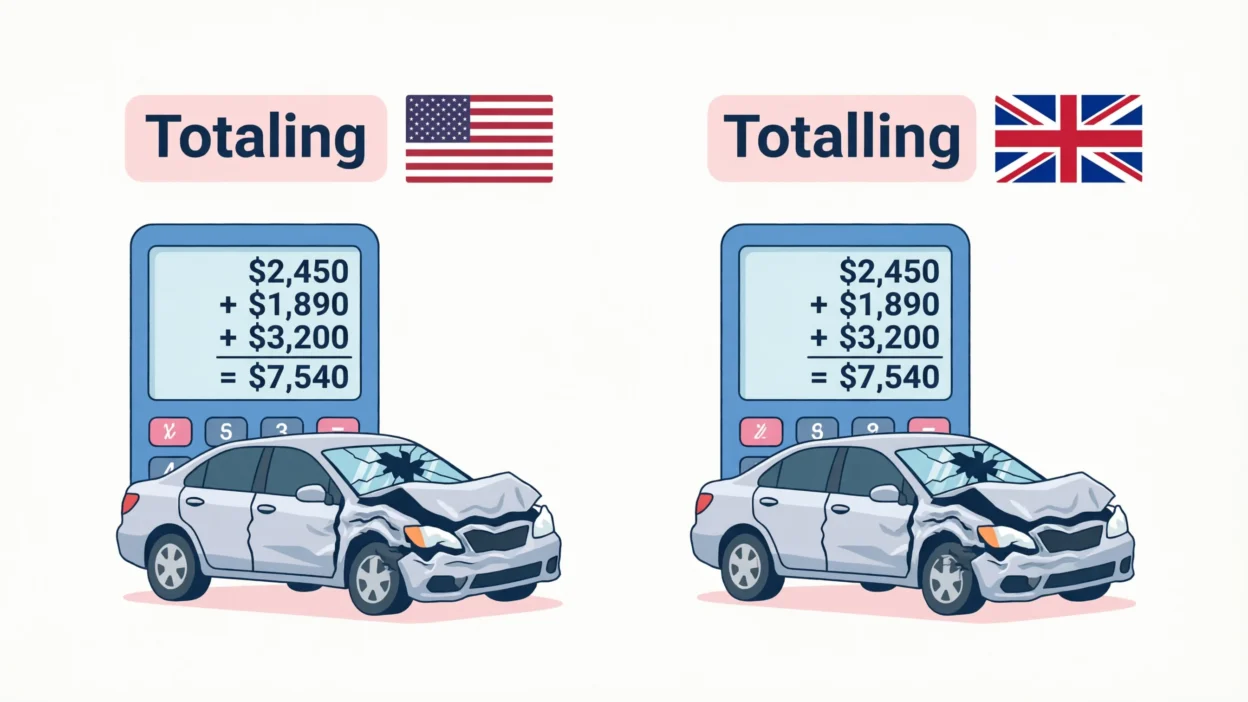
“Totalling” and “totaling” have the same meaning and pronunciation. The difference is mainly based on regional spelling conventions.
The key idea: British English vs American English spelling.
Both words are forms of the verb total, meaning:
- adding up numbers
- reaching a sum
- completely damaging something (especially vehicles)
Understanding the difference will help you choose the correct spelling for your audience and writing style.
Quick Answer
- ✅ Totaling – American English spelling
- ✅ Totalling – British English spelling
- ✏️ Remember: One “l” = American, two “l”s = British
Clear Explanation
What Does “Totaling” Mean?
Totaling is the American English spelling of the present participle form of total.
👉 It means:
- adding numbers together
- reaching a complete amount
- severely damaging a vehicle beyond repair
Examples:
- She is totaling the expenses.
- The costs are totaling over $500.
- The accident ended up totaling the car.
- He spent hours totaling receipts.
- They are totaling the final scores.
👉 “Totaling” is commonly used in:
- the United States
- American accounting and business writing
- U.S. insurance reports
Common Uses of “Totaling”
1. Adding Numbers
Examples:
- totaling expenses
- totaling scores
Example Sentence:
- She is totaling the monthly bills.
2. Reaching an Amount
Examples:
- totaling $1,000
- totaling several hours
Example Sentence:
- Their purchases are totaling more than expected.
3. Damaging a Vehicle
Examples:
- totaling a car
- totaling the truck
Example Sentence:
- The crash ended up totaling the vehicle.
What Does “Totalling” Mean?
Totalling is the British English spelling of the same word.
👉 It has exactly the same meaning:
- adding up
- reaching a sum
- severely damaging a vehicle
Examples:
- He is totalling the figures.
- Repairs ended up totalling thousands of pounds.
- The accident resulted in totalling the car.
- They are totalling the final costs.
- She spent the afternoon totalling invoices.
👉 “Totalling” is commonly used in:
- the United Kingdom
- Australia
- New Zealand
- Commonwealth English
Common Uses of “Totalling”
1. Mathematics and Accounting
Examples:
- totalling bills
- totalling accounts
Example Sentence:
- The accountant is totalling the receipts.
2. Reaching a Sum
Examples:
- totalling £500
- totalling several items
Example Sentence:
- The repairs are totalling a large amount.
3. Vehicle Damage
Examples:
- totalling a vehicle
- totalling the car
Example Sentence:
- The storm ended up totalling several cars.
Key Difference
| Feature | Totaling | Totalling |
|---|---|---|
| Meaning | Same | Same |
| English Style | American English | British English |
| Number of “L”s | One | Two |
| Pronunciation | Same | Same |
Which One to Use and When
Use “Totaling” When:
- Writing American English
- Writing for U.S. audiences
- Following American spelling conventions
Examples:
- totaling expenses
- totaling scores
- totaling costs
- totaling receipts
- totaling the car
Example Sentences:
- She is totaling the invoices.
- The accident ended up totaling the truck.
- The numbers are totaling more than expected.
Use “Totalling” When:
- Writing British English
- Writing for UK or Commonwealth audiences
- Following British spelling conventions
Examples:
- totalling expenses
- totalling scores
- totalling costs
- totalling receipts
- totalling the car
Example Sentences:
- He is totalling the figures now.
- The repairs are totalling thousands of pounds.
- The collision resulted in totalling the vehicle.
Common Mistakes People Make
1. Mixing American and British Spelling
Avoid using:
- totaling
and - totalling
in the same document.
2. Thinking One Spelling Is Wrong
Both are correct depending on regional style.
3. Forgetting Consonant-Doubling Rules
British English often doubles consonants:
- totalling
- travelling
- cancelling
American English often simplifies them:
- totaling
- traveling
- canceling
4. Assuming Pronunciation Changes
Both are pronounced the same way.
5. Inconsistent Professional Writing
Accounting and business documents should stay consistent in spelling style.
Easy Memory Trick
👉 One “l” = American English
👉 Two “l”s = British English
Think:
- totaling → USA style
- totalling → UK style
Real-Life Examples
Correct Use of “Totaling”
- She is totaling the receipts.
- The accident ended up totaling the car.
- The expenses are totaling over $2,000.
Correct Use of “Totalling”
- He is totalling the bills now.
- The damage resulted in totalling the vehicle.
- Their purchases are totalling more than expected.
Practice Exercise
Fill in the blanks:
- American English commonly uses “______.”
- British English commonly uses “______.”
- Both words can mean adding numbers together.
Answers:
- totaling
- totalling
- true
Quick Quiz
- Which spelling is American English?
a) Totalling
b) Totaling - Which spelling is British English?
a) Totaling
b) Totalling - Do both words have the same meaning?
a) Yes
b) No
Correct Answers:
- b) Totaling
- b) Totalling
- a) Yes
Why This Confusion Happens
The confusion happens because:
- both spellings are correct
- pronunciation is identical
- British English often doubles consonants
However:
- totaling is American English
- totalling is British English
Helpful Tip for Better Writing
Stay consistent:
- American English → totaling
- British English → totalling
Conclusion
The difference between “totalling” and “totaling” is mainly regional spelling preference. Both words refer to adding amounts together or severely damaging a vehicle.
👉 Totaling = American English
👉 Totalling = British English
Using the correct regional spelling will make your writing clearer and more professional.

Sophia Reynolds is a digital writer and researcher with a focus on modern trends, productivity, and online education. She enjoys exploring new ideas and presenting them in a simple, reader-friendly way. Sophia is committed to creating informative and trustworthy content that helps audiences stay informed and inspired.