English spelling can sometimes be confusing, especially when words sound similar but are spelled differently. One common mistake is writing “presense” instead of “presence.” Since both words look alike and share the same pronunciation, many students, ESL learners, and beginners mix them up.
Understanding the correct spelling is important for academic writing, professional communication, and everyday use. This guide explains the difference in very simple English so that anyone can understand it easily on the first read.
Quick Answer
Here is the clear and simple answer:
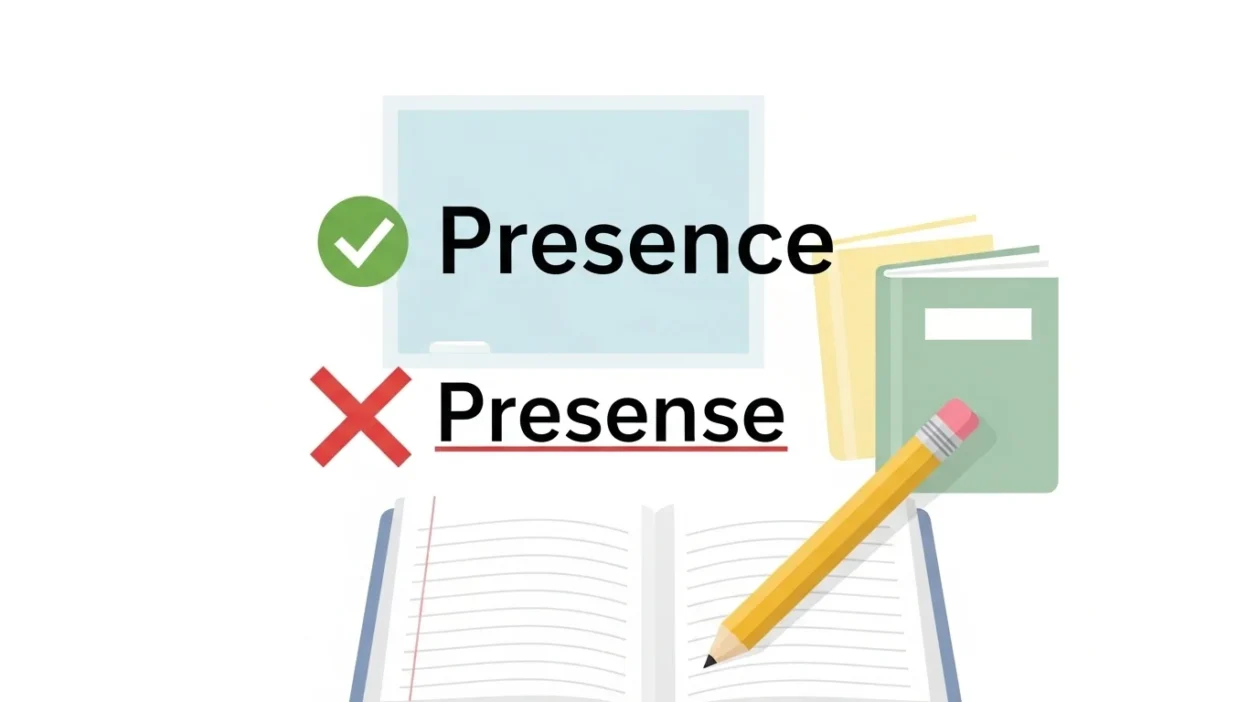
- ✅ Presence – Correct spelling; means being in a place or the state of existing.
- ❌ Presense – Incorrect spelling; not a real English word.
- 📚 Always use presence in writing and speech.
- ✏️ If you see “presense,” it is a spelling mistake that should be corrected.
Origin and Background
The word presence comes from the Latin word praesentia, which means “being present” or “being in front of someone.” Over time, it entered Old French as presence and later became part of modern English.
It is related to the word present, which means “to be in a place” or “to exist at a particular time.” By adding the suffix “-ence,” the noun presence is formed.
Related Word Forms
| Word | Meaning |
|---|---|
| Present | To be in a place |
| Presence | The state of being present |
| Absent | Not present |
| Absence | The state of being away |
This pattern helps explain why presence is the correct spelling.
Clear Explanation of the Difference
What Does “Presence” Mean?
Presence is a noun that refers to the state of being somewhere or existing in a particular place or moment. It can also describe a person’s influence, aura, or importance.
Meanings of “Presence”
- Being in a Place
- Her presence made everyone happy.
- The teacher’s presence kept the class quiet.
- A Calm and Confident Aura
- The leader has a strong presence.
- The actor impressed the audience with his stage presence.
- Existence or Availability
- The presence of oxygen is essential for life.
- The company increased its online presence.
What About “Presense”?
Presense is not a correct English word. It is a common spelling mistake caused by confusion between the endings “-ence” and “-ense.”
Therefore:
- ❌ Presense – Incorrect
- ✅ Presence – Correct
Always use presence in formal and informal writing.
Comparison Table
| Feature | Presence | Presense |
|---|---|---|
| Spelling | Correct | Incorrect |
| Meaning | State of being present or existing | No meaning in standard English |
| Part of Speech | Noun | Not a valid word |
| Dictionary Recognition | Yes | No |
| Usage | Formal and informal writing | Considered a mistake |
| Example Sentence | Her presence brightened the room. | ❌ Her presense brightened the room. |
Which One to Use and When
Use “Presence” When:
- Referring to someone being in a place
- Describing confidence or influence
- Writing essays, emails, and reports
- Talking about physical or digital existence
- Communicating in professional or academic settings
Examples:
- Your presence is requested at the meeting.
- The manager’s presence improved productivity.
- The brand has a strong online presence.
- The presence of water makes life possible.
- She has a graceful stage presence.
Avoid “Presense”
Never use presense in any context, as it is always incorrect.
Common Mistakes People Make
1. Confusing “-ence” with “-ense”
Many learners assume the word ends with “-sense,” leading to the incorrect spelling “presense.”
❌ Presense
✅ Presence
2. Spelling by Sound
Since both spellings sound the same, people rely on pronunciation instead of correct spelling.
3. Typing Errors
Fast typing or autocorrect mistakes can result in incorrect forms.
4. Lack of Proofreading
Failing to review written work often allows spelling errors to remain unnoticed.
5. Mixing It with Similar Words
Words like sense, defense, and license can cause confusion due to similar endings.
Everyday Real-Life Examples
Emails
- “Your presence is required at tomorrow’s meeting.”
- “Thank you for your presence at the event.”
School and Education
- “Regular presence in class improves learning.”
- “The teacher noted the student’s presence.”
Workplace Communication
- “The CEO’s presence inspired the team.”
- “Please confirm your presence at the conference.”
News and Media
- “The country increased its military presence in the region.”
- “The company expanded its global presence.”
Social Media
- “She has a strong online presence.”
- “Influencers build their presence through engaging content.”
Daily Conversations
- “Your presence means a lot to me.”
- “His calm presence comforted everyone.”
Short Learning Section for Students and Beginners
Easy Trick to Remember
Think of the word present.
Present + ence = Presence
If you can spell present, you can spell presence.
Memory Tip
“Presence comes from present.”
Pronunciation Guide
- Presence: PREZ-uhns
Practice Exercise
Fill in the blanks with the correct word:
- Your ______ is important to us.
- The leader’s ______ inspired the team.
- The ______ of fresh air improved the room.
Answers:
- Presence
- Presence
- Presence
Quick Quiz
Choose the correct option:
- Her ______ made the event special.
a) Presense
b) Presence - The company has a strong online ______.
a) Presence
b) Presense
Correct Answers:
- b) Presence
- a) Presence
Frequently Asked Questions (FAQs)
1. Is “presense” a real word?
No, “presense” is not a correct English word. It is a spelling mistake.
2. What is the correct spelling?
The correct spelling is presence.
3. What does “presence” mean?
It means the state of being present, existing, or having influence.
4. How do you pronounce “presence”?
It is pronounced as PREZ-uhns.
5. What is the difference between “present” and “presence”?
“Present” means being in a place, while “presence” is the noun form describing that state.
6. Can “presence” refer to confidence?
Yes, it can describe a person’s strong and impressive personality, such as “stage presence.”
7. What is “online presence”?
It refers to how visible a person or organization is on the internet.
8. How can I remember the correct spelling?
Remember this simple rule: Presence comes from present.
Conclusion
The confusion between “presense” and “presence” is common, but the solution is simple. Presence is the correct spelling and refers to the state of being present, existing, or having influence. On the other hand, presense is an incorrect form that should never be used.
By learning its origin, understanding its meaning, and practicing with real-life examples, you can avoid this mistake with confidence. Just remember: If it comes from “present,” the correct spelling is “presence.”

Sophia Reynolds is a digital writer and researcher with a focus on modern trends, productivity, and online education. She enjoys exploring new ideas and presenting them in a simple, reader-friendly way. Sophia is committed to creating informative and trustworthy content that helps audiences stay informed and inspired.