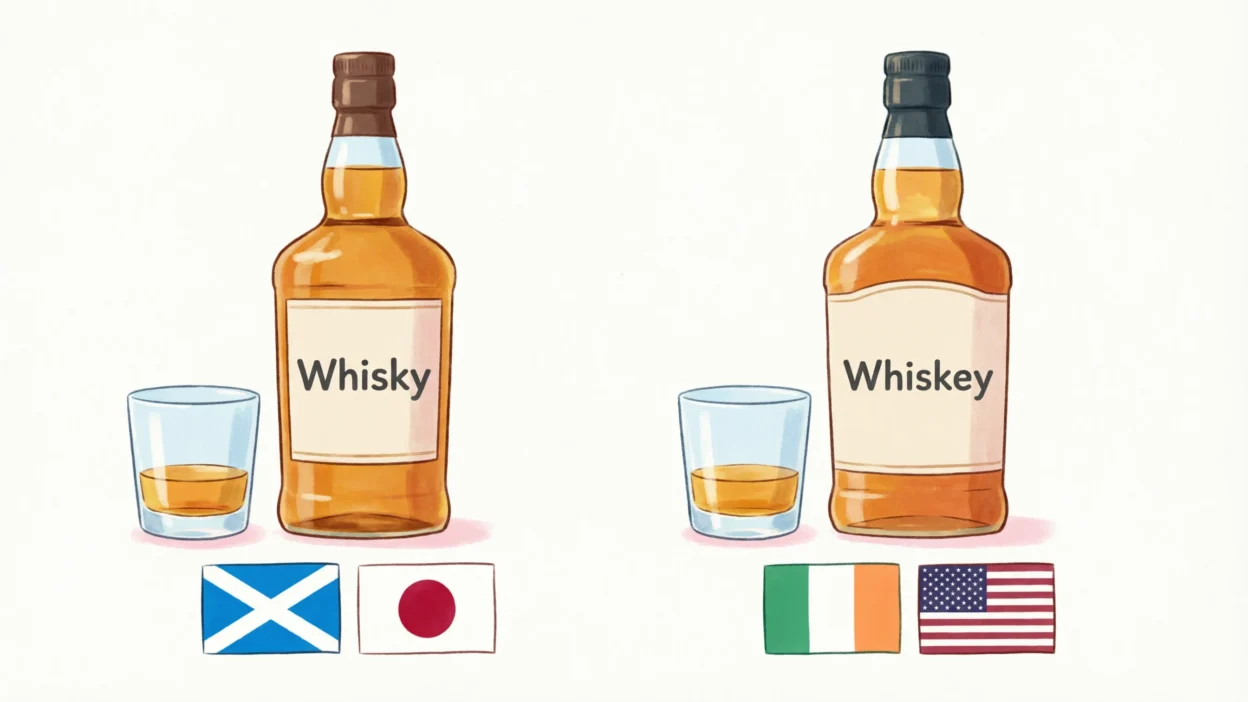
“Whisky” and “whiskey” both refer to the same type of distilled alcoholic drink made from fermented grain. The main difference is regional spelling and production tradition.
The key idea: Scottish/Canadian spelling vs Irish/American spelling.
Understanding the difference helps you identify drink origins and use the correct spelling in writing.
Quick Answer
- ✅ Whisky – Common in Scotland, Canada, and Japan
- ✅ Whiskey – Common in Ireland and the United States
- ✏️ Remember: Ireland and America usually add the “e”
Clear Explanation
What Does “Whisky” Mean?
Whisky refers to distilled grain spirits and is the preferred spelling in several countries.
👉 Commonly used in:
- Scotland
- Canada
- Japan
Examples:
- Scotch whisky
- Japanese whisky
- Canadian whisky
- single malt whisky
- blended whisky
👉 Famous styles:
- Scotch whisky
- Japanese whisky
- Canadian whisky
Common Uses of “Whisky”
1. Scottish Spirits
Examples:
- Scotch whisky
- Highland whisky
Example Sentence:
- Scotland is famous for producing whisky.
2. Japanese Whisky
Examples:
- Japanese whisky brands
- aged whisky
Example Sentence:
- Japanese whisky has become popular worldwide.
3. Canadian Whisky
Examples:
- Canadian rye whisky
- blended whisky
Example Sentence:
- He bought a bottle of Canadian whisky.
What Does “Whiskey” Mean?
Whiskey is the preferred spelling in:
- Ireland
- the United States
👉 It refers to the same type of alcoholic drink.
Examples:
- Irish whiskey
- Tennessee whiskey
- bourbon whiskey
- rye whiskey
- American whiskey
👉 Famous styles:
- Irish whiskey
- bourbon whiskey
- Tennessee whiskey
Common Uses of “Whiskey”
1. Irish Whiskey
Examples:
- Irish whiskey distilleries
- aged Irish whiskey
Example Sentence:
- Ireland is famous for whiskey production.
2. American Whiskey
Examples:
- bourbon whiskey
- Tennessee whiskey
Example Sentence:
- Kentucky produces world-famous whiskey.
3. Cocktail Culture
Examples:
- whiskey sour
- whiskey cocktail
Example Sentence:
- He ordered a whiskey sour.
Key Difference
| Feature | Whisky | Whiskey |
|---|---|---|
| Meaning | Same drink type | Same drink type |
| Common Regions | Scotland, Canada, Japan | Ireland, United States |
| Spelling | No “e” | Includes “e” |
| Pronunciation | Same | Same |
Which One to Use and When
Use “Whisky” When:
- Referring to Scottish products
- Writing about Canadian or Japanese brands
- Using Scottish-style spelling
Examples:
- Scotch whisky
- Japanese whisky
- Canadian whisky
- malt whisky
- blended whisky
Example Sentences:
- He enjoys Scotch whisky.
- Japanese whisky has gained popularity.
- They toured a whisky distillery in Scotland.
Use “Whiskey” When:
- Referring to Irish or American products
- Writing about bourbon or Tennessee whiskey
- Using Irish/American spelling
Examples:
- Irish whiskey
- bourbon whiskey
- Tennessee whiskey
- rye whiskey
- whiskey sour
Example Sentences:
- She ordered Irish whiskey.
- Bourbon whiskey is popular in the United States.
- The bar serves premium whiskey.
Common Mistakes People Make
1. Thinking One Spelling Is Wrong
Both spellings are correct.
2. Ignoring Regional Tradition
Spelling usually matches the country of origin.
3. Mixing Brand Spellings
Always follow the producer’s official spelling.
Example:
- Scotch whisky ✅
- Irish whiskey ✅
4. Assuming Pronunciation Changes
Both are pronounced the same way.
5. Forgetting the “E” Rule
Ireland and America usually use:
- whiskey
Scotland usually uses:
- whisky
Easy Memory Trick
👉 Whiskey = Ireland & America (extra “e”)
👉 Whisky = Scotland, Canada, Japan
Think:
- Ireland adds the “e”
- Scotland does not
Real-Life Examples
Correct Use of “Whisky”
- Scotland exports famous whisky worldwide.
- He bought Japanese whisky.
- The whisky distillery offered tours.
Correct Use of “Whiskey”
- She enjoys Irish whiskey.
- Bourbon whiskey is made in the U.S.
- He ordered a glass of whiskey.
Practice Exercise
Fill in the blanks:
- Scotland commonly uses “______.”
- Ireland commonly uses “______.”
- Both words refer to distilled grain spirits.
Answers:
- whisky
- whiskey
- true
Quick Quiz
- Which spelling is common in Scotland?
a) Whiskey
b) Whisky - Which spelling is common in Ireland?
a) Whisky
b) Whiskey - Do both words refer to the same type of drink?
a) Yes
b) No
Correct Answers:
- b) Whisky
- b) Whiskey
- a) Yes
Why This Confusion Happens
The confusion happens because:
- both spellings are correct
- pronunciation is identical
- spelling depends on regional traditions and branding
However:
- whisky is associated with Scotland, Canada, and Japan
- whiskey is associated with Ireland and the United States
Helpful Tip for Better Writing
Use the spelling that matches the product’s origin:
- Scotch whisky
- Irish whiskey
- bourbon whiskey
- Japanese whisky
Conclusion
The difference between “whisky” and “whiskey” is mainly regional spelling tradition. Both refer to distilled grain spirits, but different countries prefer different spellings.
👉 Whisky = Scotland, Canada, Japan
👉 Whiskey = Ireland, United States
Using the correct spelling helps your writing appear accurate and culturally informed.

Michael Anderson is a professional editor and senior contributor with a background in long-form content and strategic writing. He focuses on quality, structure, and credibility across all publications. Michael brings years of experience in content development and ensures high editorial standards for every project.