Many learners search for “make do vs make due” because the phrases sound identical. However, only one is correct in standard English.
The confusion comes from mixing up “do” and “due.”
Quick Answer
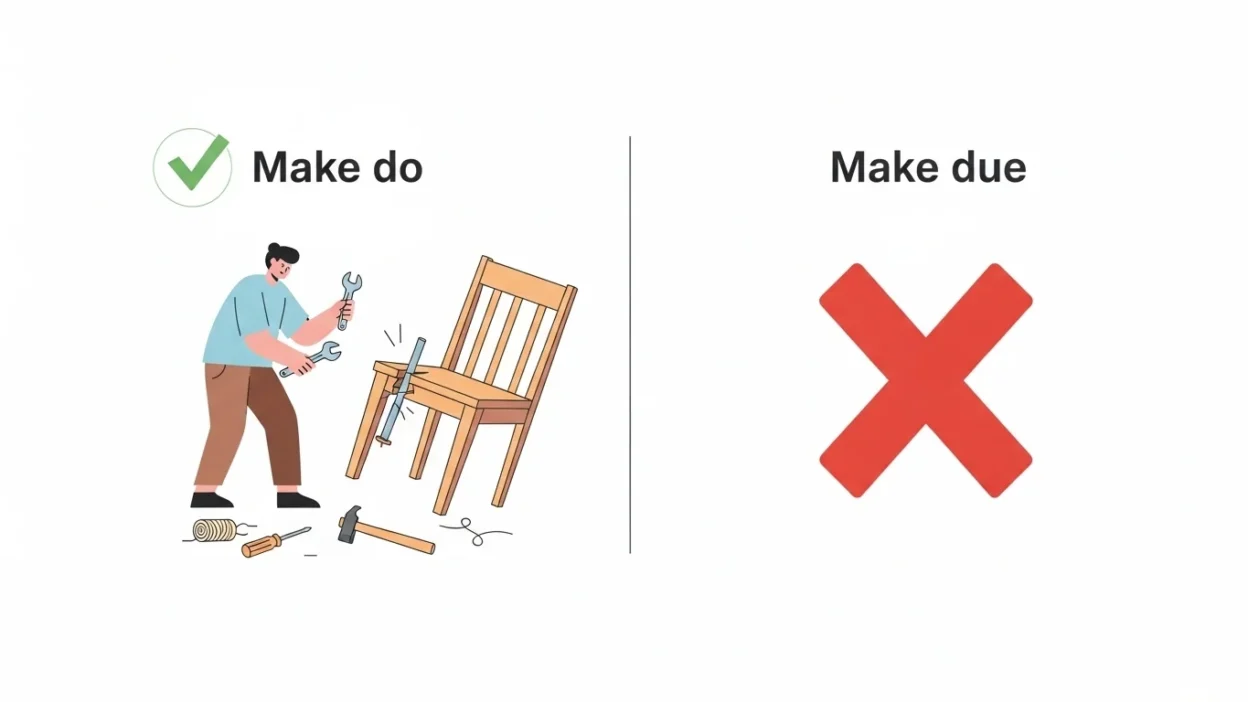
- ✅ Make do – Correct phrase; means “manage with what you have”
- ❌ Make due – Incorrect in this context
- ✏️ Remember: Do = action → make do
Clear Explanation of the Difference
What Does “Make Do” Mean?
Make do is a verb phrase.
👉 It means:
- to manage with limited resources
- to cope without something better
Examples:
- We’ll have to make do without a car.
- She made do with what she had.
- They made do in difficult conditions.
- I didn’t have tools, so I made do.
- He made do with old clothes.
What About “Make Due”?
Make due is not correct in this context.
❌ Make due
✅ Make do
👉 The word “due” means:
- expected or owed
- scheduled
But it does not fit this phrase.
Comparison Table
| Feature | Make do | Make due |
|---|---|---|
| Spelling | Correct | Incorrect |
| Meaning | Manage with less | No valid meaning here |
| Usage | Common phrase | Considered an error |
| Example | We made do. | ❌ We made due. |
Which One to Use and When
Use “Make Do” When:
- You are managing with limited resources
- You don’t have something better
- You are adapting to a situation
Examples:
- We had to make do without electricity.
- She made do with simple tools.
- They made do during hard times.
- I’ll make do for now.
- He made do with leftovers.
Avoid “Make Due”
Never use make due in place of make do.
Common Mistakes People Make
1. Confusing “Do” and “Due”
They sound the same but mean different things.
2. Using “Due” Incorrectly
“Due” is used for time or obligation, not here.
3. Writing Based on Sound
Spelling based on pronunciation causes errors.
4. Not Knowing Fixed Phrases
“Make do” is a set expression.
5. Lack of Practice
Practice helps fix common mistakes.
Everyday Real-Life Examples
Daily Life
- “We’ll make do with what we have.”
- “I had to make do without help.”
Work
- “We made do with limited resources.”
- “The team made do during shortages.”
School
- “Students made do without books.”
- “He made do with old notes.”
Conversations
- “Just make do for now.”
- “We’ll make do.”
Short Learning Section for Students and Beginners
Easy Rule to Remember
Make do = correct phrase
Memory Tip
“Do = action → make do.”
Practice Exercise
Fill in the blanks:
- We had to ______ without help.
- She ______ with limited tools.
- They will ______ for now.
Answers:
- make do
- made do
- make do
Quick Quiz
Choose the correct option:
- We had to ______ without electricity.
a) Make do
b) Make due - She ______ with what she had.
a) Made due
b) Made do
Correct Answers:
- a) Make do
- b) Made do
Frequently Asked Questions (FAQs)
1. Is “make due” correct?
No, it is incorrect in this context.
2. What is the correct phrase?
The correct phrase is make do.
3. What does “make do” mean?
It means to manage with limited resources.
4. Why do people say “make due”?
Because “do” and “due” sound the same.
5. Is “make do” formal?
It is used in both formal and informal English.
6. Is this a common mistake?
Yes, very common.
7. Can “due” be used elsewhere?
Yes, in phrases like “due date.”
8. How can I remember it?
Remember: Do = action.
Conclusion
The difference between “make do” and “make due” is simple. Make do is the correct phrase used when managing with limited resources, while make due is incorrect in this context.
To avoid mistakes, remember:
👉 Use “make do,” not “make due.”
This will help you write clearly and correctly every time.

Emily Carter is a content writer and editor based in the United States, specializing in lifestyle, wellness, and personal development topics. With a passion for clear and engaging storytelling, she creates content that connects with readers and delivers practical value. Emily focuses on making complex ideas easy to understand and relatable.