Many learners search for “anyway vs anyways” because both forms appear in everyday speech. While they may sound similar, they are not equally accepted in standard English.
The key idea: one is standard, the other is informal.
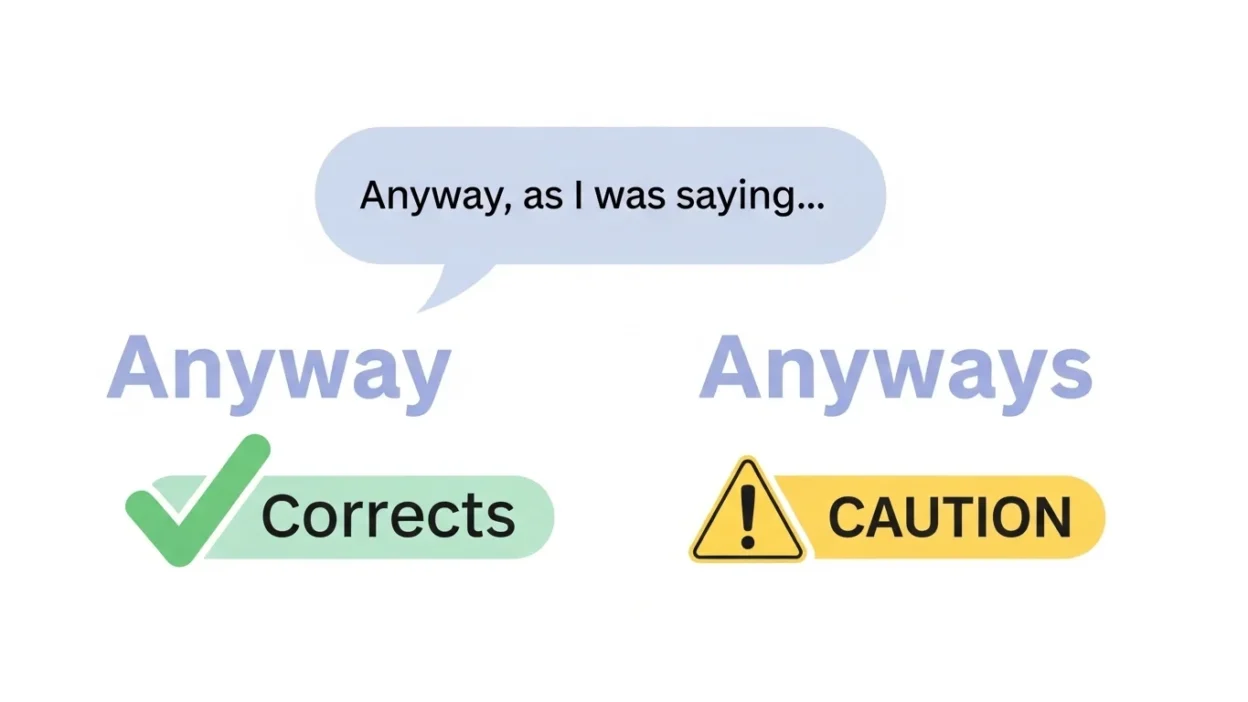
Quick Answer
- ✅ Anyway – Correct and standard in all contexts
- ⚠️ Anyways – Informal, mostly used in casual speech
- ❌ Avoid anyways in formal writing
- ✏️ Remember: Anyway = correct choice
Clear Explanation of the Difference
What Does “Anyway” Mean?
Anyway is an adverb.
👉 It means:
- “in any case”
- “despite that”
- used to change or return to a topic
Examples:
- I was tired, but I went anyway.
- Anyway, let’s continue.
- It doesn’t matter anyway.
- She didn’t call, but I went anyway.
- Anyway, what were we saying?
What Does “Anyways” Mean?
Anyways is also used as an adverb, but:
👉 It is considered informal or nonstandard in many contexts.
Examples (casual use):
- Anyways, let’s go.
- I didn’t like it anyways.
✔ Acceptable in:
- Casual conversation
- Informal texting
❌ Not recommended in:
- Academic writing
- Professional communication
Comparison Table
| Feature | Anyway | Anyways |
|---|---|---|
| Type | Adverb | Informal adverb |
| Correctness | Standard English | Informal / nonstandard |
| Usage | Formal & informal | Casual only |
| Example | Anyway, let’s start. | Anyways, let’s go. |
Which One to Use and When
Use “Anyway” When:
- Writing essays or formal content
- Speaking in professional settings
- You want correct standard English
Examples:
- Anyway, let’s begin.
- I’ll do it anyway.
- It doesn’t matter anyway.
- Anyway, moving on.
- He didn’t agree, but we continued anyway.
Use “Anyways” When:
- Speaking casually with friends
- Texting or informal chats
Examples:
- Anyways, I’m leaving.
- I didn’t like it anyways.
👉 Still, it’s better to use anyway in most cases.
Common Mistakes People Make
1. Using “Anyways” in Formal Writing
❌ Anyways, this is my conclusion
✅ Anyway, this is my conclusion
2. Thinking Both Are Equal
They are not equally accepted.
3. Overusing Informal Language
Professional writing needs standard forms.
4. Not Knowing Context
Context determines correctness.
5. Copying Spoken Language
Speech habits don’t always fit writing.
Everyday Real-Life Examples
Conversations
- “Anyway, let’s go.”
- “Anyways, I’m tired.” (informal)
School
- “Anyway, we should continue.”
- Avoid “anyways” in essays
Work
- “Anyway, let’s proceed.”
- Use standard English
Social Media
- “Anyways, that’s my opinion.”
- Casual usage is common
Writing
- “Anyway, the topic is clear.”
- Prefer “anyway” always
Short Learning Section for Students and Beginners
Easy Rule to Remember
- Anyway = correct
- Anyways = informal
Memory Tip
“No ‘s’ for success → anyway.”
Practice Exercise
Fill in the blanks:
- ______, let’s start.
- I didn’t like it ______.
- ______, we should continue.
Answers:
- Anyway
- anyway
- Anyway
Quick Quiz
Choose the correct option:
- ______, let’s begin.
a) Anyways
b) Anyway - I will do it ______.
a) Anyways
b) Anyway
Correct Answers:
- b) Anyway
- b) Anyway
Frequently Asked Questions (FAQs)
1. Is “anyways” correct?
It is informal but not standard.
2. Which one should I use?
Use anyway in most cases.
3. Can I use “anyways” in essays?
No, avoid it.
4. Is “anyways” wrong?
Not wrong in casual speech, but not preferred.
5. Which is more common?
Anyway is standard and more widely accepted.
6. Is this a common mistake?
Yes, very common.
7. Can I use both in speaking?
Yes, but “anyway” is better.
8. How can I remember it?
Remember: Anyway = correct form.
Conclusion
The difference between “anyway” and “anyways” is about correctness and context. Anyway is the standard and correct form used in all situations, while anyways is informal and should be limited to casual speech.
To stay accurate, remember:
👉 Use “anyway” for correct English
👉 Avoid “anyways” in formal writing
This will help you write clearly and professionally every time.

Emily Carter is a content writer and editor based in the United States, specializing in lifestyle, wellness, and personal development topics. With a passion for clear and engaging storytelling, she creates content that connects with readers and delivers practical value. Emily focuses on making complex ideas easy to understand and relatable.