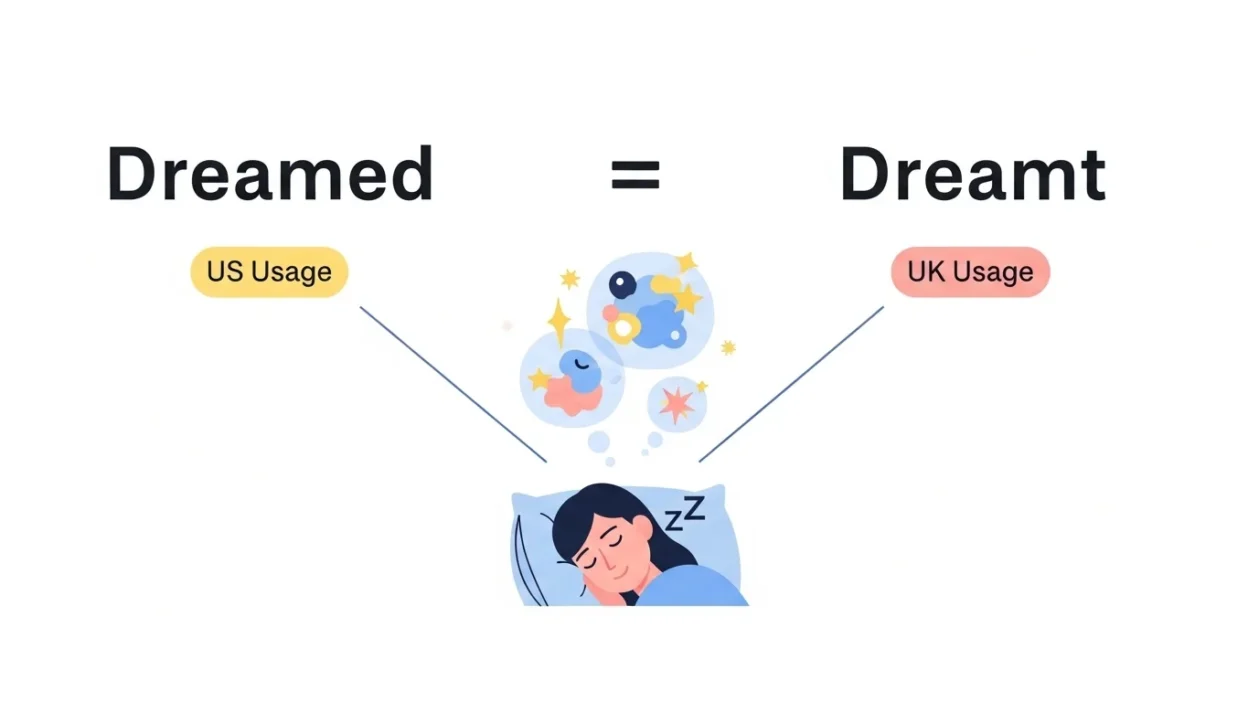
Many learners search for “dreamed vs dreamt” because both forms exist and are correct. The confusion comes from regional usage, not meaning.
The key idea: they mean the same thing.
Quick Answer
- ✅ Dreamed – More common in American English
- ✅ Dreamt – More common in British English
- ✔ Both are correct
- ✏️ Remember: Meaning is the same, usage depends on style
Clear Explanation of the Difference
What Do They Mean?
Both dreamed and dreamt are the past tense and past participle of dream.
👉 They mean:
- to experience dreams during sleep
- to imagine or hope for something
Examples (Same Meaning)
- I dreamed about flying.
- I dreamt about flying.
✔ Both sentences are correct and mean the same thing.
Regional Usage
American English 🇺🇸
- Dreamed is preferred
- More common in modern writing
Examples:
- I dreamed last night.
- She dreamed of success.
British English 🇬🇧
- Dreamt is more common
- Sounds slightly more traditional
Examples:
- I dreamt about you.
- He dreamt of adventure.
Comparison Table
| Feature | Dreamed | Dreamt |
|---|---|---|
| Meaning | Same | Same |
| Type | Past tense | Past tense |
| Region | American English | British English |
| Usage | More common globally | Slightly less common |
| Example | I dreamed last night. | I dreamt last night. |
Which One to Use and When
Use “Dreamed” When:
- Writing in American English
- You want a more modern, widely accepted form
Examples:
- I dreamed about it.
- She dreamed of becoming a doctor.
- We dreamed big.
- He dreamed last night.
- They dreamed of success.
Use “Dreamt” When:
- Writing in British English
- You prefer a traditional or literary tone
Examples:
- I dreamt of you.
- She dreamt about the future.
- He dreamt last night.
- They dreamt of adventure.
- I dreamt something strange.
Common Mistakes People Make
1. Thinking One Is Wrong
Both are correct.
2. Mixing Styles
Switching between American and British forms in one text.
3. Overthinking Usage
4. Assuming “Dreamt” Is Old Only
It is still used, especially in British English.
5. Ignoring Consistency
Stick to one style in writing.
Everyday Real-Life Examples
Conversations
- “I dreamed about you.”
- “I dreamt about you.”
Writing
- “She dreamed of success.”
- “She dreamt of success.”
Stories
- “He dreamed of flying.”
- “He dreamt of flying.”
School
- “Use one style consistently.”
- “Both forms are correct.”
Social Media
- “I dreamed something weird.”
- “I dreamt something weird.”
Short Learning Section for Students and Beginners
Easy Rule to Remember
- Dreamed = American English
- Dreamt = British English
Memory Tip
“Both are correct, just choose one style.”
Practice Exercise
Fill in the blanks:
- I ______ about flying.
- She ______ of success.
- He ______ last night.
Answers:
All can be: dreamed or dreamt
Quick Quiz
Choose the correct option:
- I ______ about you.
a) Dreamed
b) Dreamt - She ______ of success.
a) Dreamed
b) Dreamt
Correct Answers:
✔ Both options are correct
Frequently Asked Questions (FAQs)
1. Is “dreamed” correct?
Yes, especially in American English.
2. Is “dreamt” correct?
Yes, especially in British English.
3. Do they have different meanings?
No, they mean the same.
4. Which is more common?
Dreamed is more common globally.
5. Can I use both in one sentence?
It’s better to stay consistent.
6. Is “dreamt” old-fashioned?
Not necessarily, just less common in some regions.
7. Which should I use in exams?
Usually dreamed, unless British English is required.
8. How can I remember it?
Remember: same meaning, different style.
Conclusion
The difference between “dreamed” and “dreamt” is not about meaning, but about usage style. Both are correct past forms of dream. Dreamed is more common in American English, while dreamt is preferred in British English.
To stay consistent, remember:
👉 Choose one style and stick to it
This will help you write clearly and confidently.

Emily Carter is a content writer and editor based in the United States, specializing in lifestyle, wellness, and personal development topics. With a passion for clear and engaging storytelling, she creates content that connects with readers and delivers practical value. Emily focuses on making complex ideas easy to understand and relatable.