Many learners search for “lovie vs lovey” because both look possible and sound the same. In English, small spelling changes can change what a word means or how common it is. That’s why this pair feels confusing.
The truth is: both words exist, but one is more common and widely used.
Quick Answer
Here is the clear and simple answer:
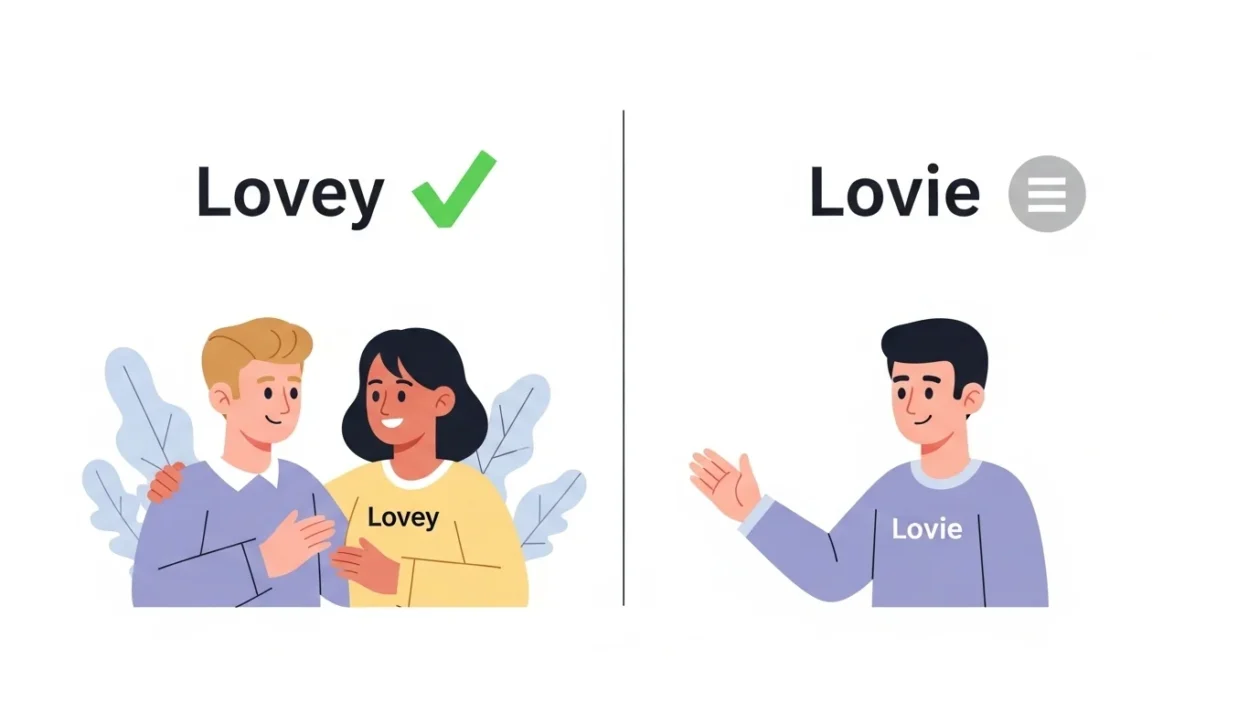
- ✅ Lovey – Correct and more common; used as a cute or affectionate word
- ⚠️ Lovie – Less common; used in some names or informal speech
- 📚 Use lovey in most everyday writing
- ✏️ Remember: Lovey is the standard form
Origin and Background
Both words come from the word love.
- Adding “-y” or “-ie” makes words sound softer or more affectionate
- This is common in English (like dog → doggy, sweet → sweetie)
Over time, “lovey” became the more standard spelling, especially in everyday use.
Clear Explanation of the Difference
What Does “Lovey” Mean?
Lovey is a common informal word. It is used to show affection or love.
Common Uses
- Term of Affection
- “Come here, lovey.”
- Cute Name for Someone
- “Good night, lovey.”
- Soft or Friendly Tone
- Used in friendly or caring speech
What Does “Lovie” Mean?
Lovie is less common. It may be used:
- As a nickname
- In personal or regional speech
- As a name
It is not as widely used as lovey in general English.
Comparison Table
| Feature | Lovey | Lovie |
|---|---|---|
| Spelling | More common | Less common |
| Meaning | Term of affection | Similar meaning, less used |
| Usage | Everyday informal English | Names or rare usage |
| Tone | Friendly, cute | Personal or informal |
| Example | Hello, lovey. | (Less common in daily use) |
Which One to Use and When
Use “Lovey” When:
- Showing affection
- Speaking kindly or warmly
- Writing informal messages
Examples:
- “Hi, lovey!”
- “Take care, lovey.”
- “Good morning, lovey.”
- “You did great, lovey.”
- “Sleep well, lovey.”
Use “Lovie” When:
- Referring to a name or nickname
- Using personal or regional style
Examples:
- “Her nickname is Lovie.”
- “They call him Lovie.”
Common Mistakes People Make
1. Thinking One Is Completely Wrong
Both exist, but one is more common.
2. Using “Lovie” in Formal Writing
It is not standard for general use.
3. Mixing Spellings Without Reason
Choose one based on context.
4. Not Knowing Tone Differences
“Lovey” sounds more natural.
5. Overusing Informal Words
Use carefully in formal writing.
Everyday Real-Life Examples
Conversations
- “Come here, lovey.”
- “How are you, lovey?”
Messages and Chats
- “Good night, lovey.”
- “Miss you, lovey.”
Family Use
- “Eat your food, lovey.”
- “Be careful, lovey.”
Social Media
- “Stay strong, lovey.”
- “You’re amazing, lovey.”
Names or Nicknames
- “Her name is Lovie.”
- “They call her Lovie.”
Short Learning Section for Students and Beginners
Easy Rule to Remember
Lovey = common and correct for daily use
Memory Tip
“Use ‘ey’ for everyday → lovey.”
Pronunciation Guide
- Lovey / Lovie: LUV-ee
Practice Exercise
Fill in the blanks:
- Hello, ______
- Good night, ______
- Her nickname is ______
Answers:
- lovey
- lovey
- lovie
Quick Quiz
Choose the correct option:
- Hi, ______
a) Lovie
b) Lovey - Her name is ______
a) Lovey
b) Lovie
Correct Answers:
- b) Lovey
- b) Lovie
Frequently Asked Questions (FAQs)
1. Is “lovie” correct?
Yes, but it is less common.
2. Which is more common?
Lovey is more common.
3. What does “lovey” mean?
It is a sweet or affectionate word.
4. Can I use “lovey” daily?
Yes, in informal situations.
5. Is “lovie” used as a name?
Yes, sometimes.
6. Are both pronounced the same?
Yes, they sound similar.
7. Which should I learn first?
Learn lovey first.
8. How can I remember it?
Remember: Lovey is everyday use.
Conclusion
The difference between “lovie” and “lovey” is simple. Lovey is the more common and widely used word for showing affection. Lovie exists but is mostly used as a name or in limited contexts.
To stay safe and clear, remember this rule:
👉 Use “lovey” in most situations.
This will help you write naturally and confidently in everyday English.

Daniel Brooks is a technology and business writer with experience covering innovation, startups, and digital tools. His work emphasizes clarity, accuracy, and real-world application. Daniel aims to help readers understand emerging technologies and make informed decisions in a fast-changing digital landscape.