Many learners search for “reciept vs receipt” because the letters “ie” and “ei” are easy to mix up. English spelling rules can feel tricky, especially when the pronunciation does not clearly match the spelling.
In this case, one spelling is correct, and the other is a very common mistake.
Quick Answer
Here is the clear and simple answer:
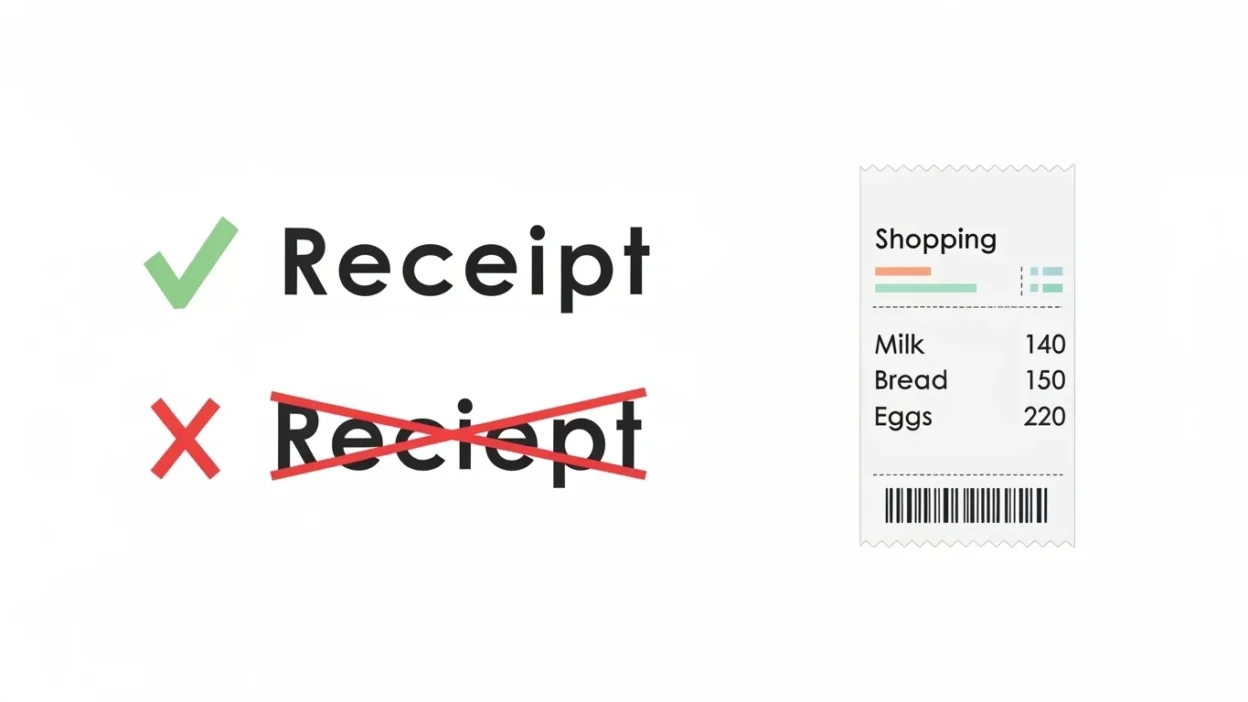
- ✅ Receipt – Correct spelling; a written proof of payment
- ❌ Reciept – Incorrect spelling
- 📚 Always use receipt in writing
- ✏️ Remember: “ei” comes before “pt” → receipt
Origin and Background
The word receipt comes from old French and Latin words related to receiving something.
Even though the word sounds like “ree-seet,” the spelling kept its original form with “ei.”
That is why the correct spelling is:
👉 receipt (not reciept)
Clear Explanation of the Difference
What Does “Receipt” Mean?
Receipt is a noun. It means a written record that shows you paid for something.
Common Meanings
- Proof of Payment
- Keep the receipt after shopping.
- Record of Purchase
- The store gave me a receipt.
- Business Use
- Receipts are important for records.
What About “Reciept”?
Reciept is not correct in standard English. It is a spelling mistake caused by mixing up “ie” and “ei.”
❌ Reciept
✅ Receipt
You should never use reciept in proper writing.
Comparison Table
| Feature | Receipt | Reciept |
|---|---|---|
| Spelling | Correct | Incorrect |
| Meaning | Proof of payment | No meaning |
| Part of Speech | Noun | Not valid |
| Rule | “ei” used correctly | Letters in wrong order |
| Usage | Formal and informal English | Considered a spelling error |
| Example | Keep the receipt. | ❌ Keep the reciept. |
Which One to Use and When
Use “Receipt” When:
- Talking about shopping or payments
- Writing in business or school
- Keeping records
Examples:
- I kept the receipt.
- The cashier gave me a receipt.
- Please show the receipt.
- Save your receipt for returns.
- The receipt shows the total price.
Avoid “Reciept”
Never use reciept, as it is always incorrect.
Common Mistakes People Make
1. Mixing “ie” and “ei”
This is the most common error.
❌ Reciept
✅ Receipt
2. Spelling Based on Sound
The pronunciation does not match spelling.
3. Forgetting the Rule
“I before E” does not always apply.
4. Typing Too Quickly
Fast typing leads to mistakes.
5. Lack of Practice
More exposure helps correct spelling.
Everyday Real-Life Examples
Shopping
- “Keep the receipt.”
- “I lost my receipt.”
Business and Work
- “Submit the receipt.”
- “The receipt shows payment.”
School and Learning
- “Attach the receipt.”
- “Bring your receipt.”
Emails
- “Please send the receipt.”
- “The receipt is attached.”
Daily Conversations
- “Do you have the receipt?”
- “Check the receipt.”
Short Learning Section for Students and Beginners
Easy Rule to Remember
Receipt = correct spelling
Memory Tip
“Recei-pt → ei before pt.”
Pronunciation Guide
- Receipt: ri-SEET
Practice Exercise
Fill in the blanks:
- Keep the ______.
- I got a ______.
- Show the ______.
Answers:
- receipt
- receipt
- receipt
Quick Quiz
Choose the correct option:
- Keep the ______.
a) Reciept
b) Receipt - Show your ______.
a) Receipt
b) Reciept
Correct Answers:
- b) Receipt
- a) Receipt
Frequently Asked Questions (FAQs)
1. Is “reciept” correct?
No, it is incorrect.
2. What is the correct spelling?
The correct spelling is receipt.
3. What does “receipt” mean?
It means proof of payment.
4. Why do people write “reciept”?
Because they mix “ie” and “ei.”
5. Is “receipt” used daily?
Yes, it is very common.
6. How do you pronounce “receipt”?
It is pronounced ri-SEET.
7. Is the “p” silent?
Yes, the “p” is silent.
8. How can I remember it?
Remember: ei before pt → receipt.
Conclusion
The difference between “reciept” and “receipt” is simple. Receipt is the correct spelling and should always be used. Reciept is incorrect and should be avoided.
To avoid mistakes, remember this easy rule:
👉 Use “receipt,” not “reciept.”
Using the correct spelling will help you write clearly, confidently, and correctly in everyday English.

Sophia Reynolds is a digital writer and researcher with a focus on modern trends, productivity, and online education. She enjoys exploring new ideas and presenting them in a simple, reader-friendly way. Sophia is committed to creating informative and trustworthy content that helps audiences stay informed and inspired.