Many learners search for “alterior vs ulterior” because both words look similar and sound close. The mix-up often happens because people are unsure whether the word starts with “al-” or “ul-.”
In reality, only one spelling is correct in standard English.
Quick Answer
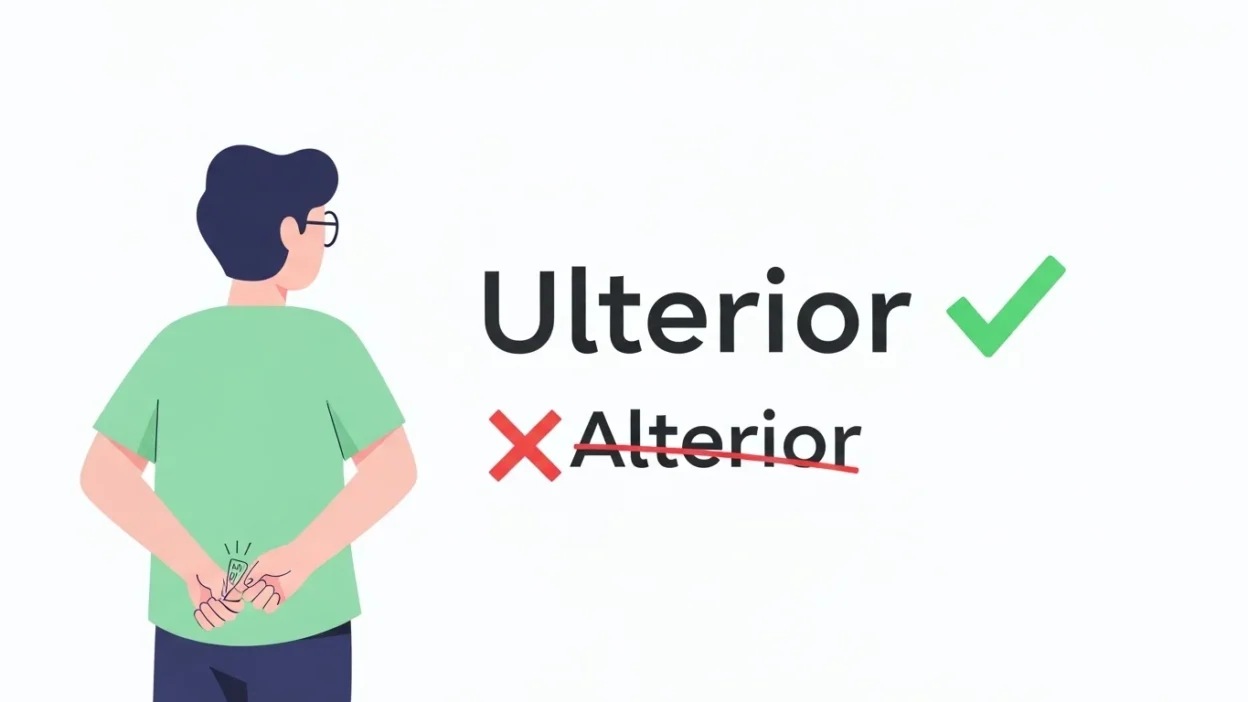
- ✅ Ulterior – Correct spelling; usually used in the phrase ulterior motive
- ❌ Alterior – Incorrect spelling
- 📚 Always use ulterior in writing
- ✏️ Remember: It starts with “ul-” → ulterior
Origin and Background
The word ulterior comes from Latin, meaning “beyond” or “hidden.”
That’s why it is often used to describe hidden intentions or motives.
👉 Example: ulterior motive = a secret or hidden reason
Clear Explanation of the Difference
What Does “Ulterior” Mean?
Ulterior is an adjective. It means something that is hidden, secret, or not obvious.
Common Use
- Hidden Motives
- He had an ulterior motive.
- Secret Intentions
- She helped him for ulterior reasons.
- Beyond What Is Seen
- There may be ulterior plans.
What About “Alterior”?
Alterior is not a correct English word. It is a spelling mistake caused by confusing the starting letters.
❌ Alterior
✅ Ulterior
You should never use alterior in proper writing.
Comparison Table
| Feature | Ulterior | Alterior |
|---|---|---|
| Spelling | Correct | Incorrect |
| Meaning | Hidden or secret | No meaning |
| Part of Speech | Adjective | Not valid |
| Usage | Common in phrases like “ulterior motive” | Considered a spelling error |
| Example | He had an ulterior motive. | ❌ He had an alterior motive. |
Which One to Use and When
Use “Ulterior” When:
- Talking about hidden motives
- Describing secret intentions
- Writing formal or informal content
Examples:
- He had an ulterior motive.
- She helped him for ulterior reasons.
- They suspected an ulterior plan.
- His actions had an ulterior purpose.
- There may be ulterior intentions.
Avoid “Alterior”
Never use alterior, as it is always incorrect.
Common Mistakes People Make
1. Using “Al-” Instead of “Ul-”
People guess the starting letters.
❌ Alterior
✅ Ulterior
2. Spelling Based on Sound
The beginning sound can be unclear.
3. Not Knowing the Word
Less familiarity leads to mistakes.
4. Typing Too Quickly
Fast typing causes errors.
5. Lack of Practice
Practice helps fix spelling issues.
Everyday Real-Life Examples
Conversations
- “He had an ulterior motive.”
- “She may have ulterior reasons.”
News and Media
- “They suspected ulterior motives.”
- “There were ulterior plans.”
Work and Business
- “His decision had an ulterior purpose.”
- “They questioned his ulterior intent.”
Social Media
- “Watch out for ulterior motives.”
- “Not everything is what it seems—ulterior reasons exist.”
Stories and Writing
- “The villain had ulterior motives.”
- “There was an ulterior plan behind it.”
Short Learning Section for Students and Beginners
Easy Rule to Remember
Ulterior = correct spelling
Memory Tip
“UL = hidden → ulterior.”
Pronunciation Guide
- Ulterior: ul-TEER-ee-er
Practice Exercise
Fill in the blanks:
- He had an ______ motive.
- She had ______ reasons.
- There were ______ plans.
Answers:
- ulterior
- ulterior
- ulterior
Quick Quiz
Choose the correct option:
- He had an ______ motive.
a) Alterior
b) Ulterior - She had ______ reasons.
a) Ulterior
b) Alterior
Correct Answers:
- b) Ulterior
- a) Ulterior
Frequently Asked Questions (FAQs)
1. Is “alterior” correct?
No, it is incorrect.
2. What is the correct spelling?
The correct spelling is ulterior.
3. What does “ulterior” mean?
It means hidden or secret.
4. Why do people write “alterior”?
Because of confusion in spelling.
5. Is “ulterior” commonly used?
Yes, especially in “ulterior motive.”
6. How do you pronounce it?
It is pronounced ul-TEER-ee-er.
7. Is this a formal word?
Yes, it is often used in formal contexts.
8. How can I remember it?
Remember: UL = hidden → ulterior.
Conclusion
The difference between “alterior” and “ulterior” is simple. Ulterior is the correct spelling and is used to describe hidden motives or intentions. Alterior is incorrect and should be avoided.
To stay accurate, remember this rule:
👉 Use “ulterior,” not “alterior.”
This will help you write clearly and correctly in all situations.

Sophia Reynolds is a digital writer and researcher with a focus on modern trends, productivity, and online education. She enjoys exploring new ideas and presenting them in a simple, reader-friendly way. Sophia is committed to creating informative and trustworthy content that helps audiences stay informed and inspired.