Many learners confuse “past” and “passed” because they sound the same. However, they have different meanings and grammar roles.
The key idea: time vs action.
Quick Answer
- ✅ Past – A noun, adjective, preposition, or adverb (related to time or position)
- ✅ Passed – A verb (past tense of pass)
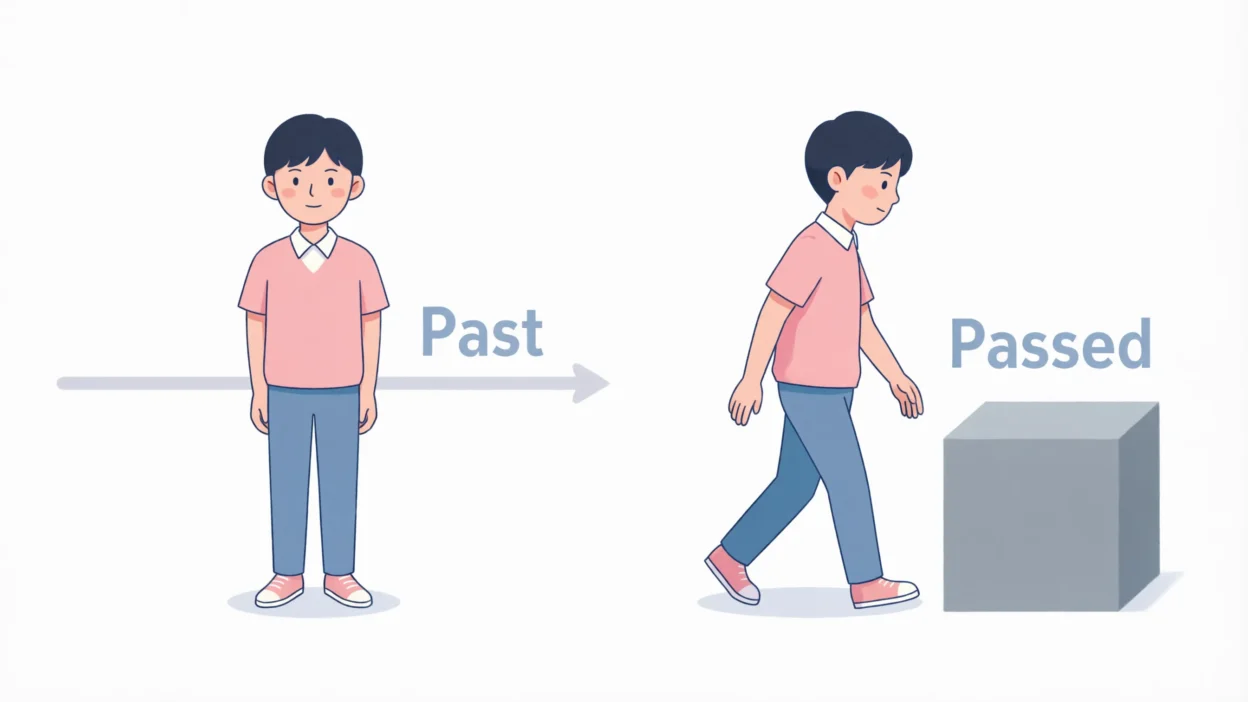
- ✏️ Remember: Past = time/position, Passed = action
Clear Explanation
What Does “Past” Mean?
Past is not a verb. It usually relates to time or position.
👉 It can mean:
- time before now
- beyond a point
Examples:
- That happened in the past.
- Don’t think about the past.
- It’s past midnight.
- Walk past the shop.
- We moved past the problem.
👉 Uses:
- Noun: the past
- Adjective: past events
- Preposition: past the door
What Does “Passed” Mean?
Passed is the past tense of the verb “pass.”
👉 It means:
- moved by or went by
- succeeded (like passing a test)
- gave or transferred
Examples:
- He passed the exam.
- She passed me on the road.
- Time passed quickly.
- He passed the ball.
- The car passed us.
Key Difference
| Feature | Past | Passed |
|---|---|---|
| Type | Not a verb | Verb |
| Meaning | Time / position | Action |
| Usage | Descriptive | Doing something |
| Example | Past midnight | Passed the test |
Which One to Use and When
Use “Past” When:
- Talking about time before now
- Referring to position (beyond something)
Examples:
- The past is gone.
- It’s past noon.
- Walk past the building.
- Past mistakes matter.
- He moved past the issue.
Use “Passed” When:
- You need a verb (action)
- Something happened or moved
Examples:
- He passed the exam.
- She passed the message.
- Time passed slowly.
- The car passed us.
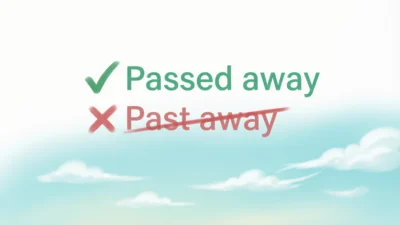
- He passed away.
Common Mistakes People Make
1. Using “Past” as a Verb
❌ He past the exam
✅ He passed the exam
2. Using “Passed” for Time
❌ In the passed
✅ In the past
3. Confusing Sound
They sound the same.
4. Ignoring Grammar Role
Past = not a verb
Passed = verb
5. Fast Writing Errors
Very common in typing.
Easy Trick to Remember
👉 If you can replace the word with “went”, use passed.
Example:
- He passed me → He went by me ✔
Memory Tip
“Passed = action (has ‘ed’)”
Everyday Real-Life Examples
Time
- “In the past, things were different.”
- “It’s past bedtime.”
Action
- “He passed the test.”
- “She passed me in the street.”
Daily Life
- “Forget the past.”
- “Time passed quickly.”
Conversations
- “That’s in the past.”
- “He passed the ball.”
Practice Exercise
Fill in the blanks:
- He ______ the exam.
- That is in the ______.
- The car ______ us.
Answers:
- passed
- past
- passed
Quick Quiz
- It’s ______ midnight.
a) Passed
b) Past - He ______ the message.
a) Past
b) Passed
Correct Answers:
- b) Past
- b) Passed
Frequently Asked Questions (FAQs)
1. What does “past” mean?
It refers to time before now or position.
2. What does “passed” mean?
It is the past form of “pass.”
3. Which one is a verb?
Passed.
4. Which one relates to time?
Past.
5. Is this a common mistake?
Yes, very common.
6. Can “past” be a verb?
No.
7. How can I remember it?
Passed = action.
8. What is the easiest trick?
Replace with “went” to test.
Conclusion
The difference between “past” and “passed” is simple. Past relates to time or position, while passed is an action (verb).
To remember easily:
👉 Past = time/position
👉 Passed = action

Michael Anderson is a professional editor and senior contributor with a background in long-form content and strategic writing. He focuses on quality, structure, and credibility across all publications. Michael brings years of experience in content development and ensures high editorial standards for every project.