English spelling can be confusing, especially when words look similar and sound alike. One common mistake is between “fead” and “feed.” Because the pronunciation is close and the letters are almost identical, many students, ESL learners, and beginners accidentally use the wrong form.
However, only one of these spellings is correct in standard English. This guide explains the difference in very simple language so you can understand it easily on your first read.
Quick Answer
Here is the clear and simple answer:
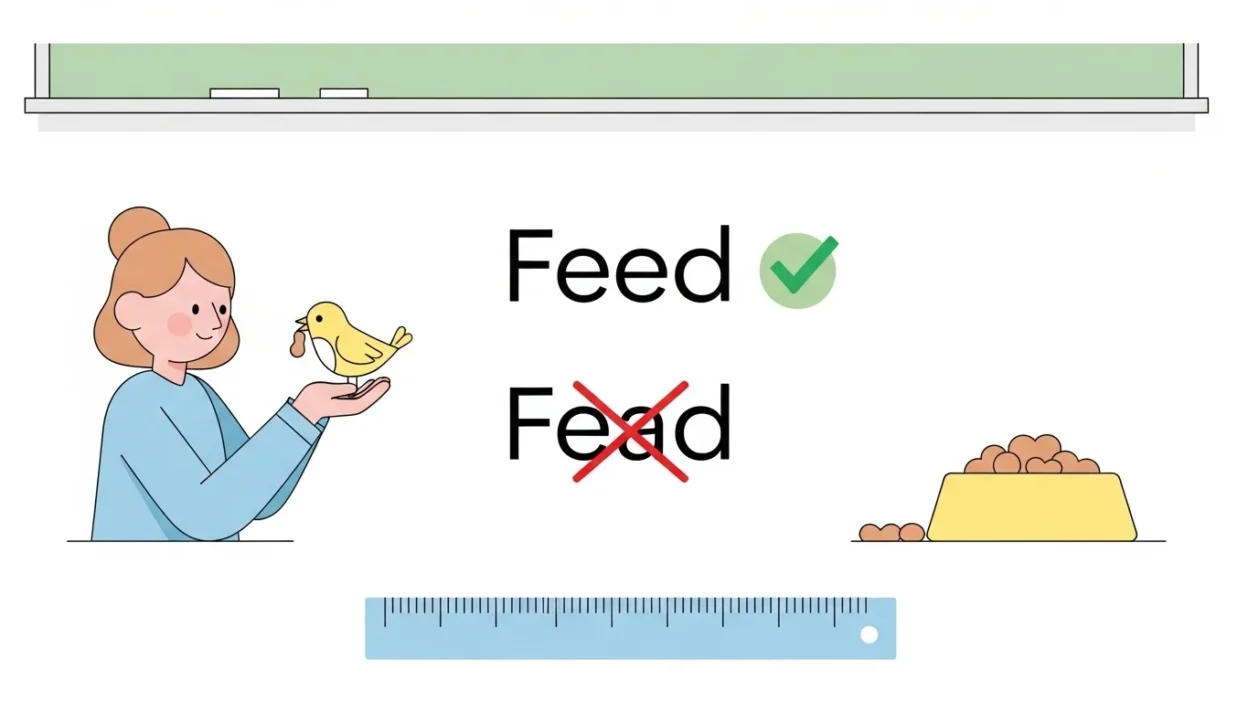
- ✅ Feed – Correct spelling; means to give food or supply something.
- ❌ Fead – Incorrect spelling; not a real English word.
- 📚 Always use feed in writing and speech.
- ✏️ If you see “fead,” it is a spelling mistake that should be corrected.
Origin and Background
The word feed comes from Old English fēdan, which means “to nourish” or “to provide food.” It has been used for centuries and remains an essential part of modern English.
The spelling “fead” likely appears due to confusion with similar-looking words such as read, lead, and head. However, unlike these words, fead does not exist in standard English.
Related Word Forms
| Word | Part of Speech | Meaning |
|---|---|---|
| Feed | Verb/Noun | To give food or supply something |
| Feeding | Verb (Present Participle) | The act of giving food |
| Fed | Verb (Past Tense) | Gave food |
| Feeder | Noun | A person, animal, or device that feeds |
| Livestock Feed | Noun | Food for animals |
Clear Explanation of the Difference
What Does “Feed” Mean?
Feed can function as both a verb and a noun. It is widely used in everyday English.
1. As a Verb: To Give Food
- She feeds the cat every morning.
- Farmers feed their cattle daily.
- Please feed the baby.
2. To Supply or Provide Something
- The river feeds the lake.
- This cable feeds electricity to the machine.
- Data is fed into the computer system.
3. As a Noun: Food for Animals
- The farmer bought chicken feed.
- The store sells high-quality animal feed.
4. In Technology and Media
- I checked my social media feed.
- Subscribe to the news feed for updates.
What About “Fead”?
Fead is not a correct English word. It is simply a misspelling of feed.
❌ Fead
✅ Feed
Always replace “fead” with feed to ensure clarity and correctness.
Comparison Table
| Feature | Feed | Fead |
|---|---|---|
| Spelling | Correct | Incorrect |
| Meaning | To give food or supply something | No meaning in standard English |
| Part of Speech | Noun and Verb | Not a valid word |
| Dictionary Recognition | Yes | No |
| Usage | Formal and informal English | Considered a spelling mistake |
| Example Sentence | Please feed the dog. | ❌ Please fead the dog. |
Which One to Use and When
Use “Feed” When:
- Giving food to people or animals
- Providing energy, data, or resources
- Talking about animal food
- Referring to news or social media updates
- Writing emails, essays, and reports
Examples:
- Please feed the birds.
- She fed the baby before bedtime.
- The machine feeds paper automatically.
- He checked his Instagram feed.
- The farmer purchased animal feed.
Avoid “Fead”
Never use fead, as it is always incorrect in standard English.
Common Mistakes People Make
1. Confusing Similar Spellings
Words like read, lead, and head may cause learners to write “fead” instead of “feed.”
2. Spelling Based on Assumption
Some learners assume the vowel pattern follows similar-looking words.
3. Typing Errors
Fast typing can result in incorrect spellings.
4. Lack of Proofreading
Failing to review written work allows mistakes to go unnoticed.
5. Limited Vocabulary Practice
Infrequent reading and writing can lead to confusion between similar words.
Everyday Real-Life Examples
Emails
- “Please remember to feed the office fish.”
- “The system automatically feeds data into the report.”
School and Education
- “Students feed information into the science model.”
- “The teacher explained how farmers feed livestock.”
Workplace Communication
- “This cable feeds power to the server.”
- “The printer feeds paper automatically.”
News and Media
- “She scrolled through her news feed.”
- “Live feeds kept viewers updated.”
Social Media
- “My feed is full of travel photos.”
- “He refreshed his feed for updates.”
Daily Conversations
- “Did you feed the dog?”
- “Please feed the baby on time.”
Short Learning Section for Students and Beginners
Easy Trick to Remember
Feed has two “e” letters—just like “eat,” which is related to food.
Memory Tip
“We feed what we eat.”
Pronunciation Guide
- Feed: FEED
Practice Exercise
Fill in the blanks with the correct word:
- Please ______ the cat.
- The farmer bought animal ______.
- She checked her social media ______.
Answers:
- feed
- feed
- feed
Quick Quiz
Choose the correct option:
- The mother will ______ the baby.
a) Fead
b) Feed - The river ______ the lake.
a) Feads
b) Feeds
Correct Answers:
- b) Feed
- b) Feeds
Frequently Asked Questions (FAQs)
1. Is “fead” a real English word?
No, “fead” is not a correct English word. It is a misspelling of “feed.”
2. What is the correct spelling?
The correct spelling is feed.
3. What does “feed” mean?
It means to give food or supply something with resources, energy, or information.
4. Is “feed” a noun or a verb?
It can be both a noun and a verb.
5. What is the past tense of “feed”?
The past tense of “feed” is fed.
6. How do you pronounce “feed”?
It is pronounced as FEED.
7. What is a news feed?
A news feed is a stream of updates on websites or social media platforms.
8. How can I remember the correct spelling?
Remember this phrase: “We feed what we eat.”
Conclusion
The difference between “fead” and “feed” is simple but important. Feed is the correct spelling and means to give food or supply something. In contrast, fead is an incorrect form that should never be used in standard English.
To avoid confusion, remember this simple rule: Feed has two “e” letters, just like eat. By mastering this spelling, you can write clearly, confidently, and correctly in both academic and everyday communication.

Emily Carter is a content writer and editor based in the United States, specializing in lifestyle, wellness, and personal development topics. With a passion for clear and engaging storytelling, she creates content that connects with readers and delivers practical value. Emily focuses on making complex ideas easy to understand and relatable.