
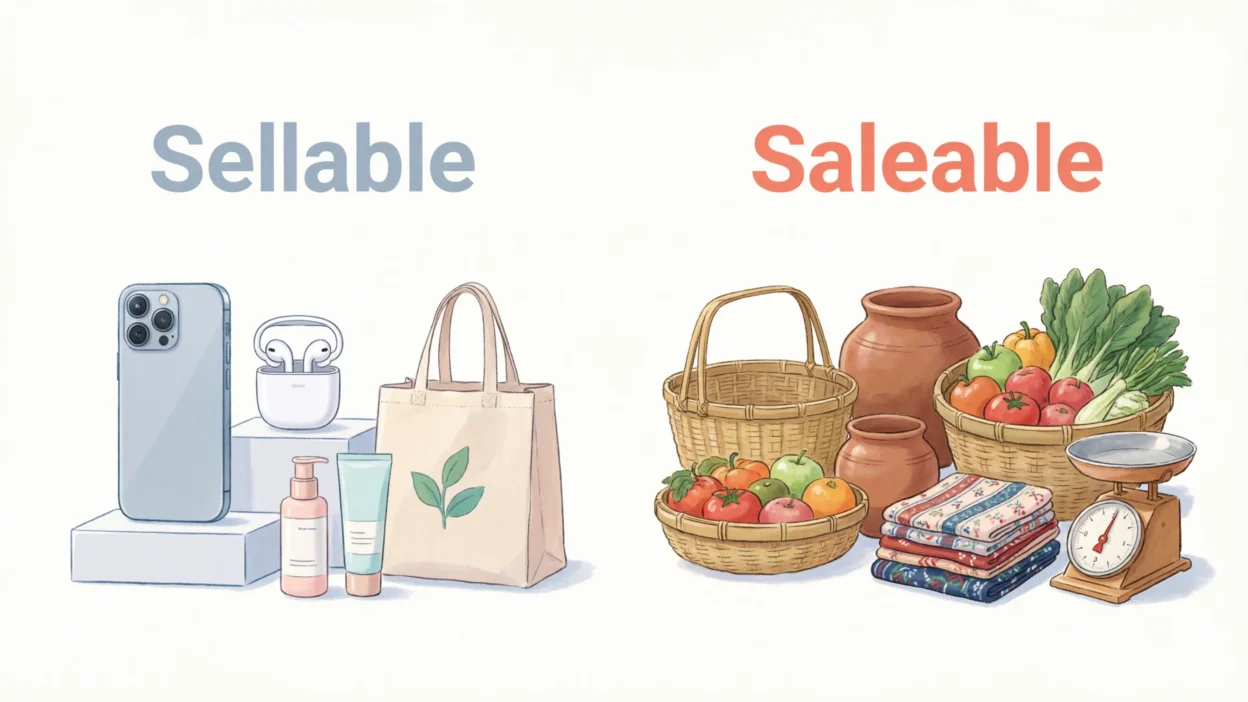
“Sellable” and “saleable” have almost the same meaning in English. Both describe something that can be sold successfully. The main difference is usually spelling preference and regional usage.
The key idea: same meaning, different spelling styles.
Quick Answer
- ✅ Sellable – More common in American English
- ✅ Saleable – More traditional and often used in British English
- ✏️ Remember: Both mean “able to be sold”
Clear Explanation
What Does “Sellable” Mean?
Sellable is an adjective.
👉 It means:
- capable of being sold
- attractive to buyers
- marketable
Examples:
- The product is highly sellable.
- Bright packaging makes items more sellable.
- They created a sellable brand image.
- The design became more sellable online.
- A good title makes books sellable.
👉 This spelling is especially common in:
- American English
- marketing
- business writing
What Does “Saleable” Mean?
Saleable is also an adjective.
👉 It has the same meaning:
- fit for sale
- likely to sell successfully
Examples:
- The company produced saleable goods.
- The artwork became more saleable.
- Fresh products are more saleable.
- The business focused on saleable items.
- The property remained saleable.
👉 This spelling is more common in:
- British English
- formal or traditional writing
Key Difference
| Feature | Sellable | Saleable |
|---|---|---|
| Meaning | Can be sold | Can be sold |
| Usage | More American English | More British English |
| Style | Modern/common | Traditional/formal |
| Example | Sellable product | Saleable product |
Which One to Use and When
Use “Sellable” When:
- Writing for American audiences
- Using modern business language
- Writing casually or online
Examples:
- Sellable product
- Sellable idea
- Sellable content
- Sellable packaging
- Sellable design
Use “Saleable” When:
- Writing British English
- Using formal or traditional style
Examples:
- Saleable goods
- Saleable property
- Saleable merchandise
- Saleable assets
- Saleable products
Common Mistakes People Make
1. Thinking One Is Incorrect
Both spellings are correct.
2. Mixing Regional Styles
American English prefers “sellable.”
3. Assuming Different Meanings
The meanings are nearly identical.
4. Spelling Confusion
The words look very similar.
5. Overthinking Usage
Either word is usually understood.
Easy Memory Trick
👉 Sellable = from “sell”
👉 Saleable = from “sale”
Both still mean:
✅ “able to be sold”
Real-Life Examples
Correct Use of “Sellable”
- The company needs more sellable products.
- A catchy design makes items sellable.
- The brand became more sellable online.
Correct Use of “Saleable”
- The store only stocks saleable goods.
- The property remained saleable despite the market decline.
- Fresh fruit is more saleable.
Practice Exercise
Fill in the blanks:
- The company created a highly ______ product.
- The goods were still ______ after inspection.
- Better packaging makes products more ______.
Answers:
- sellable / saleable
- saleable / sellable
- sellable / saleable
Quick Quiz
- Which spelling is more common in American English?
a) Saleable
b) Sellable - Which spelling is often more traditional or British?
a) Sellable
b) Saleable
Correct Answers:
- b) Sellable
- b) Saleable
Conclusion
The difference between “sellable” and “saleable” is mostly regional and stylistic. Both words mean something that can be sold successfully. “Sellable” is more common in American English, while “saleable” is often preferred in British English or formal writing.
👉 Sellable = American/common
👉 Saleable = British/traditional

Emily Carter is a content writer and editor based in the United States, specializing in lifestyle, wellness, and personal development topics. With a passion for clear and engaging storytelling, she creates content that connects with readers and delivers practical value. Emily focuses on making complex ideas easy to understand and relatable.