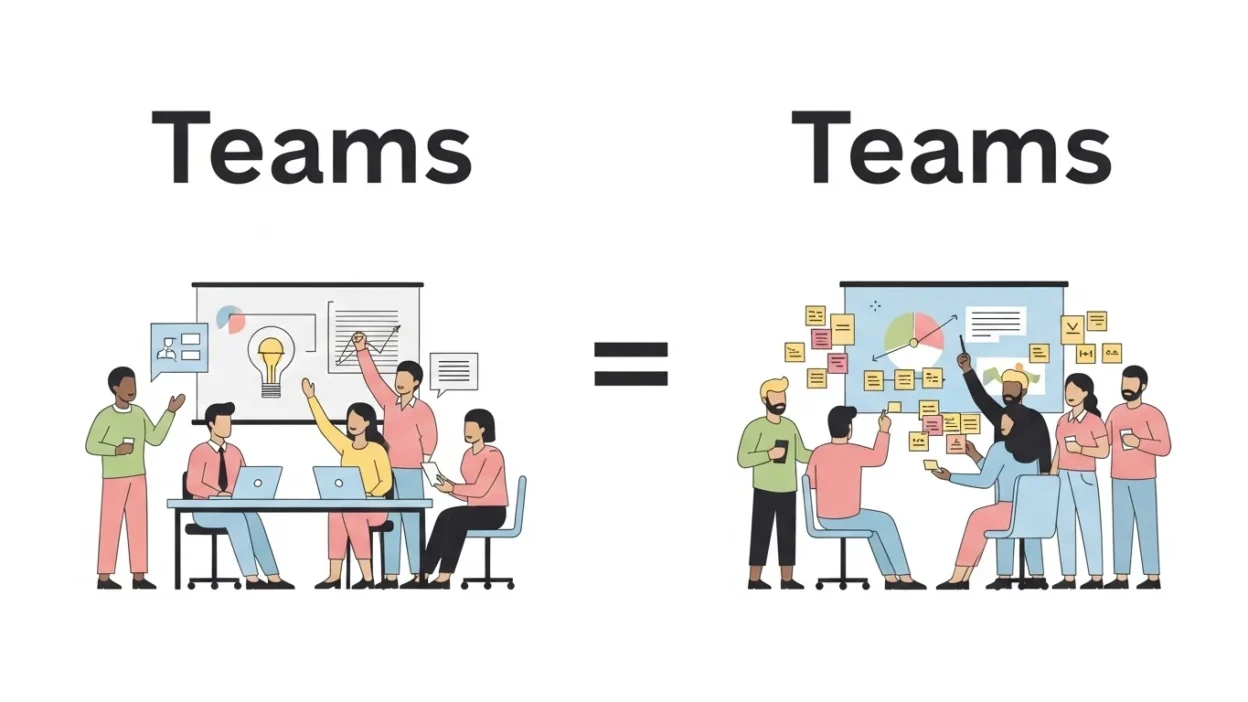
Sometimes learners search for “teams vs teams” and feel confused—even though both words look exactly the same. This usually happens because of typing mistakes, auto-correct issues, or simply double-checking spelling.
The truth is very simple: both words are identical, so there is no difference at all.
Quick Answer
Here is the clear and simple answer:
- ✅ Teams – Correct spelling
- ✅ Teams – Same word, same meaning
- 📚 There is no difference between them
- ✏️ Remember: If both words are spelled the same, they are the same
Origin and Background
The word team comes from Old English and means a group of people working together.
When we add “-s,” it becomes teams, which means more than one group.
- Team → Teams
Clear Explanation of the Difference
What Does “Teams” Mean?
Teams is the plural form of team. It means more than one group of people working together.
Examples:
- Two teams are playing today.
- The teams are ready for the match.
- Both teams performed well.
- The company has several teams.
- Students were divided into teams.
Is There Any Difference?
No, there is no difference at all.
- Teams = Teams
- Same spelling
- Same meaning
- Same usage
Comparison Table
| Feature | Teams | Teams |
|---|---|---|
| Spelling | Same | Same |
| Meaning | Plural of team | Plural of team |
| Usage | Correct | Correct |
| Difference | None | None |
| Example | The teams are ready. | The teams are ready. |
Which One to Use and When
Use “Teams” When:
- Talking about more than one group
- Writing about sports, work, or school
- Describing collaboration
Examples:
- The teams played well.
- Our company has many teams.
- The teams are competing.
- Students formed teams.
- Both teams scored points.
Common Mistakes People Make
1. Overthinking Simple Words
Sometimes learners think there must be a difference.
👉 There is no difference.
2. Typing Errors
People may type the same word twice by mistake.
3. Searching for Differences That Don’t Exist
Not every comparison has two different words.
4. Confusion with Similar Words
Sometimes confusion comes from similar-looking words, but not here.
5. Lack of Confidence
Learners double-check even simple words.
Everyday Real-Life Examples
Emails
- “Both teams completed the project.”
School and Education
- “Students worked in teams.”
Workplace Communication
- “Different teams handle different tasks.”
Sports
- “The teams are ready to play.”
- “Both teams scored goals.”
Daily Conversations
- “We formed two teams.”
- “The teams worked together.”
Short Learning Section for Students and Beginners
Easy Rule to Remember
Same word = same meaning
Memory Tip
“Teams and teams are twins—no difference.”
Pronunciation Guide
- Teams: TEEMZ
Practice Exercise
Fill in the blanks:
- The ______ are ready.
- Two ______ competed.
- Students formed ______.
Answers:
- teams
- teams
- teams
Quick Quiz
Choose the correct option:
- Which is correct?
a) Teams
b) Teams
👉 Both are correct (same word).
Frequently Asked Questions (FAQs)
1. Is there a difference between “teams” and “teams”?
No, there is no difference.
2. Is “teams” a correct word?
Yes, it is correct.
3. What does “teams” mean?
It means more than one group of people.
4. Can I use “teams” in daily life?
Yes, it is very common.
5. Is this a spelling issue?
No, both spellings are the same.
6. Why do people search this?
Usually due to confusion or double-checking.
7. Is “teams” formal or informal?
It is used in both.
8. How can I remember this?
Remember: Same word, same meaning.
Conclusion
The comparison “teams vs teams” is simple: there is no difference at all. Both words are exactly the same in spelling, meaning, and usage.
To avoid confusion, remember this easy rule:
👉 If both words look the same, they are the same.
This will help you stay confident and avoid unnecessary confusion in your learning.

Sophia Reynolds is a digital writer and researcher with a focus on modern trends, productivity, and online education. She enjoys exploring new ideas and presenting them in a simple, reader-friendly way. Sophia is committed to creating informative and trustworthy content that helps audiences stay informed and inspired.