Workplace head protection is extremely important, even in jobs that may seem low risk. Many workers assume hard hats are only necessary on large construction sites, but even minor head injuries can cause:
- Concussions
- Cuts
- Bruising
- Long-term complications
That’s why workplaces use different types and classes of protective headgear depending on the hazard level.
A very common safety question is:
If you could be exposed to minor bumps in your job, what class of hard hat will you need to wear?
The answer depends on whether the risk involves:
- Minor bumps only
- Falling objects
- Electrical hazards
- Construction dangers
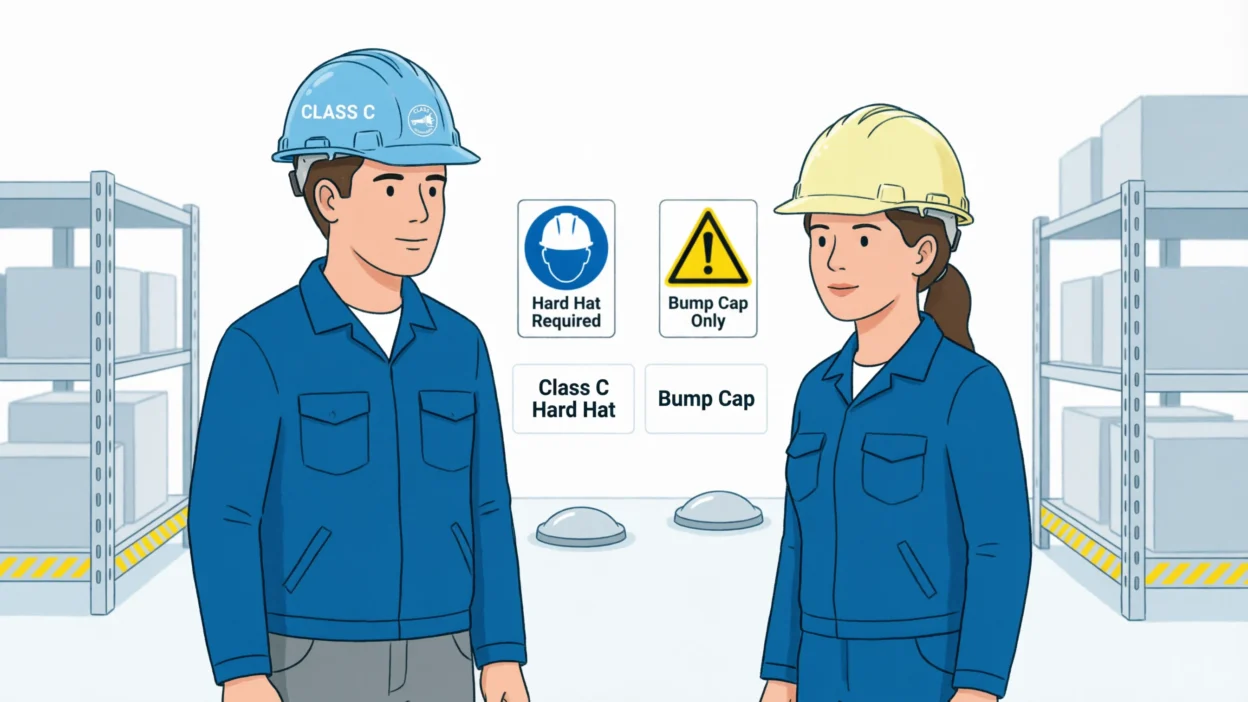
In many low-risk environments, a Class C hard hat or even a bump cap may be appropriate. However, understanding the differences is important for workplace safety and OSHA compliance.
This guide explains everything in simple English.
Quick Answer: What Hard Hat Is Needed for Minor Bumps?
If your job only exposes you to minor bumps and not major impact or electrical hazards, a Class C hard hat is commonly used. In very low-risk environments, a bump cap may also be appropriate because it protects against minor scrapes and bumps but not falling objects.
What Is a Hard Hat?
A hard hat is protective headgear designed to reduce head injuries caused by:
- Falling objects
- Bumps
- Impacts
- Electrical hazards
Hard hats are commonly required in:
- Construction
- Warehouses
- Factories
- Industrial sites
- Utility work
What Is a Bump Cap?
A bump cap looks similar to a baseball cap but contains a protective insert.
It is designed for:
- Minor bumps
- Scrapes
- Low-clearance areas
Bump caps are not true hard hats because they do not protect against:
- Falling tools
- Heavy impacts
- Serious industrial hazards
Common Uses
- Warehouses
- Automotive work
- Maintenance rooms
- Tight workspaces
Understanding Hard Hat Classes
Hard hats in the United States are commonly divided into:
- Class C
- Class G
- Class E
Each class provides different levels of protection.
Class C Hard Hats
Best for Minor Bumps and Basic Impact Protection
Class C stands for:
- Conductive
These hard hats:
- Protect against impacts
- Are lightweight
- Provide ventilation
- Do not protect against electrical hazards
Good For
- Minor impact risks
- General labor
- Warehouses
- Manufacturing areas
Not Good For
- Electrical work
- High-voltage environments
Class G Hard Hats
General Protection
Class G stands for:
- General
These hard hats provide:
- Impact protection
- Limited electrical protection
They are commonly used in:
- Construction
- General industrial work
Class E Hard Hats
Electrical Protection
Class E stands for:
- Electrical
These hard hats provide:
- Strong electrical insulation
- High-voltage protection
- Impact protection
They are designed for:
- Electricians
- Utility workers
- High-voltage jobs
Hard Hat Comparison Table
| Type | Main Protection | Electrical Protection | Best For |
|—|—|—|
| Bump Cap | Minor bumps only | No | Low-risk indoor work |
| Class C Hard Hat | Impact protection | No | Minor bump hazards |
| Class G Hard Hat | Impact + limited electrical | Moderate | General construction |
| Class E Hard Hat | Impact + high electrical | High | Electrical work |
Why Minor Bumps Still Matter
Even small head injuries can cause:
- Headaches
- Dizziness
- Cuts
- Concussions
Many workplace injuries happen because workers underestimate “minor” risks.
That’s why employers often require protective headgear even in lower-risk environments.
When a Bump Cap Is Enough
A bump cap may be appropriate when:
- There are no falling objects
- Workers only face accidental bumps
- The environment is low risk
Examples include:
- Warehouse shelves
- Vehicle interiors
- Tight machinery spaces
However, bump caps should never replace hard hats on active construction sites.
When You Need a Real Hard Hat Instead
You should wear a true hard hat when there is risk of:
- Falling tools
- Heavy equipment
- Construction debris
- Electrical hazards
- Serious impacts
In these environments, bump caps are not sufficient.
OSHA and Workplace Safety Rules
The Occupational Safety and Health Administration (OSHA) requires employers to provide proper head protection when workers face potential head injury hazards.
Employers must assess:
- Workplace dangers
- Impact risks
- Electrical exposure
- Falling object hazards
Pros and Cons of Class C Hard Hats
Pros
- Lightweight
- Comfortable
- Good ventilation
- Suitable for basic impact risks
Cons
- No electrical protection
- Less suitable for high-risk construction work
Pros and Cons of Bump Caps
Pros
- Comfortable
- Lightweight
- Good for tight spaces
Cons
- Not OSHA-approved for major hazards
- No protection from falling objects
- Limited impact resistance
Common Workplace Mistakes
Mistake 1: Using a Bump Cap on Construction Sites
This can be dangerous and non-compliant.
Mistake 2: Ignoring Electrical Hazards
Class C hard hats do not protect against electricity.
Mistake 3: Wearing Damaged Hard Hats
Cracked or worn-out hard hats lose effectiveness.
How to Choose the Right Hard Hat
Ask these questions:
- Are there falling objects?
- Is there electrical exposure?
- Are impacts minor or severe?
- Does OSHA require specific protection?
The answers determine which class you need.
Best Option for Minor Bump Protection
Winner: Class C Hard Hat
If the workplace requires an actual hard hat and hazards are limited to minor bumps or impacts, a Class C hard hat is usually the appropriate choice.
For very low-risk environments with no falling-object danger, a bump cap may also be acceptable.
Safety Tips
- Inspect hard hats regularly
- Replace damaged equipment
- Follow workplace safety rules
- Never modify hard hats improperly
- Wear the correct class for your environment
Conclusion
So, what class of hard hat do you need if your job exposes you to minor bumps?
In most cases, a Class C hard hat is the correct answer because it provides lightweight impact protection for lower-risk environments. In very low-risk areas where there are only minor bumps and no falling objects, a bump cap may also be used.
The key is understanding the hazard level:
- Minor bumps = bump cap or Class C
- Falling objects = stronger hard hat protection
- Electrical hazards = Class G or Class E
Choosing the right protective headgear helps prevent injuries and keeps workplaces safer.
FAQs
What is a Class C hard hat?
A lightweight hard hat that provides impact protection but no electrical protection.
What does Class C mean?
The “C” stands for conductive.
Are bump caps the same as hard hats?
No. Bump caps only protect against minor bumps and scrapes.
Can a bump cap protect against falling objects?
No, bump caps are not designed for falling-object protection.
Which hard hat protects against electricity?
Class G and Class E hard hats provide electrical protection.
What hard hat is best for construction sites?
Usually Class G or Class E, depending on electrical risks.
Are Class C hard hats OSHA approved?
Yes, for appropriate low-risk environments.
When should a hard hat be replaced?
When cracked, damaged, expired, or heavily impacted.
Why are hard hats important?
They help prevent serious head injuries.
Can workers choose any hard hat they want?
No. Employers must ensure proper protection for workplace hazards.

Sophia Reynolds is a digital writer and researcher with a focus on modern trends, productivity, and online education. She enjoys exploring new ideas and presenting them in a simple, reader-friendly way. Sophia is committed to creating informative and trustworthy content that helps audiences stay informed and inspired.