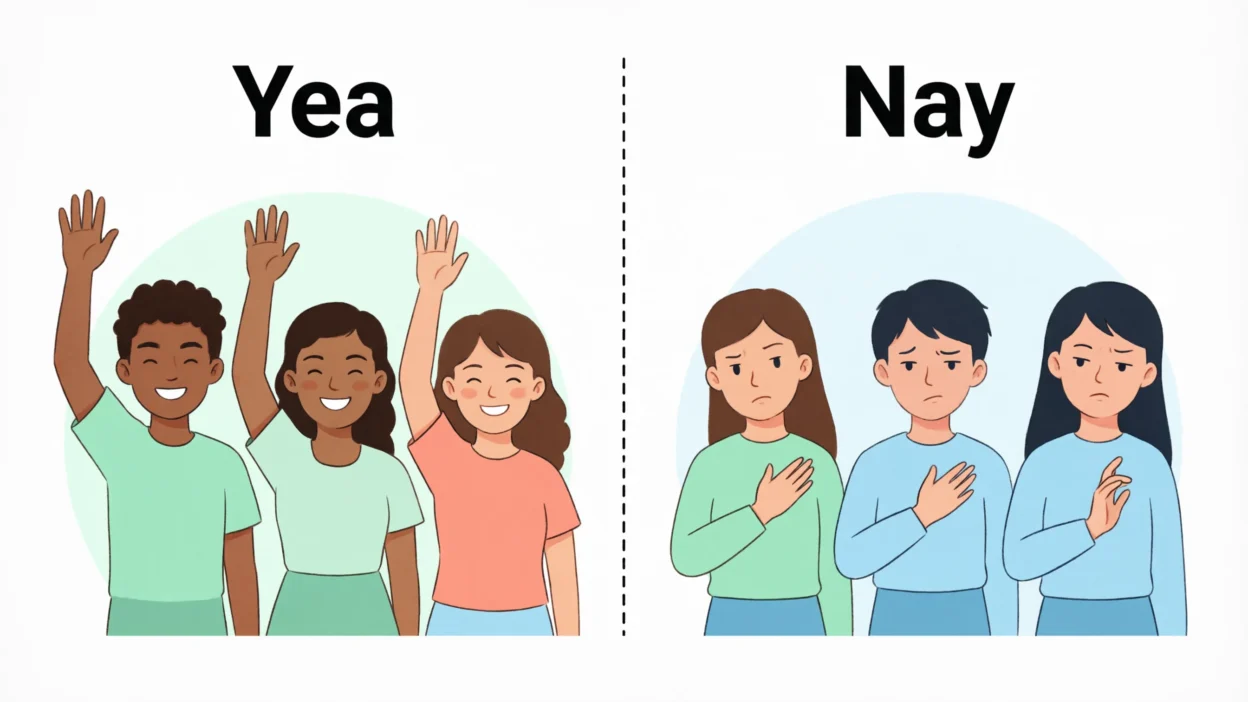
“Yea” and “nay” are old-fashioned English words mainly used in voting, formal decisions, and historical language. Many people confuse them with modern words like “yeah” and “no.”
The key idea: formal yes vs formal no.
Understanding the difference will help you recognize these words in politics, history, legal settings, and literature.
Quick Answer
- ✅ Yea – Formal or old-fashioned word meaning “yes”
- ✅ Nay – Formal or old-fashioned word meaning “no”
- ✏️ Remember: Yea = yes vote, Nay = no vote
Clear Explanation
What Does “Yea” Mean?
Yea is an old or formal word meaning:
- yes
- agreement
- approval
Examples:
- The committee voted yea.
- All those in favor say yea.
- The proposal received more yeas than nays.
- Parliament members voted yea on the bill.
- The motion passed with twenty yeas.
👉 “Yea” is commonly used in:
- government voting
- formal meetings
- legal procedures
- historical writing
Common Uses of “Yea”
1. Voting Situations
Examples:
- vote yea
- yeas and nays
Example Sentence:
- Senators voted yea on the legislation.
2. Formal Approval
Examples:
- answer yea
- say yea
Example Sentence:
- Members responded yea during the vote.
3. Historical or Religious Language
Examples:
- yea, verily
- yea and amen
Example Sentence:
- Ancient texts often use the word yea.
What Does “Nay” Mean?
Nay is an old or formal word meaning:
- no
- disagreement
- rejection
Examples:
- Several members voted nay.
- The audience answered nay.
- The motion failed because of too many nays.
- Parliament recorded ten nays.
- The proposal was rejected by nay votes.
👉 “Nay” is often used in:
- official voting
- historical speech
- literature
- formal debates
Common Uses of “Nay”
1. Voting Against Something
Examples:
- vote nay
- nays recorded
Example Sentence:
- Three council members voted nay.
2. Formal Disagreement
Examples:
- answer nay
- say nay
Example Sentence:
- The board responded nay to the request.
3. Dramatic or Literary Language
Examples:
- nay, impossible
- nay indeed
Example Sentence:
- The old play used the word nay frequently.
Key Difference
| Feature | Yea | Nay |
|---|---|---|
| Meaning | Yes | No |
| Tone | Formal/old-fashioned | Formal/old-fashioned |
| Common Context | Voting, approval | Voting, rejection |
| Example | Vote yea | Vote nay |
Which One to Use and When
Use “Yea” When:
- Expressing formal agreement or approval
- Talking about yes votes
Examples:
- Vote yea
- Say yea
- Yeas and nays
- Yea votes
- Respond yea
Example Sentences:
- The senators voted yea on the bill.
- All those in favor should say yea.
- The proposal passed with many yea votes.
Use “Nay” When:
- Expressing formal disagreement or rejection
- Talking about no votes
Examples:
- Vote nay
- Say nay
- Nay votes
- Respond nay
- Record nays
Example Sentences:
- Several members voted nay.
- The council answered nay to the proposal.
- The motion failed because of too many nays.
Common Mistakes People Make
1. Confusing “Yea” With “Yeah”
❌ Yea = casual yes
✅ Yeah = casual yes
✅ Yea = formal yes vote
2. Thinking “Nay” Means “Maybe”
❌ Nay = uncertain
✅ Nay = no
3. Using These Words in Casual Conversation
Modern English usually uses:
- yes
- no
- yeah
instead of:
- yea
- nay
4. Misspelling “Yeah” as “Yea”
These are different words.
5. Forgetting Formal Context
“Yea” and “nay” mostly appear in:
- government
- historical texts
- formal voting
Easy Memory Trick
👉 Yea = yes
👉 Nay = no
Think:
- yea vote = approval
- nay vote = rejection
Real-Life Examples
Correct Use of “Yea”
- The committee voted yea unanimously.
- Citizens shouted yea during the decision.
- Parliament approved the bill with more yeas than nays.
Correct Use of “Nay”
- Two officials voted nay.
- The proposal failed after several nay votes.
- The audience answered nay.
Practice Exercise
Fill in the blanks:
- The senators voted ______ on the proposal.
- Three council members voted ______.
- “Yeas and ______” is a formal voting phrase.
Answers:
- yea
- nay
- nays
Quick Quiz
- Which word means “yes” in formal voting?
a) Nay
b) Yea - Which word means “no” in formal voting?
a) Yea
b) Nay - Which sentence is correct?
a) The members voted yea
b) The members voted yeah
Correct Answers:
- b) Yea
- b) Nay
- a) The members voted yea
Why This Confusion Happens
The confusion happens because:
- “yea” sounds like “yeah”
- these words are old-fashioned
- modern English rarely uses them outside formal settings
However:
- yea means formal “yes”
- nay means formal “no”
Helpful Tip for Better Writing
Use:
- yea and nay for formal voting or historical writing
- yes and no for normal everyday English
Conclusion
The difference between “yea” and “nay” is simple but important. Yea means a formal or historical “yes,” while nay means a formal or historical “no.”
👉 Yea = formal yes
👉 Nay = formal no
Learning this distinction will help you better understand political, legal, and historical English.

Emily Carter is a content writer and editor based in the United States, specializing in lifestyle, wellness, and personal development topics. With a passion for clear and engaging storytelling, she creates content that connects with readers and delivers practical value. Emily focuses on making complex ideas easy to understand and relatable.