Many learners search for “yea vs nay” because both are short words used in voting or agreement. They look simple, but they are not modern everyday words and are often confused with “yeah” and “no.”
The key idea: these are formal/old-fashioned voting terms.
Quick Answer
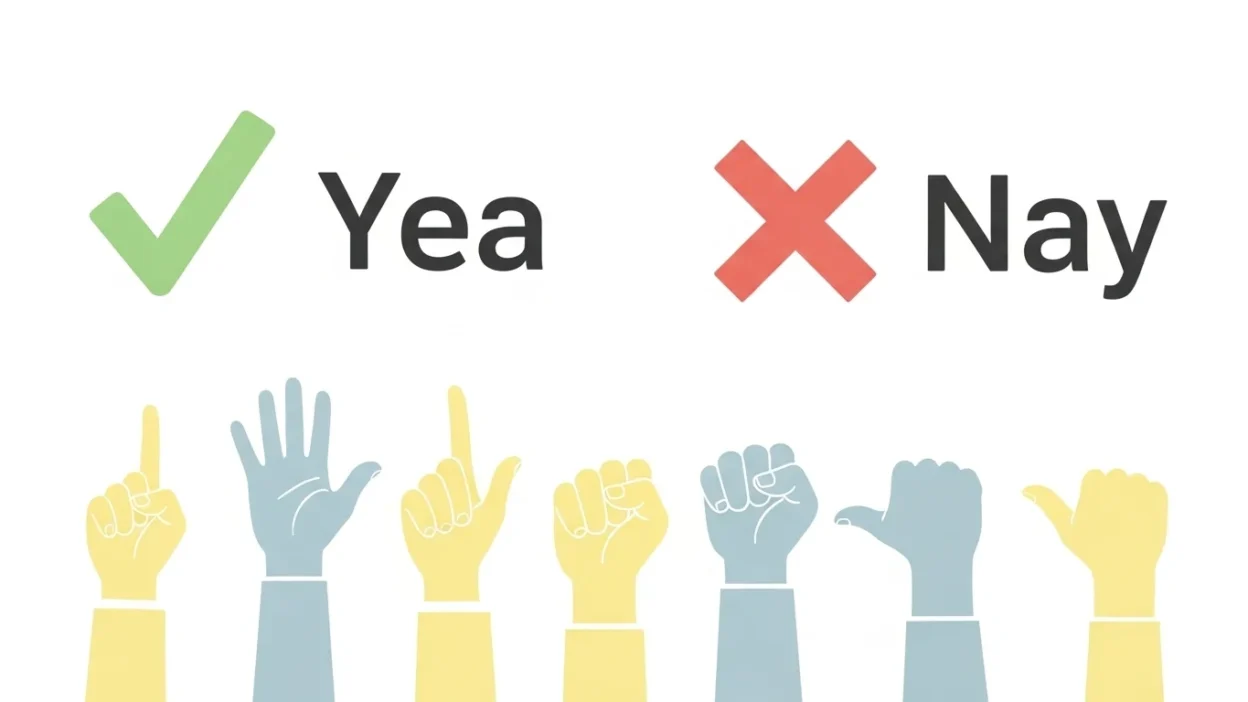
- ✅ Yea – Means yes (formal, voting context)
- ❌ Nay – Means no (formal, voting context)
- ✏️ Remember: Yea = yes, Nay = no
Clear Explanation of the Difference
What Does “Yea” Mean?
Yea means yes, but it is used in formal or official settings.
👉 Common in:
- voting
- formal decisions
- old or historical language
Examples:
- All those in favor say yea.
- The motion passed with 10 yeas.
- Members voted yea on the bill.
What Does “Nay” Mean?
Nay means no, also used in formal contexts.
Examples:
- All those against say nay.
- There were 5 nays in the vote.
- He voted nay on the proposal.
Important Note ⚠️
Do NOT confuse:
- Yea ❌ with Yeah ✔
- Nay ❌ with casual “No”
👉 Yeah = informal “yes” (common in daily speech)
👉 Yea = formal voting word
Comparison Table
| Feature | Yea | Nay |
|---|---|---|
| Meaning | Yes | No |
| Usage | Formal / voting | Formal / voting |
| Tone | Official | Official |
| Example | Vote yea | Vote nay |
Which One to Use and When
Use “Yea” When:
- Voting or making formal decisions
- Writing in historical or official style
Examples:
- The council voted yea.
- All in favor say yea.
- The result was mostly yeas.
Use “Nay” When:
- Voting against something
- Rejecting in formal contexts
Examples:
- He voted nay.
- All opposed say nay.
- There were more nays than yeas.
Common Mistakes People Make
1. Confusing “Yea” with “Yeah”
❌ Yea, I agree (casual speech)
✅ Yeah, I agree
2. Using “Nay” in Everyday Speech
❌ Nay, I don’t want it (too formal/unnatural)
✅ No, I don’t want it
3. Thinking They Are Modern Words
They are mostly used in formal settings.
4. Mixing Contexts
Use them only where appropriate.
5. Not Knowing Tone
They sound formal or old-fashioned.
Everyday Real-Life Examples
Formal Voting
- “All in favor say yea.”
- “All opposed say nay.”
Government or Meetings
- “The members voted yea.”
- “Some voted nay.”
Historical Context
- “The assembly declared yea.”
- “Voices shouted nay.”
Learning Context
- “Yea means yes.”
- “Nay means no.”
Short Learning Section for Students and Beginners
Easy Rule to Remember
- Yea = yes
- Nay = no
Memory Tip
“Yea starts like yes, Nay sounds like no.”
Practice Exercise
Fill in the blanks:
- All in favor say ______.
- All against say ______.
- He voted ______.
Answers:
- yea
- nay
- yea or nay (depending on context)
Quick Quiz
Choose the correct option:
- He voted ______ on the bill.
a) Yea
b) Nay - All opposed say ______.
a) Yea
b) Nay
Correct Answers:
- depends on meaning
- b) Nay
Frequently Asked Questions (FAQs)
1. What does “yea” mean?
It means yes in formal contexts.
2. What does “nay” mean?
It means no in formal contexts.
3. Are these words commonly used?
Not in everyday speech.
4. Is “yea” the same as “yeah”?
No, they are different.
5. Can I use “nay” casually?
No, it sounds too formal.
6. Where are they used?
In voting or official situations.
7. Is this a common confusion?
Yes, especially with “yeah.”
8. How can I remember it?
Remember: Yea = yes, Nay = no.
Conclusion
The difference between “yea” and “nay” is simple. Yea means yes, and nay means no, but both are used mainly in formal voting contexts.
To avoid mistakes, remember:
👉 Yea = yes
👉 Nay = no
This will help you understand and use them correctly when needed.

Emily Carter is a content writer and editor based in the United States, specializing in lifestyle, wellness, and personal development topics. With a passion for clear and engaging storytelling, she creates content that connects with readers and delivers practical value. Emily focuses on making complex ideas easy to understand and relatable.