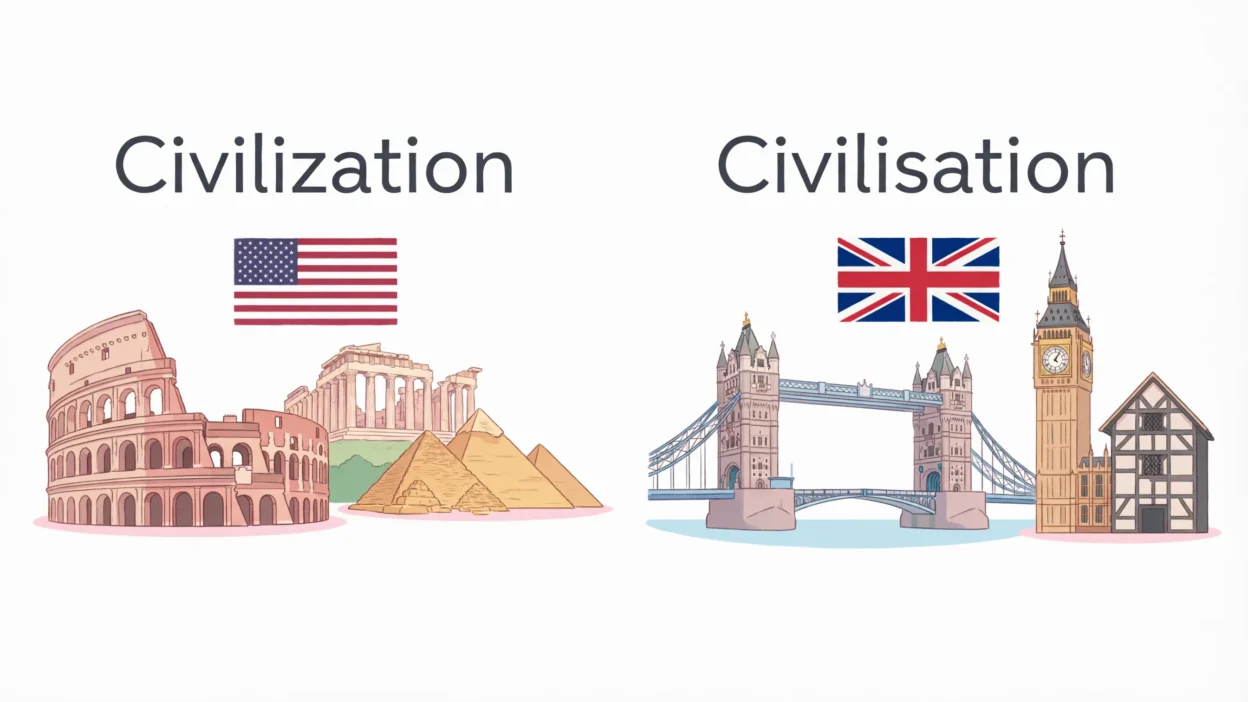
“Civilisation” and “civilization” have the same meaning and pronunciation. The difference is mainly based on regional spelling conventions.
The key idea: British English vs American English spelling.
Both words refer to:
- an advanced human society
- a culture with organized government, laws, and institutions
- the process of becoming more socially developed
Understanding the difference will help you choose the correct spelling for your audience and writing style.
Quick Answer
- ✅ Civilization – American English spelling
- ✅ Civilisation – British English spelling
- ✏️ Remember: American English uses “z”; British English often uses “s.”
Clear Explanation
What Does “Civilization” Mean?
Civilization is the American English spelling.
👉 It refers to:
- a highly developed society
- a culture with complex institutions
- human progress and social development
Examples:
- Ancient Egyptian civilization was highly advanced.
- The civilization developed impressive architecture.
- Historians study early human civilization.
- Modern civilization relies on technology.
- The civilization lasted for centuries.
👉 “Civilization” is commonly used in:
- the United States
- American textbooks
- U.S. academic publications
Common Uses of “Civilization”
1. Ancient Societies
Examples:
- Roman civilization
- Mayan civilization
Example Sentence:
- The Roman civilization influenced much of Europe.
2. Human Development
Examples:
- modern civilization
- human civilization
Example Sentence:
- Technology has transformed modern civilization.
3. Historical Studies
Examples:
- early civilization
- advanced civilization
Example Sentence:
- Archaeologists discovered evidence of an ancient civilization.
What Does “Civilisation” Mean?
Civilisation is the British English spelling of the same word.
👉 It has exactly the same meaning:
- an advanced society
- a developed culture
- organized human communities
Examples:
- Ancient Greek civilisation influenced Western culture.
- The civilisation prospered for hundreds of years.
- Historians study early human civilisation.
- Modern civilisation depends on infrastructure.
- The civilisation left remarkable monuments.
👉 “Civilisation” is commonly used in:
- the United Kingdom
- Australia
- New Zealand
- Commonwealth English
Common Uses of “Civilisation”
1. Historical Cultures
Examples:
- Egyptian civilisation
- Greek civilisation
Example Sentence:
- The Egyptian civilisation built the pyramids.
2. Social Development
Examples:
- modern civilisation
- Western civilisation
Example Sentence:
- Modern civilisation faces environmental challenges.
3. Academic Writing
Examples:
- early civilisation
- ancient civilisation
Example Sentence:
- Researchers examined evidence of a lost civilisation.
Key Difference
| Feature | Civilization | Civilisation |
|---|---|---|
| Meaning | Same | Same |
| English Style | American English | British English |
| Spelling | Uses “z” | Uses “s” |
| Pronunciation | Same | Same |
Which One to Use and When
Use “Civilization” When:
- Writing American English
- Writing for U.S. audiences
- Following American spelling conventions
Examples:
- human civilization
- Roman civilization
- modern civilization
- ancient civilization
- advanced civilization
Example Sentences:
- Human civilization has evolved dramatically.
- Archaeologists study ancient civilization.
- Technology shapes modern civilization.
Use “Civilisation” When:
- Writing British English
- Writing for UK or Commonwealth audiences
- Following British spelling conventions
Examples:
- human civilisation
- Roman civilisation
- modern civilisation
- ancient civilisation
- advanced civilisation
Example Sentences:
- Human civilisation has changed significantly.
- Historians study ancient civilisation.
- Modern civilisation depends on communication networks.
Common Mistakes People Make
1. Mixing American and British Spellings
Avoid using:
- civilization
and - civilisation
in the same document.
2. Thinking One Spelling Is Incorrect
Both are correct depending on regional style.
3. Forgetting the “S” vs “Z” Rule
American English often prefers:
- civilization
- organization
- realization
British English often uses:
- civilisation
- organisation
- realisation
4. Assuming Different Meanings
Both words mean exactly the same thing.
5. Inconsistent Academic Writing
Choose one spelling style and use it consistently throughout your work.
Easy Memory Trick
👉 Civilization = American English
👉 Civilisation = British English
Think:
- American English usually prefers “z”
- British English often prefers “s”
Real-Life Examples
Correct Use of “Civilization”
- Ancient civilization produced remarkable inventions.
- Human civilization continues to evolve.
- The civilization built impressive cities.
Correct Use of “Civilisation”
- Ancient civilisation developed advanced agriculture.
- Modern civilisation depends on technology.
- The civilisation flourished along the river.
Practice Exercise
Fill in the blanks:
- American English commonly uses “______.”
- British English commonly uses “______.”
- Both words refer to an advanced human society.
Answers:
- civilization
- civilisation
- true
Quick Quiz
- Which spelling is American English?
a) Civilisation
b) Civilization - Which spelling is British English?
a) Civilization
b) Civilisation - Do both words have the same meaning?
a) Yes
b) No
Correct Answers:
- b) Civilization
- b) Civilisation
- a) Yes
Why This Confusion Happens
The confusion happens because:
- both spellings are correct
- pronunciation is identical
- American and British English follow different spelling conventions
However:
- civilization is American English
- civilisation is British English
Helpful Tip for Better Writing
Stay consistent:
- American English → civilization
- British English → civilisation
Conclusion
The difference between “civilisation” and “civilization” is mainly regional spelling preference. Both words refer to an advanced human society, culture, or stage of social development.
👉 Civilization = American English
👉 Civilisation = British English
Using the correct regional spelling will make your writing clearer, more professional, and better suited to your audience.

Emily Carter is a content writer and editor based in the United States, specializing in lifestyle, wellness, and personal development topics. With a passion for clear and engaging storytelling, she creates content that connects with readers and delivers practical value. Emily focuses on making complex ideas easy to understand and relatable.