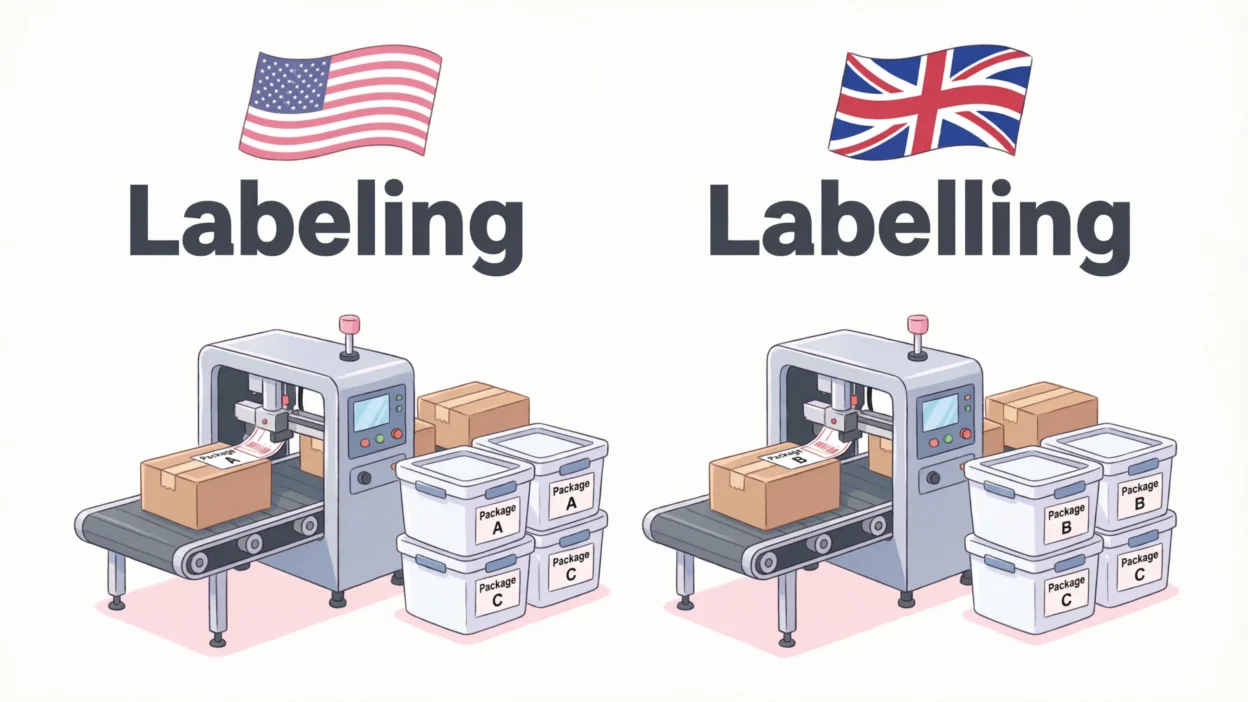
“Labelling” and “labeling” have the same meaning and pronunciation. The difference is mainly a matter of regional spelling conventions.
The key idea: British English vs American English spelling.
Both words are forms of the verb label, meaning:
- attaching a label to something
- identifying or categorizing something
- describing a person, object, or idea
Understanding the difference will help you choose the correct spelling for your audience.
Quick Answer
- ✅ Labeling – American English spelling
- ✅ Labelling – British English spelling
- ✏️ Remember: American English uses one “l”; British English uses two “l”s.
Clear Explanation
What Does “Labeling” Mean?
Labeling is the American English spelling of the present participle form of label.
👉 It means:
- putting labels on items
- classifying or identifying something
- assigning a description or category
Examples:
- She is labeling the folders.
- The company is labeling its products clearly.
- Avoid labeling people unfairly.
- Workers are labeling boxes for shipment.
- The teacher is labeling the diagrams.
👉 “Labeling” is commonly used in:
- the United States
- American business writing
- U.S. educational materials
Common Uses of “Labeling”
1. Product Packaging
Examples:
- food labeling
- product labeling
Example Sentence:
- Accurate labeling helps consumers make informed choices.
2. Organization
Examples:
- labeling files
- labeling containers
Example Sentence:
- She spent the afternoon labeling storage boxes.
3. Categorization
Examples:
- labeling behavior
- labeling groups
Example Sentence:
- Experts advise against labeling children too quickly.
What Does “Labelling” Mean?
Labelling is the British English spelling of the same word.
👉 It has exactly the same meaning:
- attaching labels
- identifying items
- categorizing people or things
Examples:
- He is labelling the packages.
- The company follows strict labelling regulations.
- Teachers should avoid labelling students unfairly.
- Workers are labelling products for export.
- The museum is labelling exhibits clearly.
👉 “Labelling” is commonly used in:
- the United Kingdom
- Australia
- New Zealand
- Commonwealth English
Common Uses of “Labelling”
1. Packaging and Compliance
Examples:
- food labelling
- product labelling
Example Sentence:
- Food labelling laws protect consumers.
2. Organization
Examples:
- labelling shelves
- labelling documents
Example Sentence:
- The staff are labelling files carefully.
3. Classification
Examples:
- labelling individuals
- labelling behavior
Example Sentence:
- Unfairly labelling people can be harmful.
Key Difference
| Feature | Labeling | Labelling |
|---|---|---|
| Meaning | Same | Same |
| English Style | American English | British English |
| Number of “L”s | One | Two |
| Pronunciation | Same | Same |
Which One to Use and When
Use “Labeling” When:
- Writing American English
- Writing for U.S. audiences
- Following American spelling conventions
Examples:
- product labeling
- food labeling
- labeling files
- labeling boxes
- labeling diagrams
Example Sentences:
- The company is labeling its products correctly.
- She is labeling the folders.
- Food labeling regulations have changed.
Use “Labelling” When:
- Writing British English
- Writing for UK or Commonwealth audiences
- Following British spelling conventions
Examples:
- product labelling
- food labelling
- labelling files
- labelling boxes
- labelling exhibits
Example Sentences:
- The museum is labelling exhibits clearly.
- Food labelling standards are important.
- Workers are labelling packages for delivery.
Common Mistakes People Make
1. Mixing American and British Spellings
Avoid using:
- labeling
and - labelling
in the same document.
2. Thinking One Spelling Is Wrong
Both are correct depending on regional style.
3. Forgetting Consonant-Doubling Rules
British English often doubles consonants:
- labelling
- travelling
- cancelling
American English often simplifies them:
- labeling
- traveling
- canceling
4. Assuming Different Meanings
Both words mean exactly the same thing.
5. Inconsistent Professional Writing
Business and academic documents should use one spelling style consistently.
Easy Memory Trick
👉 Labeling = American English
👉 Labelling = British English
Think:
- British English often doubles the “l”
- American English usually keeps a single “l”
Real-Life Examples
Correct Use of “Labeling”
- She is labeling the boxes.
- Product labeling regulations are strict.
- The teacher is labeling the charts.
Correct Use of “Labelling”
- He is labelling the shelves.
- Food labelling requirements have changed.
- The museum is labelling its exhibits.
Practice Exercise
Fill in the blanks:
- American English commonly uses “______.”
- British English commonly uses “______.”
- Both words refer to attaching labels or categorizing something.
Answers:
- labeling
- labelling
- true
Quick Quiz
- Which spelling is American English?
a) Labelling
b) Labeling - Which spelling is British English?
a) Labeling
b) Labelling - Do both words have the same meaning?
a) Yes
b) No
Correct Answers:
- b) Labeling
- b) Labelling
- a) Yes
Why This Confusion Happens
The confusion happens because:
- both spellings are correct
- pronunciation is identical
- British English often doubles consonants
However:
- labeling is American English
- labelling is British English
Helpful Tip for Better Writing
Stay consistent:
- American English → labeling
- British English → labelling
Conclusion
The difference between “labelling” and “labeling” is mainly regional spelling preference. Both words refer to attaching labels, identifying items, or categorizing people and things.
👉 Labeling = American English
👉 Labelling = British English
Using the correct regional spelling will make your writing clearer and more professional.

Daniel Brooks is a technology and business writer with experience covering innovation, startups, and digital tools. His work emphasizes clarity, accuracy, and real-world application. Daniel aims to help readers understand emerging technologies and make informed decisions in a fast-changing digital landscape.