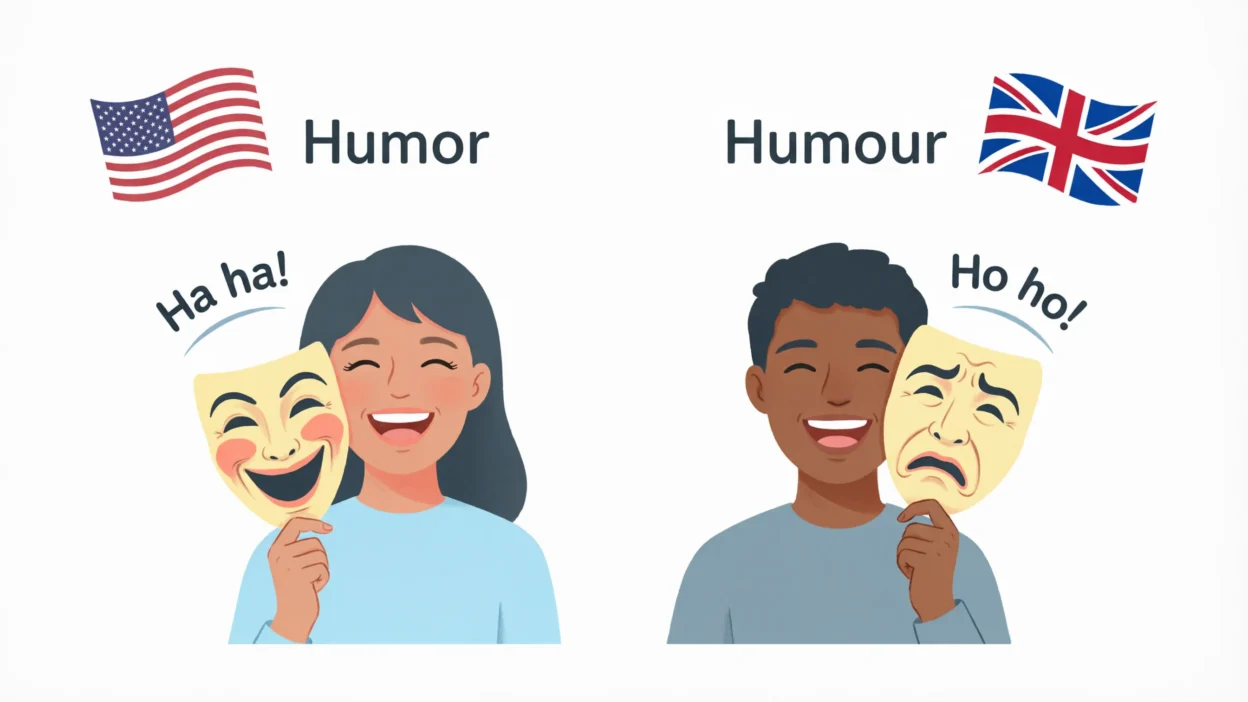
“Humour” and “humor” have the same meaning and pronunciation. The difference lies mainly in regional spelling conventions.
The key idea: British English vs American English spelling.
Both words refer to:
- the quality of being funny
- the ability to appreciate comedy
- a person’s mood or temperament (in some contexts)
Understanding the difference will help you choose the correct spelling for your audience.
Quick Answer
- ✅ Humor – American English spelling
- ✅ Humour – British English spelling
- ✏️ Remember: British English keeps the “u”; American English removes it.
Clear Explanation
What Does “Humor” Mean?
Humor is the American English spelling.
👉 It refers to:
- comedy or funniness
- a sense of amusement
- the ability to make people laugh
Examples:
- She has a great sense of humor.
- His humor makes everyone smile.
- The movie’s humor appealed to all ages.
- Good humor can brighten a difficult day.
- The comedian is known for clever humor.
👉 “Humor” is commonly used in:
- the United States
- American media
- U.S. publications
Common Uses of “Humor”
1. Comedy
Examples:
- dark humor
- dry humor
Example Sentence:
- The book contains plenty of humor.
2. Personality
Examples:
- sense of humor
- good humor
Example Sentence:
- She has an excellent sense of humor.
3. Entertainment
Examples:
- humorous stories
- humor writing
Example Sentence:
- His humor made the audience laugh.
What Does “Humour” Mean?
Humour is the British English spelling of the same word.
👉 It has exactly the same meaning:
- comedy
- amusement
- wit
- a cheerful disposition
Examples:
- She has a wonderful sense of humour.
- The author’s humour is very clever.
- British humour is famous worldwide.
- His humour helped ease the tension.
- The play was full of humour.
👉 “Humour” is commonly used in:
- the United Kingdom
- Australia
- New Zealand
- Commonwealth English
Common Uses of “Humour”
1. Comedy and Wit
Examples:
- British humour
- clever humour
Example Sentence:
- The novel is known for its humour.
2. Personality
Examples:
- good humour
- sense of humour
Example Sentence:
- He faced challenges with good humour.
3. Entertainment
Examples:
- humorous articles
- humour writing
Example Sentence:
- Her humour delighted the audience.
Key Difference
| Feature | Humor | Humour |
|---|---|---|
| Meaning | Same | Same |
| English Style | American English | British English |
| Pronunciation | Same | Same |
| Spelling | No “u” | Includes “u” |
Which One to Use and When
Use “Humor” When:
- Writing American English
- Writing for U.S. audiences
- Following American spelling conventions
Examples:
- sense of humor
- dark humor
- good humor
- humor writing
- humor magazine
Example Sentences:
- She has a great sense of humor.
- The article uses humor effectively.
- His humor is appreciated by everyone.
Use “Humour” When:
- Writing British English
- Writing for UK or Commonwealth audiences
- Following British spelling conventions
Examples:
- sense of humour
- dark humour
- good humour
- humour writing
- British humour
Example Sentences:
- She has a great sense of humour.
- British humour is often subtle.
- His humour made the audience laugh.
Common Mistakes People Make
1. Mixing American and British Spellings
Avoid using:
- humor
and - humour
in the same document.
2. Thinking One Is Incorrect
Both spellings are correct.
3. Forgetting the “U” Rule
British English often uses:
- humour
- honour
- colour
- favour
American English usually uses:
- humor
- honor
- color
- favor
4. Assuming Different Meanings
Both words have the same meaning.
5. Inconsistent Writing Style
Choose one spelling style and use it consistently.
Easy Memory Trick
👉 Humor = American English
👉 Humour = British English
Think:
- British English keeps the extra “u”
- American English drops it
Real-Life Examples
Correct Use of “Humor”
- He has a wonderful sense of humor.
- The movie’s humor was clever.
- Good humor improves workplace morale.
Correct Use of “Humour”
- She has a wonderful sense of humour.
- British humour can be very subtle.
- The book is full of humour.
Practice Exercise
Fill in the blanks:
- American English commonly uses “______.”
- British English commonly uses “______.”
- Both words refer to comedy or amusement.
Answers:
- humor
- humour
- true
Quick Quiz
- Which spelling is American English?
a) Humour
b) Humor - Which spelling is British English?
a) Humor
b) Humour - Do both words have the same meaning?
a) Yes
b) No
Correct Answers:
- b) Humor
- b) Humour
- a) Yes
Why This Confusion Happens
The confusion happens because:
- both spellings are correct
- pronunciation is identical
- British English often keeps the letter “u”
However:
- humor is American English
- humour is British English
Helpful Tip for Better Writing
Stay consistent:
- American English → humor
- British English → humour
Conclusion
The difference between “humour” and “humor” is mainly regional spelling preference. Both words refer to comedy, wit, amusement, or a sense of fun.
👉 Humor = American English
👉 Humour = British English
Using the correct regional spelling will make your writing clearer, more professional, and better suited to your audience.

Michael Anderson is a professional editor and senior contributor with a background in long-form content and strategic writing. He focuses on quality, structure, and credibility across all publications. Michael brings years of experience in content development and ensures high editorial standards for every project.