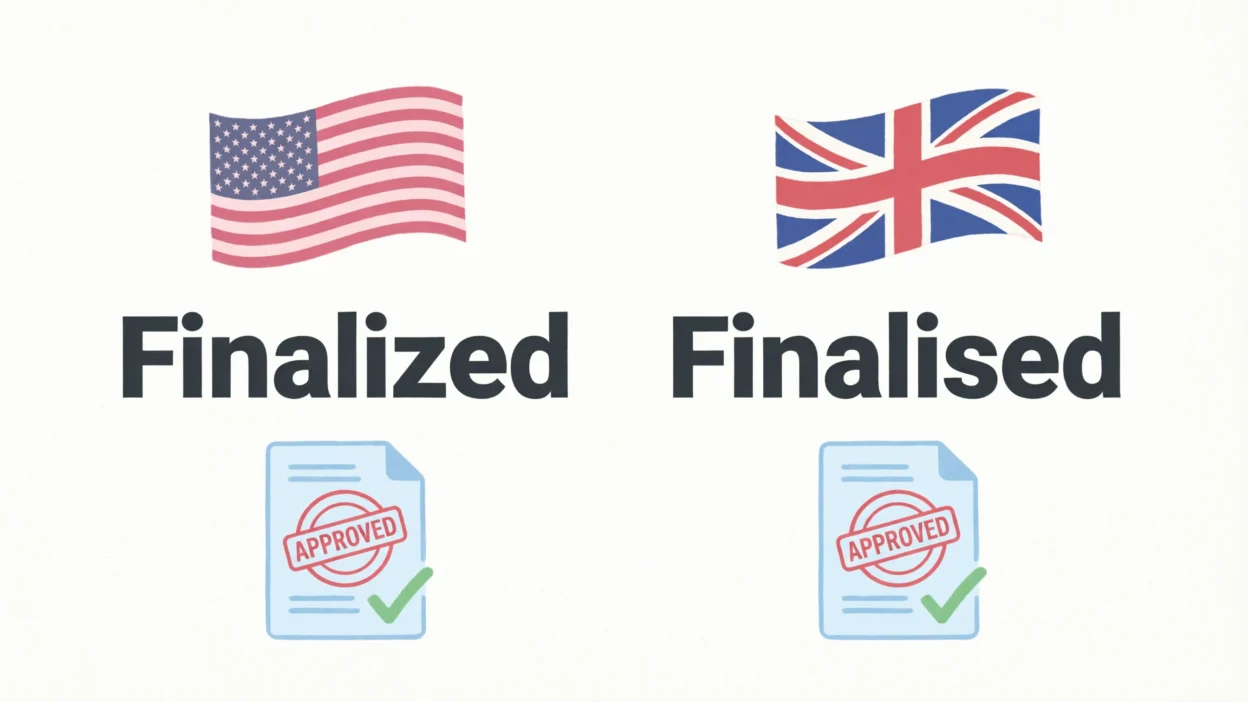
“Finalised” and “finalized” have the same meaning and pronunciation. The difference is mainly a matter of regional spelling conventions.
The key idea: British English vs American English spelling.
Both words mean:
- completed
- finished
- officially approved
- brought to a final form
Understanding the difference will help you choose the correct spelling for your audience and maintain a consistent writing style.
Quick Answer
- ✅ Finalized – American English spelling
- ✅ Finalised – British English spelling
- ✏️ Remember: American English prefers “z”; British English often prefers “s.”
Clear Explanation
What Does “Finalized” Mean?
Finalized is the American English spelling of the past tense and past participle of finalize.
👉 It means:
- completed officially
- approved in its final form
- made ready for use or implementation
Examples:
- The contract was finalized yesterday.
- We finalized the project plan.
- The team finalized the budget.
- She finalized her travel arrangements.
- The agreement has been finalized.
👉 “Finalized” is commonly used in:
- the United States
- American business writing
- U.S. legal and corporate documents
Common Uses of “Finalized”
1. Business Documents
Examples:
- finalized contract
- finalized proposal
Example Sentence:
- The company finalized the merger agreement.
2. Project Management
Examples:
- finalized schedule
- finalized plan
Example Sentence:
- The team finalized the timeline before launch.
3. Personal Arrangements
Examples:
- finalized booking
- finalized travel plans
Example Sentence:
- They finalized their wedding arrangements.
What Does “Finalised” Mean?
Finalised is the British English spelling of the same word.
👉 It has exactly the same meaning:
- completed
- approved
- brought to a final version
Examples:
- The contract was finalised yesterday.
- The committee finalised the report.
- We finalised the budget.
- She finalised her travel plans.
- The agreement has been finalised.
👉 “Finalised” is commonly used in:
- the United Kingdom
- Australia
- New Zealand
- Commonwealth English
Common Uses of “Finalised”
1. Business and Government
Examples:
- finalised agreement
- finalised policy
Example Sentence:
- The government finalised the new regulations.
2. Academic and Professional Work
Examples:
- finalised report
- finalised document
Example Sentence:
- The researchers finalised their findings.
3. Personal Planning
Examples:
- finalised itinerary
- finalised arrangements
Example Sentence:
- They finalised their holiday plans.
Key Difference
| Feature | Finalized | Finalised |
|---|---|---|
| Meaning | Same | Same |
| English Style | American English | British English |
| Spelling | Uses “z” | Uses “s” |
| Pronunciation | Same | Same |
Which One to Use and When
Use “Finalized” When:
- Writing American English
- Writing for U.S. audiences
- Following American spelling conventions
Examples:
- finalized contract
- finalized report
- finalized proposal
- finalized budget
- finalized schedule
Example Sentences:
- The agreement was finalized today.
- We finalized the project details.
- The budget has been finalized.
Use “Finalised” When:
- Writing British English
- Writing for UK or Commonwealth audiences
- Following British spelling conventions
Examples:
- finalised contract
- finalised report
- finalised proposal
- finalised budget
- finalised schedule
Example Sentences:
- The agreement was finalised today.
- We finalised the project details.
- The budget has been finalised.
Common Mistakes People Make
1. Mixing American and British Spellings
Avoid using:
- finalized
and - finalised
in the same document.
2. Thinking One Spelling Is Wrong
Both are correct depending on regional style.
3. Forgetting the “S” vs “Z” Rule
American English often prefers:
- finalized
- organized
- realized
British English often prefers:
- finalised
- organised
- realised
4. Assuming Different Meanings
Both words mean exactly the same thing.
5. Inconsistent Professional Writing
Business, academic, and legal documents should use one spelling style consistently.
Easy Memory Trick
👉 Finalized = American English
👉 Finalised = British English
Think:
- American English usually prefers “z”
- British English often prefers “s”
Real-Life Examples
Correct Use of “Finalized”
- The contract was finalized last week.
- They finalized the budget yesterday.
- The proposal has been finalized.
Correct Use of “Finalised”
- The contract was finalised last week.
- They finalised the budget yesterday.
- The proposal has been finalised.
Practice Exercise
Fill in the blanks:
- American English commonly uses “______.”
- British English commonly uses “______.”
- Both words mean completed or officially approved.
Answers:
- finalized
- finalised
- true
Quick Quiz
- Which spelling is American English?
a) Finalised
b) Finalized - Which spelling is British English?
a) Finalized
b) Finalised - Do both words have the same meaning?
a) Yes
b) No
Correct Answers:
- b) Finalized
- b) Finalised
- a) Yes
Why This Confusion Happens
The confusion happens because:
- both spellings are correct
- pronunciation is identical
- American and British English follow different spelling conventions
However:
- finalized is American English
- finalised is British English
Helpful Tip for Better Writing
Stay consistent:
- American English → finalized
- British English → finalised
Conclusion
The difference between “finalised” and “finalized” is mainly regional spelling preference. Both words mean completed, approved, or brought to a final form.
👉 Finalized = American English
👉 Finalised = British English
Using the correct regional spelling will make your writing clearer, more professional, and better suited to your audience.

Daniel Brooks is a technology and business writer with experience covering innovation, startups, and digital tools. His work emphasizes clarity, accuracy, and real-world application. Daniel aims to help readers understand emerging technologies and make informed decisions in a fast-changing digital landscape.