
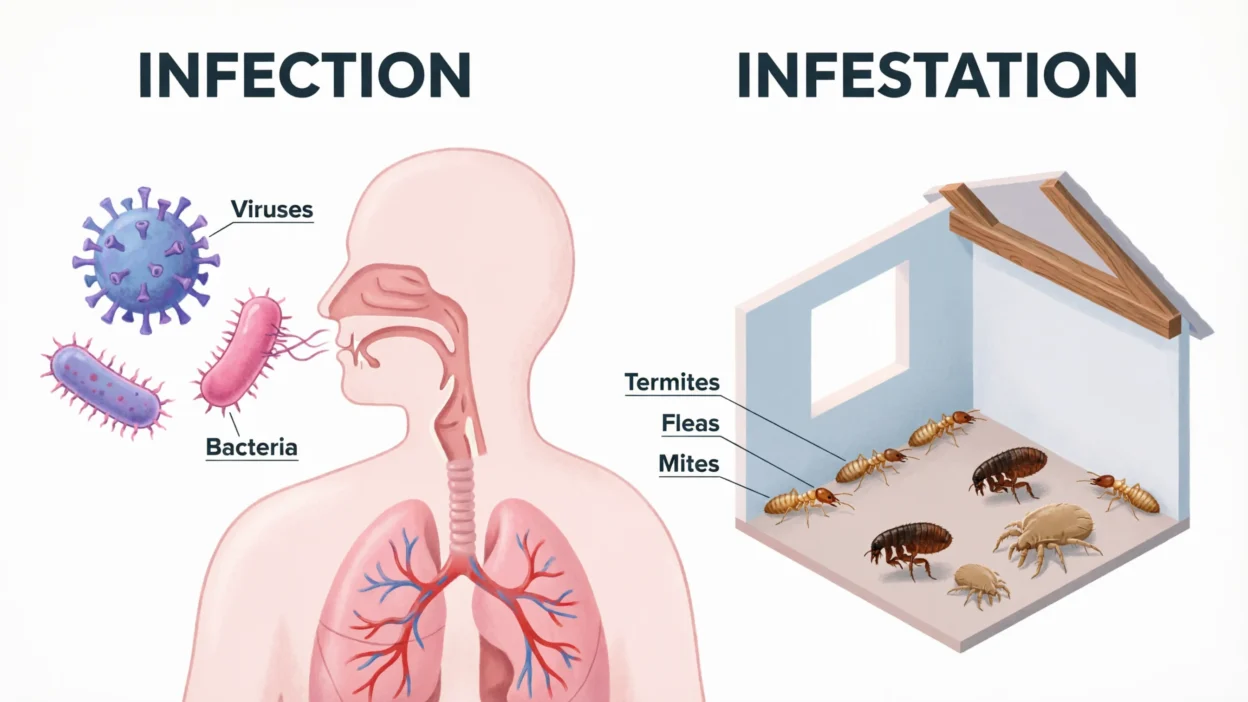
“Infection” and “infestation” are both related to harmful organisms, but they are used in different medical and biological situations.
The key idea: microorganisms inside the body vs pests living on or around something.
Quick Answer
- ✅ Infection – Invasion of the body by germs like bacteria or viruses
- ✅ Infestation – Presence of larger pests such as insects or parasites
- ✏️ Remember: Infection = germs, Infestation = pests/parasites
Clear Explanation
What Does “Infection” Mean?
Infection is a noun.
👉 It means:
- the invasion and growth of harmful microorganisms in the body
These microorganisms may include:
- bacteria
- viruses
- fungi
- some parasites
Examples:
- She developed a throat infection.
- The wound showed signs of infection.
- Viral infections spread quickly.
- Doctors treated the infection with medicine.
- Ear infections are common in children.
👉 Common medical contexts:
- hospitals
- illnesses
- injuries
- immune system problems
Types of Infections
Bacterial Infection
- caused by bacteria
Example:
- strep throat
Viral Infection
- caused by viruses
Example:
- the flu
Fungal Infection
- caused by fungi
Example:
- athlete’s foot
What Does “Infestation” Mean?
Infestation is also a noun.
👉 It means:
- being overrun or occupied by pests or parasites
These may include:
- insects
- lice
- rats
- worms
- termites
Examples:
- The house had a termite infestation.
- Flea infestations can spread quickly.
- Farmers fought a locust infestation.
- The hotel dealt with a bedbug infestation.
- The dog suffered from a flea infestation.
👉 Often used for:
- homes
- animals
- crops
- buildings
Key Difference
| Feature | Infection | Infestation |
|---|---|---|
| Cause | Germs/microorganisms | Pests or parasites |
| Common Examples | Viruses, bacteria | Fleas, termites, lice |
| Location | Inside body/tissue | On surfaces, skin, homes |
| Context | Medical illness | Pest problems |
Which One to Use and When
Use “Infection” When:
- Talking about diseases caused by microorganisms
Examples:
- Skin infection
- Eye infection
- Lung infection
- Bacterial infection
- Viral infection
Use “Infestation” When:
- Talking about pests or parasites spreading widely
Examples:
- Flea infestation
- Mouse infestation
- Bedbug infestation
- Termite infestation
- Lice infestation
Common Mistakes People Make
1. Using “Infection” for Insects
❌ The house had a cockroach infection
✅ The house had a cockroach infestation
2. Using “Infestation” for Illness
❌ She had a throat infestation
✅ She had a throat infection
3. Confusing Parasites and Germs
Microorganisms vs visible pests.
4. Overlapping Medical Situations
Some parasites can cause both infection and infestation depending on context.
5. Ignoring Scale
Infestation often suggests large numbers of pests.
Easy Memory Trick
👉 Infection = internal germs
👉 Infestation = invading pests
Think:
- infection → microscopic
- infestation → visible pests
Real-Life Examples
Correct Use of “Infection”
- The cut became infected.
- Doctors treated the infection quickly.
- Viral infections are contagious.
Correct Use of “Infestation”
- The attic had a rat infestation.
- The dog needed treatment for flea infestation.
- Farmers feared insect infestation.
Practice Exercise
Fill in the blanks:
- The doctor diagnosed a bacterial ______.
- The building suffered from termite ______.
- Ear ______ can be painful.
Answers:
- infection
- infestation
- infections
Quick Quiz
- Which word relates to germs and disease?
a) Infestation
b) Infection - Which word relates to pests or insects?
a) Infection
b) Infestation
Correct Answers:
- b) Infection
- b) Infestation
Conclusion
The difference between “infection” and “infestation” is about the type of harmful organism involved. Infection refers to germs like bacteria or viruses entering the body, while infestation refers to larger pests or parasites spreading on or around living spaces or bodies.
👉 Infection = germs/disease
👉 Infestation = pests/parasites

Michael Anderson is a professional editor and senior contributor with a background in long-form content and strategic writing. He focuses on quality, structure, and credibility across all publications. Michael brings years of experience in content development and ensures high editorial standards for every project.