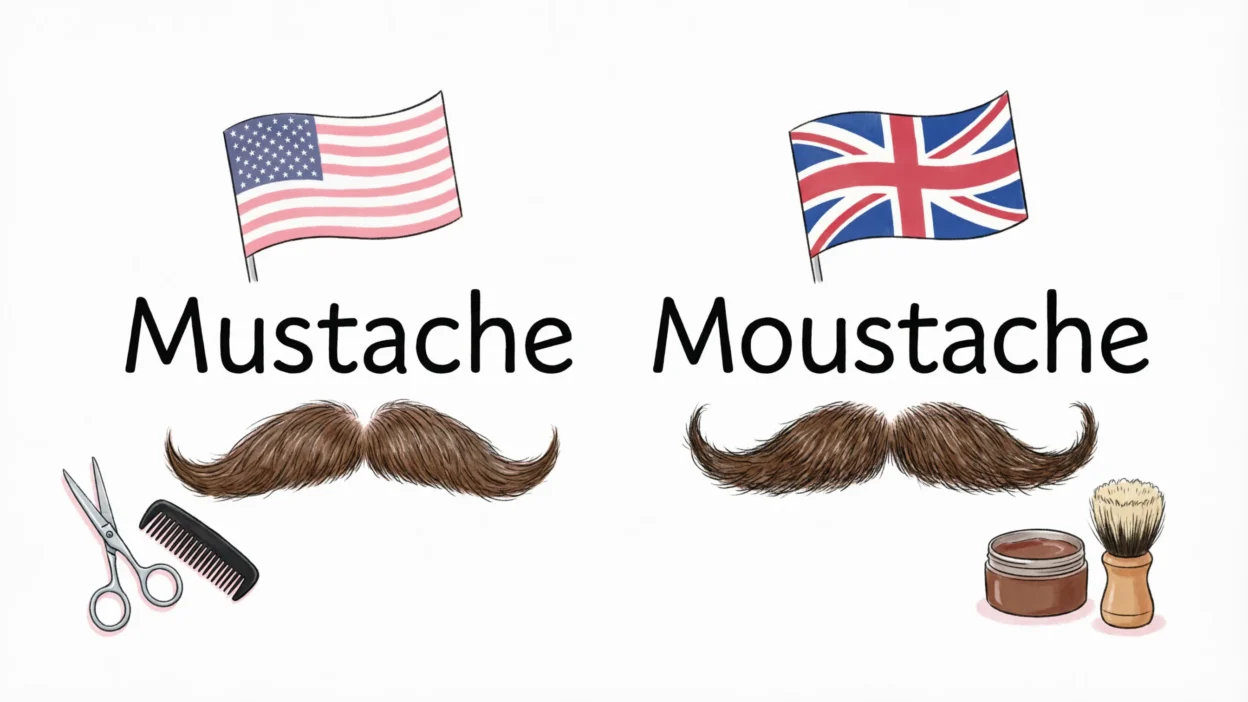
“Mustache” and “moustache” refer to the same facial hair grown on the upper lip. The difference is mainly a matter of regional spelling.
The key idea: American English vs British English spelling.
Both words describe:
- facial hair above the upper lip
- a grooming style worn by men (and occasionally in costumes or performances)
- the same physical feature
Understanding the difference will help you choose the correct spelling for your audience.
Quick Answer
- ✅ Mustache – American English spelling
- ✅ Moustache – British English spelling
- ✏️ Remember: American English uses the shorter spelling; British English keeps the extra “ou.”
Clear Explanation
What Does “Mustache” Mean?
Mustache is the American English spelling.
👉 It refers to:
- hair growing above the upper lip
- a facial hair style
Examples:
- He has a thick mustache.
- The actor shaved his mustache.
- A mustache can change a person’s appearance.
- He styles his mustache every morning.
- The costume included a fake mustache.
👉 “Mustache” is commonly used in:
- the United States
- American media
- U.S. grooming and fashion publications
Common Uses of “Mustache”
1. Personal Grooming
Examples:
- trimmed mustache
- styled mustache
Example Sentence:
- He keeps his mustache neatly trimmed.
2. Fashion and Style
Examples:
- handlebar mustache
- pencil mustache
Example Sentence:
- The handlebar mustache became his signature look.
3. Costumes and Entertainment
Examples:
- fake mustache
- theatrical mustache
Example Sentence:
- The actor wore a fake mustache for the role.
What Does “Moustache” Mean?
Moustache is the British English spelling of the same word.
👉 It has exactly the same meaning:
- facial hair above the upper lip
- a style of facial grooming
Examples:
- He has a thick moustache.
- The actor shaved his moustache.
- A moustache can alter someone’s appearance.
- He carefully styles his moustache.
- The costume included a fake moustache.
👉 “Moustache” is commonly used in:
- the United Kingdom
- Australia
- New Zealand
- Commonwealth English
Common Uses of “Moustache”
1. Grooming
Examples:
- trimmed moustache
- styled moustache
Example Sentence:
- He maintains his moustache carefully.
2. Fashion
Examples:
- handlebar moustache
- pencil moustache
Example Sentence:
- The moustache suited his vintage style.
3. Entertainment
Examples:
- fake moustache
- costume moustache
Example Sentence:
- The comedian wore a fake moustache.
Key Difference
| Feature | Mustache | Moustache |
|---|---|---|
| Meaning | Same | Same |
| English Style | American English | British English |
| Pronunciation | Same | Same |
| Spelling | Shorter | Longer |
Which One to Use and When
Use “Mustache” When:
- Writing American English
- Writing for U.S. audiences
- Following American spelling conventions
Examples:
- thick mustache
- fake mustache
- styled mustache
- handlebar mustache
- pencil mustache
Example Sentences:
- He grew a mustache last year.
- The mustache became his trademark.
- She bought a fake mustache for the costume.
Use “Moustache” When:
- Writing British English
- Writing for UK or Commonwealth audiences
- Following British spelling conventions
Examples:
- thick moustache
- fake moustache
- styled moustache
- handlebar moustache
- pencil moustache
Example Sentences:
- He grew a moustache last year.
- The moustache became his trademark.
- She bought a fake moustache for the costume.
Common Mistakes People Make
1. Mixing American and British Spellings
Avoid using:
- mustache
and - moustache
in the same document.
2. Thinking One Is Incorrect
Both spellings are correct depending on regional style.
3. Assuming Different Meanings
They refer to exactly the same facial hair.
4. Using the Wrong Regional Form
American English generally prefers:
- mustache
British English generally prefers:
- moustache
5. Inconsistent Writing Style
Keep the same spelling convention throughout your content.
Easy Memory Trick
👉 Mustache = American English
👉 Moustache = British English
Think:
- British English keeps the extra “ou”
- American English simplifies it
Real-Life Examples
Correct Use of “Mustache”
- His mustache is neatly trimmed.
- The actor shaved his mustache.
- A handlebar mustache requires regular grooming.
Correct Use of “Moustache”
- His moustache is neatly trimmed.
- The actor shaved his moustache.
- A handlebar moustache requires regular grooming.
Practice Exercise
Fill in the blanks:
- American English commonly uses “______.”
- British English commonly uses “______.”
- Both words refer to facial hair above the upper lip.
Answers:
- mustache
- moustache
- true
Quick Quiz
- Which spelling is American English?
a) Moustache
b) Mustache - Which spelling is British English?
a) Mustache
b) Moustache - Do both words have the same meaning?
a) Yes
b) No
Correct Answers:
- b) Mustache
- b) Moustache
- a) Yes
Why This Confusion Happens
The confusion happens because:
- both spellings are correct
- pronunciation is identical
- American and British English developed different spelling conventions
However:
- mustache is American English
- moustache is British English
Helpful Tip for Better Writing
Stay consistent:
- American English → mustache
- British English → moustache
Conclusion
The difference between “mustache” and “moustache” is mainly regional spelling preference. Both words refer to facial hair grown on the upper lip.
👉 Mustache = American English
👉 Moustache = British English
Using the correct regional spelling will make your writing clearer, more professional, and appropriate for your audience.

Daniel Brooks is a technology and business writer with experience covering innovation, startups, and digital tools. His work emphasizes clarity, accuracy, and real-world application. Daniel aims to help readers understand emerging technologies and make informed decisions in a fast-changing digital landscape.