
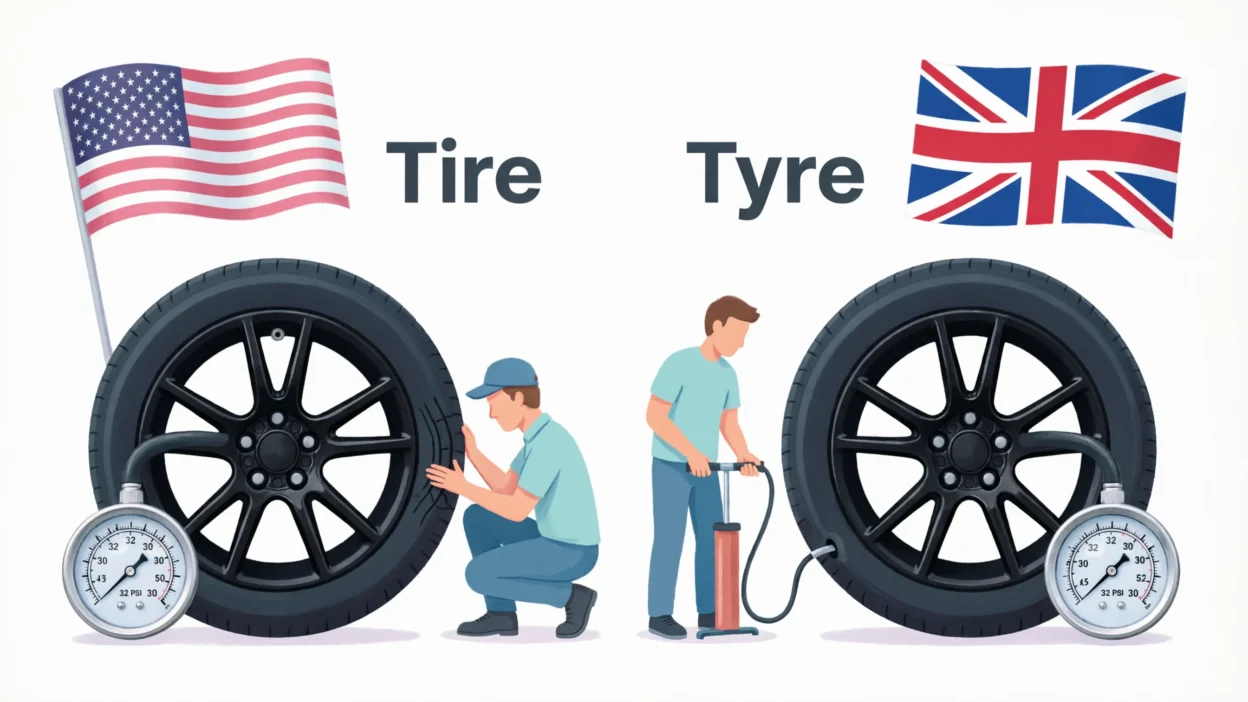
“Tire” and “tyre” are often used to refer to the rubber covering fitted around a wheel. However, the correct spelling depends on the type of English being used.
There is also an important second meaning of tire as a verb meaning to become tired or exhausted.
The key idea: American English vs British English spelling for vehicle wheels.
Quick Answer
- ✅ Tire – American English spelling for the wheel component
- ✅ Tyre – British English spelling for the wheel component
- ✅ Tire – The only spelling used for the verb meaning “to become fatigued
Clear Explanation
What Does “Tire” Mean?
Tire has two common meanings.
1. Vehicle Wheel Covering (American English)
Examples:
- car tire
- bicycle tire
- spare tire
Example Sentences:
- The car needs a new tire.
- He checked the tire pressure.
- The tire was punctured.
2. To Become Tired or Exhausted
Examples:
- tire easily
- tire quickly
Example Sentences:
- Long walks tire him.
- I never tire of listening to that song.
- The children began to tire after the game.
👉 For the verb meaning fatigue, the spelling is always tire, even in British English.
What Does “Tyre” Mean?
Tyre is the British English spelling for the rubber covering around a wheel.
Examples:
- car tyre
- bicycle tyre
- spare tyre
Example Sentences:
- The front tyre needs replacing.
- She checked the tyre pressure.
- The tyre was damaged by a nail.
👉 Tyre is used in:
- the United Kingdom
- Australia
- New Zealand
- most Commonwealth countries
Common Uses of “Tire”
1. Vehicle Parts (American English)
Examples:
- winter tire
- spare tire
Example Sentence:
- The mechanic replaced the tire.
2. Fatigue
Examples:
- tire of something
- tire quickly
Example Sentence:
- Athletes can tire after intense exercise.
Common Uses of “Tyre”
1. Vehicle Parts (British English)
Examples:
- winter tyre
- spare tyre
Example Sentence:
- The mechanic replaced the damaged tyre.
2. Automotive Industry
Examples:
- tyre pressure
- tyre manufacturer
Example Sentence:
- Proper tyre maintenance improves safety.
Key Difference
| Feature | Tire | Tyre |
|---|---|---|
| Vehicle Wheel Component | American English | British English |
| Verb Meaning “Become Tired” | Yes | No |
| Pronunciation | Same | Same |
| Meaning (Wheel) | Same | Same |
Which One to Use and When
Use “Tire” When:
- Writing American English
- Referring to vehicle wheels in the U.S.
- Using the verb meaning fatigue
Examples:
- car tire
- spare tire
- winter tire
- tire pressure
- tire quickly
Example Sentences:
- The tire needs air.
- I never tire of good music.
- The mechanic inspected the tire.
Use “Tyre” When:
- Writing British English
- Referring to vehicle wheels in the UK or Commonwealth countries
Examples:
- car tyre
- spare tyre
- winter tyre
- tyre pressure
- tyre shop
Example Sentences:
- The tyre needs replacing.
- Check the tyre pressure regularly.
- The damaged tyre caused the problem.
Common Mistakes People Make
1. Using “Tyre” as a Verb
Incorrect:
❌ I tyre easily.
Correct:
✅ I tire easily.
2. Mixing American and British Spellings
Avoid using:
- tire
and - tyre
for wheel components in the same document.
3. Thinking They Have Different Meanings
For vehicle wheels, both words mean the same thing.
4. Forgetting Regional Preferences
- American English → tire
- British English → tyre
5. Confusing the Verb and Noun
Remember:
- tire (verb) = become exhausted
- tire/tyre (noun) = wheel covering
Easy Memory Trick
👉 Tire = American spelling + the verb meaning fatigue
👉 Tyre = British spelling for vehicle wheels
Think:
- If it’s a wheel in British English, add “y” → tyre.
Real-Life Examples
Correct Use of “Tire”
- The tire lost pressure overnight.
- I never tire of reading history books.
- The spare tire is in the trunk.
Correct Use of “Tyre”
- The tyre was punctured.
- Check your tyre pressure regularly.
- The mechanic replaced the rear tyre.
Practice Exercise
Fill in the blanks:
- American English commonly uses “______” for a vehicle wheel covering.
- British English commonly uses “______” for a vehicle wheel covering.
- The verb meaning “become exhausted” is always “______.”
Answers:
- tire
- tyre
- tire
Quick Quiz
- Which spelling is American English for a vehicle wheel?
a) Tyre
b) Tire - Which spelling is British English for a vehicle wheel?
a) Tire
b) Tyre - Which spelling is used for the verb meaning “become exhausted?
a) Tire
b) Tyre
Correct Answers:
- b) Tire
- b) Tyre
- a) Tire
Why This Confusion Happens
The confusion happens because:
- both spellings refer to the same vehicle part
- pronunciation is identical
- American and British English use different conventions
Additionally:
- tire also functions as a verb meaning to become fatigued
Helpful Tip for Better Writing
Stay consistent:
- American English → tire
- British English → tyre
And remember:
- The verb is always tire.
Conclusion
The difference between “tire” and “tyre” is mainly regional spelling preference when referring to the rubber covering on a wheel.
👉 Tire = American English
👉 Tyre = British English
👉 Tire (verb) = become exhausted
Using the correct spelling will make your writing more natural and appropriate for your audience.

Michael Anderson is a professional editor and senior contributor with a background in long-form content and strategic writing. He focuses on quality, structure, and credibility across all publications. Michael brings years of experience in content development and ensures high editorial standards for every project.