“Anyone” and “anybody” are very similar words in English and are often interchangeable. Both refer to an unspecified person.
The key idea: almost identical meaning with slight tone differences.
Quick Answer
- ✅ Anyone – Refers to any person
- ✅ Anybody – Also refers to any person
- ✏️ Remember: Both usually mean the same thing
Clear Explanation
What Does “Anyone” Mean?
Anyone is an indefinite pronoun.
👉 It means:
- any person
- no specific person
Examples:
- Does anyone know the answer?
- Anyone can join the club.
- I didn’t see anyone there.
- Is anyone available to help?
- Anyone interested may apply.
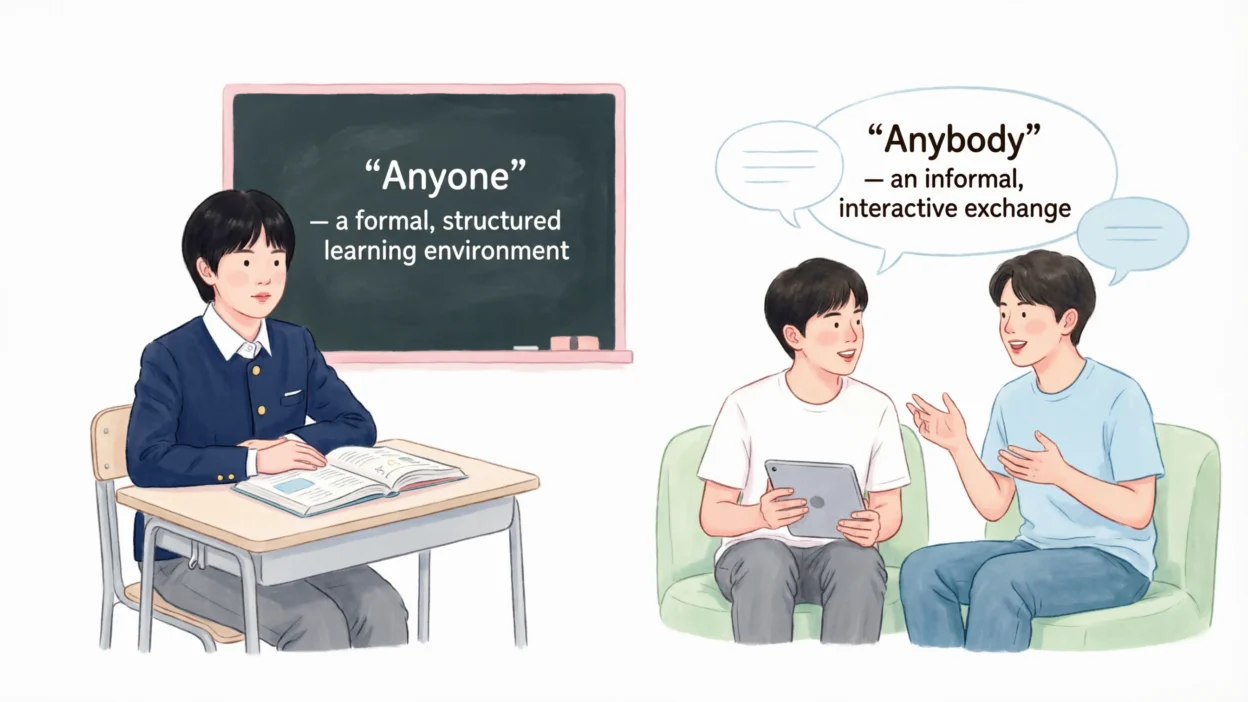
👉 “Anyone” is slightly more common in formal writing.
What Does “Anybody” Mean?
Anybody is also an indefinite pronoun.
👉 It has nearly the same meaning:
- any person
Examples:
- Does anybody want pizza?
- Anybody can learn English.
- I couldn’t find anybody outside.
- Has anybody called me?
- Anybody interested should register.
👉 “Anybody” sounds slightly more casual and conversational.
Key Difference
| Feature | Anyone | Anybody |
|---|---|---|
| Meaning | Any person | Any person |
| Formality | Slightly more formal | Slightly more casual |
| Usage | Common in writing | Common in speech |
| Example | Anyone can help | Anybody can help |
Which One to Use and When
Use “Anyone” When:
- Writing formally
- Using professional or academic tone
Examples:
- Anyone may participate.
- If anyone calls, let me know.
- Anyone with experience may apply.
- Does anyone understand this?
- Anyone can improve with practice.
Use “Anybody” When:
- Speaking casually
- Using conversational English
Examples:
- Anybody hungry?
- Can anybody hear me?
- Anybody can play this game.
- I don’t know anybody here.
- Did anybody arrive early?
Common Mistakes People Make
1. Thinking One Is Incorrect
Both are correct in standard English.
2. Overusing One Form
Native speakers use both naturally.
3. Confusing With “Somebody” or “Everyone”
Different meanings.
4. Worrying Too Much About Formality
The difference is usually small.
5. Mixing Singular and Plural Verbs
Both are grammatically singular.
✅ Anyone is
✅ Anybody is
Grammar Tip
Even though they refer to people generally, both words usually take singular verbs.
Correct:
- Anyone is welcome.
- Anybody knows that.
Incorrect:
- Anyone are welcome.
Easy Memory Trick
👉 Anyone = slightly formal
👉 Anybody = slightly casual
But both usually mean:
✅ “any person”
Practice Exercise
Fill in the blanks:
- Can ______ help me?
- ______ interested should apply.
- I don’t know ______ here.
Answers:
- anyone / anybody
- anyone / anybody
- anyone / anybody
Quick Quiz
- Which word is more formal?
a) Anybody
b) Anyone - Which word is more conversational?
a) Anyone
b) Anybody
Correct Answers:
- b) Anyone
- b) Anybody
Conclusion
The difference between “anyone” and “anybody” is very small. Both mean “any person” and are usually interchangeable. “Anyone” sounds slightly more formal, while “anybody” sounds slightly more casual.
👉 Anyone = slightly formal
👉 Anybody = slightly casual

Sophia Reynolds is a digital writer and researcher with a focus on modern trends, productivity, and online education. She enjoys exploring new ideas and presenting them in a simple, reader-friendly way. Sophia is committed to creating informative and trustworthy content that helps audiences stay informed and inspired.