English punctuation can be confusing, especially when apostrophes are involved. One common mistake is choosing between “donts” and “don’ts.” Many students, ESL learners, and beginners struggle with this pair because contractions and plural forms follow special rules.
The confusion often arises from uncertainty about where to place the apostrophe. Some people omit it entirely, while others are unsure whether it belongs in plural forms. This guide explains the difference in very simple English so that anyone can understand it easily on the first read.
Quick Answer
Here is the clear and simple answer:
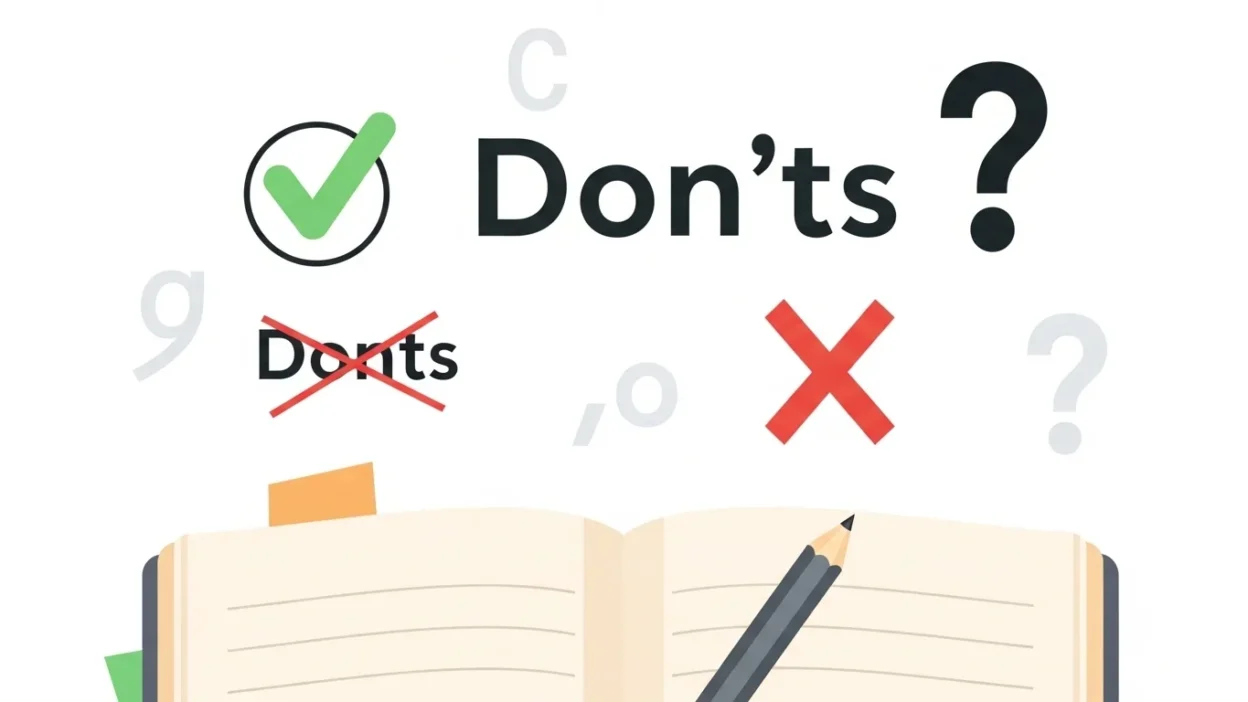
- ✅ Don’ts – Correct spelling; refers to things you should not do.
- ❌ Donts – Incorrect spelling; missing the apostrophe.
- ✏️ The apostrophe replaces the missing letter “o” in “do not.”
- 📚 Always use don’ts in formal and informal writing.
Origin and Background
The word don’t is a contraction of “do not.” The apostrophe replaces the missing letter “o.”
- Do not → Don’t
To form the plural, we add -s:
- Don’t → Don’ts
This structure helps maintain clarity and correct grammar in English.
Understanding Contractions
| Full Form | Contraction |
|---|---|
| Do not | Don’t |
| Cannot | Can’t |
| Will not | Won’t |
| Is not | Isn’t |
When making these contractions plural, we simply add -s, while keeping the apostrophe.
Clear Explanation of the Difference
What Does “Don’ts” Mean?
Don’ts is the correct plural form of don’t. It refers to actions that should be avoided.
Examples:
- The teacher explained the dos and don’ts of online learning.
- This guide lists important workplace don’ts.
- Parents teach children social don’ts.
It is commonly used alongside “dos.”
What Does “Donts” Mean?
Donts is incorrect because it lacks the necessary apostrophe. Without it, the word does not correctly represent the contraction “do not.”
❌ Donts
✅ Don’ts
Always include the apostrophe to ensure proper spelling and clarity.
Comparison Table
| Feature | Don’ts | Donts |
|---|---|---|
| Spelling | Correct | Incorrect |
| Apostrophe | Required | Missing |
| Meaning | Things you should not do | Not a valid word |
| Grammar | Plural of “don’t” | Grammatically incorrect |
| Usage | Formal and informal English | Considered a mistake |
| Example | Learn the dos and don’ts. | ❌ Learn the dos and donts. |
Which One to Use and When
Use “Don’ts” When:
- Listing rules or guidelines
- Giving advice or instructions
- Writing essays, emails, or reports
- Explaining acceptable and unacceptable behavior
- Creating educational materials
Examples:
- Follow the dos and don’ts of road safety.
- Here are the dos and don’ts of job interviews.
- The article explains social media don’ts.
- Students learned the classroom dos and don’ts.
- This handbook covers workplace don’ts.
Avoid “Donts”
Never use donts, as it is grammatically incorrect and considered a spelling mistake.
Common Mistakes People Make
1. Omitting the Apostrophe
Many learners forget to include the apostrophe.
❌ Donts
✅ Don’ts
2. Misunderstanding Plurals of Contractions
People are unsure whether contractions can be pluralized. They can—and the apostrophe remains.
3. Confusing Possessives with Plurals
Some mistakenly believe apostrophes are only for possession, but they are also used in contractions.
4. Typing Errors
Quick typing on keyboards and mobile devices often leads to missing punctuation.
5. Using Straight Quotes Incorrectly
Some writers use incorrect symbols instead of a proper apostrophe, which can affect clarity in formal writing.
Everyday Real-Life Examples
Emails
- “Please review the dos and don’ts before submitting your application.”
- “Here are the company’s social media don’ts.”
School and Education
- “The teacher explained classroom dos and don’ts.”
- “Students learned exam hall don’ts.”
Workplace Communication
- “The handbook outlines workplace dos and don’ts.”
- “Employees must follow safety don’ts.”
News and Media
- “Experts shared travel dos and don’ts.”
- “Doctors highlighted health don’ts during flu season.”
Social Media
- “Here are the dos and don’ts of online etiquette.”
- “Influencers often discuss fashion don’ts.”
Daily Conversations
- “What are the dos and don’ts of public speaking?”
- “Parents teach children basic social don’ts.”
Short Learning Section for Students and Beginners
Easy Rule to Remember
Don’t + s = Don’ts
Memory Tip
“Keep the apostrophe—don’t drop it!”
Pronunciation Guide
- Don’t: DOHNT
- Don’ts: DOHNTZ
Practice Exercise
Fill in the blanks with the correct word:
- Learn the dos and ______ of online safety.
- The guide lists important workplace ______.
- Students must follow classroom ______.
Answers:
- don’ts
- don’ts
- don’ts
Quick Quiz
Choose the correct option:
- The teacher explained the dos and ______.
a) Donts
b) Don’ts - Here are the interview ______.
a) Don’ts
b) Donts
Correct Answers:
- b) Don’ts
- a) Don’ts
Frequently Asked Questions (FAQs)
1. Is “donts” a correct word?
No, it is incorrect because it lacks the necessary apostrophe.
2. What is the correct spelling?
The correct spelling is don’ts.
3. What does “don’ts” mean?
It refers to actions or behaviors that should be avoided.
4. Why is there an apostrophe in “don’ts”?
The apostrophe replaces the missing letter “o” in “do not.”
5. Can contractions be made plural?
Yes. Simply add -s while keeping the apostrophe, as in don’ts and can’ts.
6. Is “dos and don’ts” correct?
Yes, it is a common and widely accepted expression.
7. Should I write “do’s and don’ts”?
Both “dos and don’ts” and “do’s and don’ts” are acceptable, though “dos and don’ts” is more modern.
8. How can I remember the correct spelling?
Remember this simple rule: Don’t + s = Don’ts.
Conclusion
The difference between “donts” and “don’ts” is simple but important. Don’ts is the correct spelling and refers to actions that should be avoided. In contrast, donts is incorrect because it omits the essential apostrophe.
To avoid mistakes, remember this easy rule: Keep the apostrophe when forming the plural of “don’t.” By using the correct spelling, you can communicate clearly, confidently, and accurately in both academic and everyday writing.

Daniel Brooks is a technology and business writer with experience covering innovation, startups, and digital tools. His work emphasizes clarity, accuracy, and real-world application. Daniel aims to help readers understand emerging technologies and make informed decisions in a fast-changing digital landscape.