English spelling can be tricky, especially when words sound similar. One common confusion is between “agast” and “aghast.” Since both are pronounced almost the same, many learners mistakenly assume they are interchangeable. However, only one of these spellings is correct in standard English.
This guide explains the difference in very simple language so that students, ESL learners, and beginners can understand it easily and avoid mistakes.
Quick Answer
Here is the clear and simple answer:
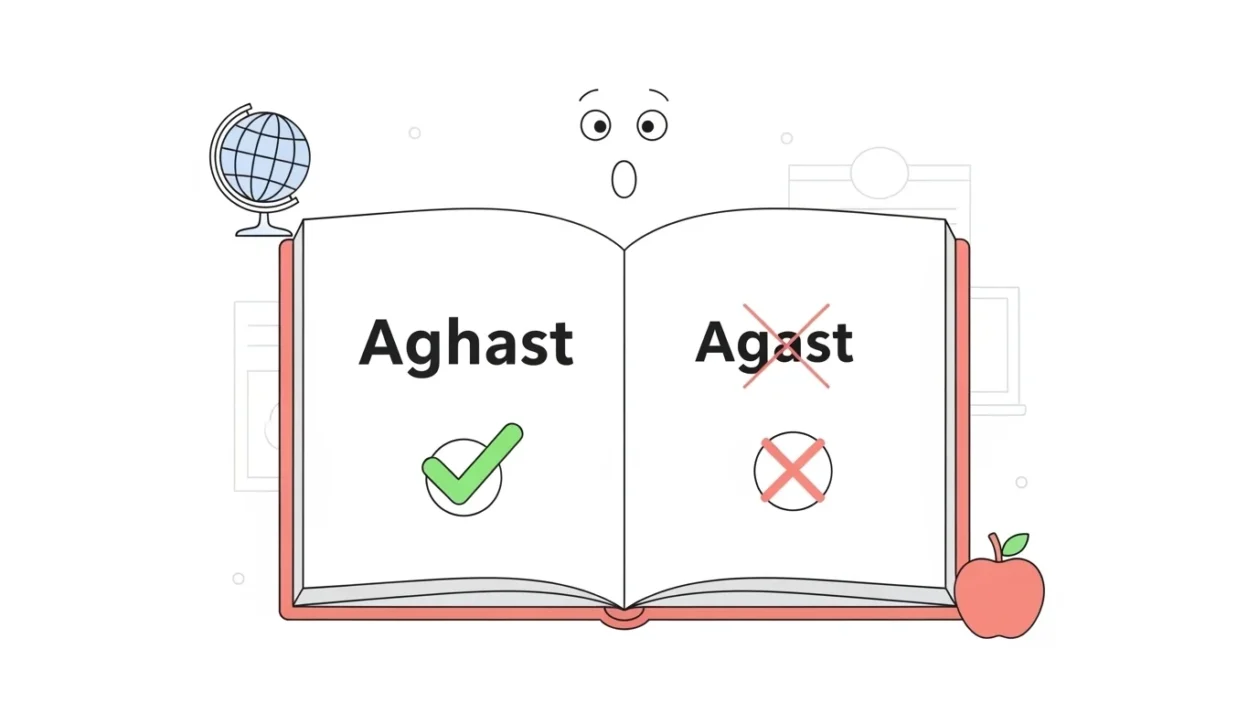
- ✅ Aghast – Correct spelling; means shocked, horrified, or filled with surprise.
- ❌ Agast – Incorrect spelling; not a standard English word.
- 📚 Always use aghast in formal and informal writing.
- ✏️ Replace “agast” with aghast to ensure accuracy.
Origin and Background
The word aghast has a long history in the English language. It comes from Middle English and is related to the word “ghast,” which means frightened or terrified. The term also shares roots with the word “ghost,” reflecting its connection to fear and shock.
The prefix “a-” in older English meant “in a state of.” Therefore, aghast originally meant “in a state of terror or shock.” Over time, its meaning evolved to describe intense surprise or horror.
The spelling “agast” emerged as a simplified but incorrect form, often due to pronunciation confusion or typographical errors.
Clear Explanation of the Difference
What Does “Aghast” Mean?
Aghast is an adjective used to describe a strong feeling of shock, horror, or disbelief.
Common Meanings
- Extremely Shocked
- She was aghast at the shocking news.
- Horrified or Appalled
- He stood aghast at the sight of the destruction.
- Deeply Surprised
- The teacher was aghast at the students’ behavior.
It is often used to express strong emotional reactions in formal and literary contexts.
What About “Agast”?
Agast is not a correct spelling in modern English. It is considered a misspelling of aghast and should be avoided.
❌ Agast
✅ Aghast
If you encounter “agast,” it is almost always an error that needs correction.
Comparison Table
| Feature | Aghast | Agast |
|---|---|---|
| Spelling | Correct | Incorrect |
| Meaning | Shocked, horrified, or stunned | No standard meaning |
| Part of Speech | Adjective | Not a valid word |
| Dictionary Recognition | Yes | No |
| Usage | Formal and informal English | Considered a mistake |
| Example Sentence | She was aghast at the news. | ❌ She was agast at the news. |
Which One to Use and When
Use “Aghast” When:
- Expressing shock or horror
- Describing disbelief or astonishment
- Writing essays, stories, or reports
- Communicating in formal or literary contexts
Examples:
- The audience was aghast at the sudden announcement.
- She looked aghast when she heard the rumor.
- He stood aghast at the unexpected outcome.
- The parents were aghast at the dangerous situation.
- I was aghast to discover the mistake.
Avoid “Agast”
Never use agast, as it is always incorrect in standard English.
Common Mistakes People Make
1. Dropping the Silent “H”
Many learners omit the “h” because it is not clearly pronounced.
❌ Agast
✅ Aghast
2. Spelling by Sound
Since both words sound alike, people rely on pronunciation instead of correct spelling.
3. Typing Errors
Fast typing often results in missing letters.
4. Lack of Proofreading
Failing to review written work can allow errors to remain unnoticed.
5. Limited Vocabulary Exposure
Learners unfamiliar with literary vocabulary may mistakenly simplify the spelling.
Everyday Real-Life Examples
Emails
- “I was aghast at the unexpected charges on my bill.”
- “She was aghast to learn about the error.”
School and Education
- “The teacher was aghast at the cheating incident.”
- “Students were aghast by the surprising results.”
Workplace Communication
- “The manager was aghast at the financial losses.”
- “Employees were aghast at the sudden policy change.”
News and Media
- “Citizens were aghast at the shocking event.”
- “The nation stood aghast at the tragedy.”
Social Media
- “I’m aghast at what I just read!”
- “Fans were aghast at the finale.”
Daily Conversations
- “She was aghast at his rude behavior.”
- “He looked aghast when he heard the news.”
Short Learning Section for Students and Beginners
Easy Trick to Remember
Aghast contains the word “ghast,” which relates to fear.
Memory Tip
“Ghostly fear makes you aghast.”
Pronunciation Guide
- Aghast: uh-GAST
Practice Exercise
Fill in the blanks with the correct word:
- She was ______ at the shocking news.
- He stood ______ at the sight of the accident.
- The audience was ______ by the unexpected announcement.
Answers:
- aghast
- aghast
- aghast
Quick Quiz
Choose the correct option:
- The teacher was ______ at the students’ behavior.
a) Agast
b) Aghast - They were ______ at the sudden change.
a) Aghast
b) Agast
Correct Answers:
- b) Aghast
- a) Aghast
Frequently Asked Questions (FAQs)
1. Is “agast” a real English word?
No, “agast” is a misspelling and is not accepted in standard English.
2. What is the correct spelling?
The correct spelling is aghast.
3. What does “aghast” mean?
It means extremely shocked, horrified, or stunned.
4. How do you pronounce “aghast”?
It is pronounced as uh-GAST.
5. Is “aghast” a formal word?
Yes, it is commonly used in formal, literary, and descriptive writing.
6. Can “aghast” be used in everyday conversation?
Yes, especially when expressing strong surprise or disbelief.
7. Why do people write “agast” instead of “aghast”?
Because the silent “h” is not pronounced clearly.
8. What is a synonym for “aghast”?
Common synonyms include shocked, horrified, stunned, and appalled.
Conclusion
The difference between “agast” and “aghast” is simple but important. Aghast is the correct spelling and means feeling shocked, horrified, or deeply surprised. In contrast, agast is an incorrect form that should never be used in standard English.
To avoid mistakes, remember this simple rule: Aghast contains “ghast,” a word linked to fear and shock. By using the correct spelling, you can communicate clearly, confidently, and accurately in both academic and everyday writing.

Emily Carter is a content writer and editor based in the United States, specializing in lifestyle, wellness, and personal development topics. With a passion for clear and engaging storytelling, she creates content that connects with readers and delivers practical value. Emily focuses on making complex ideas easy to understand and relatable.