
Ascendency vs Ascendancy: What’s the Difference?
Many English learners get confused between ascendency and ascendancy because both words look almost identical and even share similar meanings. In conversations, books, and online articles, you may see both terms used when talking about power, control, influence, or dominance.
This naturally creates confusion:
- Are they interchangeable?
- Is one more correct?
- Which word sounds more natural in modern English?
- Do native speakers prefer one over the other?
The good news is that both words are real and correct English words. However, one is far more common and widely accepted in modern writing.
If you want your English to sound natural, professional, and modern, understanding the subtle difference between ascendency and ascendancy is important.
This guide explains everything in simple English with examples, comparisons, usage tips, and common mistakes.
Quick Answer: Ascendency vs Ascendancy
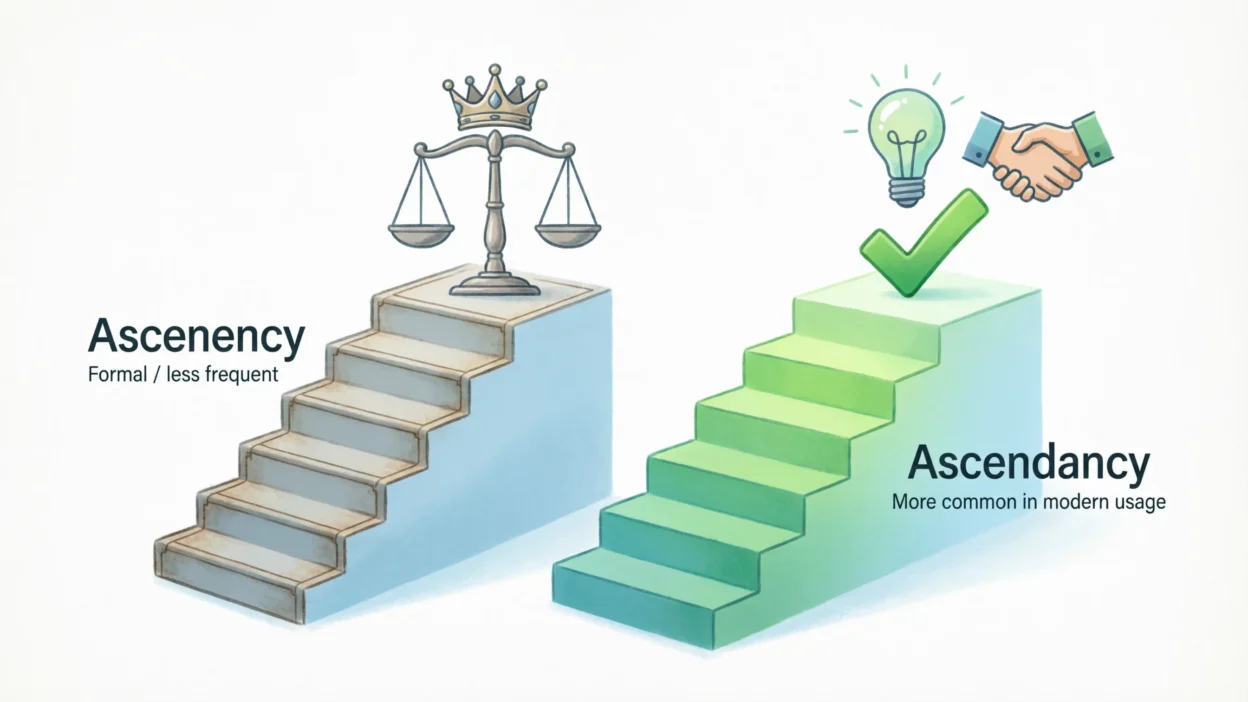
Both ascendency and ascendancy mean dominance, control, influence, or rising power. However, ascendancy is much more common and preferred in modern English. “Ascendency” is correct but sounds more formal, old-fashioned, or less natural in everyday writing.
Ascendency Meaning
Ascendency means:
- Power over others
- Dominance
- Influence
- A position of superiority
Example Sentences
- The company gained ascendency in the tech market.
- Her political ascendency surprised many experts.
Although correct, this version is less commonly used today.
Ascendancy Meaning
Ascendancy has almost the same meaning:
- Dominance
- Control
- Influence
- Superior position
Example Sentences
- The team established ascendancy early in the match.
- The country achieved economic ascendancy in the region.
This is the version most native English speakers use today.
Main Difference Between Ascendency and Ascendancy
| Feature | Ascendency | Ascendancy |
|---|---|---|
| Meaning | Dominance or influence | Dominance or influence |
| Modern usage | Less common | ✅ More common |
| Sounds natural today | Moderate | ✅ Yes |
| Formal/old-fashioned feel | Higher | Lower |
| Preferred in writing | Rarely | ✅ Commonly |
| Dictionary accepted | ✅ Yes | ✅ Yes |
Which Word Is More Common?
Winner: Ascendancy
In modern English:
- Newspapers
- Books
- Academic writing
- Business articles
- Sports commentary
usually prefer ascendancy.
“Ascendency” still appears occasionally, but it sounds less modern to many readers.
Why Do Both Words Exist?
Both words come from the verb:
- Ascend = to rise upward
Over time, English developed two noun forms:
- Ascendancy
- Ascendency
This happens with several English words where different endings developed historically.
Today, however, ascendancy became the dominant version in everyday English.
Is Ascendency Incorrect?
No, not at all.
“Ascendency” is a legitimate dictionary word.
However, many people rarely use it in casual conversation or modern writing, which is why it may feel unusual.
If your goal is:
- Natural English
- Professional writing
- SEO content
- Academic clarity
then “ascendancy” is usually the safer choice.
Ascendancy in Real-Life Contexts
Politics
- The party gained political ascendancy after the election.
Sports
- The team maintained ascendancy throughout the game.
Business
- The company achieved market ascendancy.
Culture
- The country’s cultural ascendancy expanded globally.
Pros and Cons of Using “Ascendancy”
Pros
- Sounds natural
- Modern usage
- Widely recognized
- Preferred by native speakers
Cons
- Slightly more common, so less stylistically unique
Pros and Cons of Using “Ascendency”
Pros
- Technically correct
- Can sound formal or literary
- Adds stylistic variation
Cons
- Less common
- May sound outdated
- Some readers may think it is a mistake
Which Word Should Students Use?
Best Choice: Ascendancy
If you are:
- Learning English
- Writing essays
- Creating SEO content
- Taking exams
- Writing professionally
then “ascendancy” is usually the better option.
It sounds more natural and matches modern English usage better.
Common Mistakes
Mistake 1: Thinking Ascendency Is Wrong
It is not wrong. It is simply less common.
Mistake 2: Mixing Them Randomly
Using both in the same article can confuse readers.
Choose one version and stay consistent.
Mistake 3: Overusing Rare Words
Some learners use uncommon words to sound smarter, but natural English is usually clearer and stronger.
Ascendency vs Ascendancy in British and American English
Both forms exist in:
- British English
- American English
However, “ascendancy” is generally preferred in both regions today.
Best Overall Winner
Winner: Ascendancy
Why?
- More modern
- More natural
- More widely accepted
- Better for professional writing
- Easier for readers
Unless you specifically want a literary or old-fashioned tone, ascendancy is usually the best choice.
Tips for Using These Words Correctly
- Use “ascendancy” in modern writing
- Use “ascendency” only for stylistic purposes
- Stay consistent within one piece of writing
- Focus on clarity over complexity
Conclusion
So, what is the difference between ascendency and ascendancy?
Technically, both words mean the same thing: dominance, influence, or a position of power. The real difference is usage and popularity.
“Ascendancy” is the version most native speakers, writers, and publications prefer today because it sounds smoother and more modern.
“Ascendency” is still correct, but it appears less frequently and may sound formal or slightly outdated in modern English.
If you want safe, natural, and professional English, “ascendancy” is usually the better choice.
FAQs
Is ascendency a real word?
Yes, ascendency is a real and correct English word.
Which is more common: ascendency or ascendancy?
Ascendancy is much more common in modern English.
Do both words mean the same thing?
Yes, both generally mean dominance, influence, or superiority.
Is ascendency old-fashioned?
It can sound slightly old-fashioned or formal compared to ascendancy.
Which word should students use?
Most students should use “ascendancy” because it sounds more natural today.
Is ascendancy used in business English?
Yes, it is commonly used in politics, business, sports, and academic writing.
Can I use both words interchangeably?
Technically yes, but consistency is important.
Which sounds more professional?
Ascendancy usually sounds more professional and modern.
Is ascendency wrong in grammar?
No, it is grammatically correct.
Why does English have both forms?
English often develops multiple noun forms from the same root word over time.
Meta Description:Many English learners get confused between ascendency and ascendancy because both words look almost identical and even share similar meanings. In conversations, books, and online articles, you may see both terms used when talking about power, control, influence, or dominance.
This naturally creates confusion:
- Are they interchangeable?
- Is one more correct?
- Which word sounds more natural in modern English?
- Do native speakers prefer one over the other?
The good news is that both words are real and correct English words. However, one is far more common and widely accepted in modern writing.
If you want your English to sound natural, professional, and modern, understanding the subtle difference between ascendency and ascendancy is important.
This guide explains everything in simple English with examples, comparisons, usage tips, and common mistakes.
Quick Answer: Ascendency vs Ascendancy
Both ascendency and ascendancy mean dominance, control, influence, or rising power. However, ascendancy is much more common and preferred in modern English. “Ascendency” is correct but sounds more formal, old-fashioned, or less natural in everyday writing.
Ascendency Meaning
Ascendency means:
- Power over others
- Dominance
- Influence
- A position of superiority
Example Sentences
- The company gained ascendency in the tech market.
- Her political ascendency surprised many experts.
Although correct, this version is less commonly used today.
Ascendancy Meaning
Ascendancy has almost the same meaning:
- Dominance
- Control
- Influence
- Superior position
Example Sentences
- The team established ascendancy early in the match.
- The country achieved economic ascendancy in the region.
This is the version most native English speakers use today.
Main Difference Between Ascendency and Ascendancy
| Feature | Ascendency | Ascendancy |
|---|---|---|
| Meaning | Dominance or influence | Dominance or influence |
| Modern usage | Less common | ✅ More common |
| Sounds natural today | Moderate | ✅ Yes |
| Formal/old-fashioned feel | Higher | Lower |
| Preferred in writing | Rarely | ✅ Commonly |
| Dictionary accepted | ✅ Yes | ✅ Yes |
Which Word Is More Common?
Winner: Ascendancy
In modern English:
- Newspapers
- Books
- Academic writing
- Business articles
- Sports commentary
usually prefer ascendancy.
“Ascendency” still appears occasionally, but it sounds less modern to many readers.
Why Do Both Words Exist?
Both words come from the verb:
- Ascend = to rise upward
Over time, English developed two noun forms:
- Ascendancy
- Ascendency
This happens with several English words where different endings developed historically.
Today, however, ascendancy became the dominant version in everyday English.
Is Ascendency Incorrect?
No, not at all.
“Ascendency” is a legitimate dictionary word.
However, many people rarely use it in casual conversation or modern writing, which is why it may feel unusual.
If your goal is:
- Natural English
- Professional writing
- SEO content
- Academic clarity
then “ascendancy” is usually the safer choice.
Ascendancy in Real-Life Contexts
Politics
- The party gained political ascendancy after the election.
Sports
- The team maintained ascendancy throughout the game.
Business
- The company achieved market ascendancy.
Culture
- The country’s cultural ascendancy expanded globally.
Pros and Cons of Using “Ascendancy”
Pros
- Sounds natural
- Modern usage
- Widely recognized
- Preferred by native speakers
Cons
- Slightly more common, so less stylistically unique
Pros and Cons of Using “Ascendency”
Pros
- Technically correct
- Can sound formal or literary
- Adds stylistic variation
Cons
- Less common
- May sound outdated
- Some readers may think it is a mistake
Which Word Should Students Use?
Best Choice: Ascendancy
If you are:
- Learning English
- Writing essays
- Creating SEO content
- Taking exams
- Writing professionally
then “ascendancy” is usually the better option.
It sounds more natural and matches modern English usage better.
Common Mistakes
Mistake 1: Thinking Ascendency Is Wrong
It is not wrong. It is simply less common.
Mistake 2: Mixing Them Randomly
Using both in the same article can confuse readers.
Choose one version and stay consistent.
Mistake 3: Overusing Rare Words
Some learners use uncommon words to sound smarter, but natural English is usually clearer and stronger.
Ascendency vs Ascendancy in British and American English
Both forms exist in:
- British English
- American English
However, “ascendancy” is generally preferred in both regions today.
Best Overall Winner
Winner: Ascendancy
Why?
- More modern
- More natural
- More widely accepted
- Better for professional writing
- Easier for readers
Unless you specifically want a literary or old-fashioned tone, ascendancy is usually the best choice.
Tips for Using These Words Correctly
- Use “ascendancy” in modern writing
- Use “ascendency” only for stylistic purposes
- Stay consistent within one piece of writing
- Focus on clarity over complexity
Conclusion
So, what is the difference between ascendency and ascendancy?
Technically, both words mean the same thing: dominance, influence, or a position of power. The real difference is usage and popularity.
“Ascendancy” is the version most native speakers, writers, and publications prefer today because it sounds smoother and more modern.
“Ascendency” is still correct, but it appears less frequently and may sound formal or slightly outdated in modern English.
If you want safe, natural, and professional English, “ascendancy” is usually the better choice.
FAQs
Is ascendency a real word?
Yes, ascendency is a real and correct English word.
Which is more common: ascendency or ascendancy?
Ascendancy is much more common in modern English.
Do both words mean the same thing?
Yes, both generally mean dominance, influence, or superiority.
Is ascendency old-fashioned?
It can sound slightly old-fashioned or formal compared to ascendancy.
Which word should students use?
Most students should use “ascendancy” because it sounds more natural today.
Is ascendancy used in business English?
Yes, it is commonly used in politics, business, sports, and academic writing.
Can I use both words interchangeably?
Technically yes, but consistency is important.
Which sounds more professional?
Ascendancy usually sounds more professional and modern.
Is ascendency wrong in grammar?
No, it is grammatically correct.
Why does English have both forms?
English often develops multiple noun forms from the same root word over time.

Emily Carter is a content writer and editor based in the United States, specializing in lifestyle, wellness, and personal development topics. With a passion for clear and engaging storytelling, she creates content that connects with readers and delivers practical value. Emily focuses on making complex ideas easy to understand and relatable.